Hyatt Challenges Hilton in Trademark Battle Over the Use of Select in Hospitality Branding

The global hospitality landscape is witnessing a high-stakes intellectual property dispute as Hyatt Hotels Corporation moves decisively to block Hilton Worldwide from registering the brand name Select by Hilton. This unfolding legal and corporate confrontation represents a rare and direct trademark clash between two of the world’s most dominant lodging enterprises, highlighting the fierce competition for market share, consumer mindshare, and brand identity within the rapidly expanding midscale and extended-stay segments of the travel industry.
The conflict officially surfaced when Hyatt filed a formal opposition with the United States Patent and Trademark Office’s Trademark Trial and Appeal Board. According to public filings, Hyatt’s legal challenge is anchored by its pre-existing registered trademark for Hyatt Select, alongside two additional pending applications that the company believes establish its prior rights and commercial footprint under that specific nomenclature. Rather than immediately escalating into protracted litigation, however, the two hospitality giants have signaled a willingness to resolve the matter amicably, pausing the legal proceedings while their respective legal and executive teams explore a mutually beneficial resolution.
Chronology of the Trademark Conflict
The timeline of the dispute reveals a methodical approach by Hyatt to protect its corporate branding assets in the United States intellectual property ecosystem. The sequence of events underscores how modern hospitality conglomerates carefully guard their naming conventions, especially as both companies aggressively develop and launch new sub-brands aimed at value-conscious travelers.
The foundation of Hyatt’s legal standing rests on its historical filings and registration of the Hyatt Select mark with the U.S. Patent and Trademark Office. Over the course of developing its portfolio strategy, Hyatt identified the term as a critical component of its brand architecture, securing foundational intellectual property rights and submitting subsequent applications to cover evolving categories of lodging services.
The immediate catalyst for the current dispute occurred when Hilton sought to register Select by Hilton as a trademark to support its own strategic brand initiatives. Upon publication of Hilton’s intent-to-use application, Hyatt monitored the filing and initiated formal opposition proceedings on a Monday, utilizing the administrative mechanisms provided by the Trademark Trial and Appeal Board.
However, the adversarial nature of the filing was swiftly tempered by diplomatic engagement. Almost immediately following the initial opposition submission, Hyatt filed a formal motion to suspend the administrative case. Crucially, this motion was submitted with the full consent of Hilton, indicating that back-channel communications between the corporate headquarters were already underway to prevent a public and costly legal battle. By the end of the week, spokespeople for both Hyatt and Hilton issued identical statements confirming the pause, noting that the companies had mutually agreed to suspend the action while continuing to work toward an agreeable resolution.
Corporate Context and the Battle for the Midscale Market
To understand the gravity of the dispute over the word select, industry analysts point to the fierce race among major hotel groups to capture the lucrative economy and midscale segments. Over the past several years, companies like Hyatt, Hilton, Marriott International, and IHG Hotels & Resorts have pivoted aggressively toward conversion-friendly brands. These brands are explicitly designed to appeal to independent roadside motel owners and smaller boutique properties looking to upgrade to a recognized global reservation system without incurring the massive capital expenditures associated with ground-up construction.
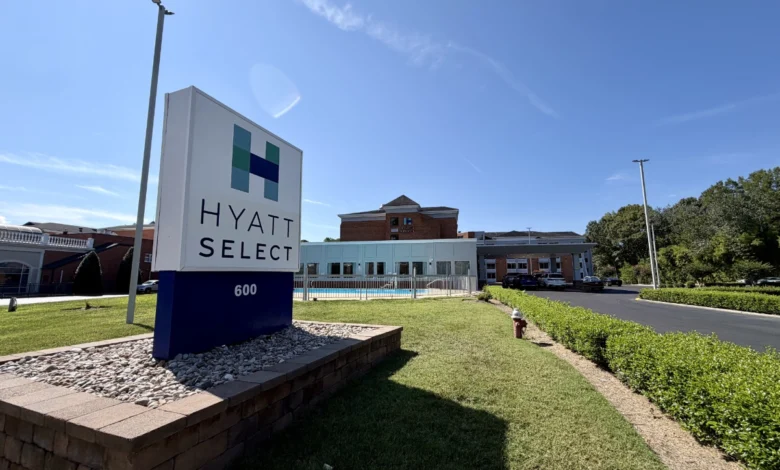
Hyatt, traditionally known for its luxury and upscale portfolio anchored by brands like Park Hyatt, Grand Hyatt, and Hyatt Regency, has made a concerted effort to diversify downward. Through strategic acquisitions—such as its purchase of Two Roads Hospitality and Apple Leisure Group—and organic launches like Caption by Hyatt and various extended-stay offerings, the company has broadened its demographic reach. The Hyatt Select branding, as evidenced by properties like the roadside motel spotted in Williamsburg, Virginia, represents an entry into the value-oriented, accessible lodging space where highway travelers and budget-conscious vacationers seek reliable, standardized accommodations.
Concurrently, Hilton has embarked on its own aggressive expansion strategy to capture whitespace in the midscale and upper-midscale categories. Brands such as Spark by Hilton and Tru by Hilton have been introduced to court travelers looking for clean, efficient, and affordable rooms. The proposed Select by Hilton moniker fits squarely into this strategic imperative, intended to signal quality, curation, and value to consumers while offering hotel developers a flexible conversion model. Because both corporate entities view this market segment as a primary engine for net unit growth, the ownership of descriptive yet powerful branding terms carries substantial commercial weight.
Official Responses and Statements from Industry Representatives
The corporate communications teams at both Hyatt and Hilton have maintained a disciplined, unified front, opting for diplomatic restraint rather than public posturing. The joint approach to managing the narrative reflects the cordial yet fiercely competitive relationship that typically characterizes interactions between the top-tier global hotel chains.
When contacted for comment by travel industry publications, representatives from both organizations provided identical, carefully calibrated statements. The official statement released by Hilton and Hyatt spokespeople read: "We have mutually agreed to suspend the action as we continue working toward an agreeable resolution."
This synchronized messaging is designed to reassure investors, franchise owners, and industry observers that the dispute is being managed professionally. By choosing suspension over litigation, both corporations have signaled that a commercial compromise—such as a co-existence agreement, geographic limitations, or the modification of Hilton’s proposed naming convention—remains a viable and preferred outcome.
Broader Implications for Hospitality Intellectual Property
The Hyatt versus Hilton trademark contest serves as a case study in the complexities of modern branding within the travel sector. As hotel companies continue to proliferate sub-brands at an unprecedented rate, the pool of available, legally protectable, and linguistically intuitive words is rapidly shrinking. Terms that convey quality, curation, or value—such as select, premier, collection, and studio—are frequently deployed across the industry, leading to inevitable friction at the U.S. Patent and Trademark Office.
Legal experts specializing in hospitality intellectual property note that trademark disputes in this sector often hinge on the doctrine of likelihood of confusion. When two massive enterprises utilize similar formative terms in the same commercial space—specifically, lodging and hospitality services—the regulatory body must determine whether consumers would reasonably confuse a Hyatt Select property with a Select by Hilton property.
If the ongoing settlement negotiations fail to yield an agreement, the Trademark Trial and Appeal Board will be tasked with evaluating the distinctiveness of the marks, the channels of trade, and the sophistication of the consumers. However, given the mutual consent to suspend the current proceedings, legal analysts widely anticipate an out-of-court settlement. Such resolutions in the hospitality industry frequently involve complex licensing terms, brand differentiation strategies, or subtle linguistic modifications that allow both global giants to coexist without diluting their respective marketing messages or confusing prospective guests.