The Sandworm Popcorn Bucket Returns With Two New Designs For Dune Part Three

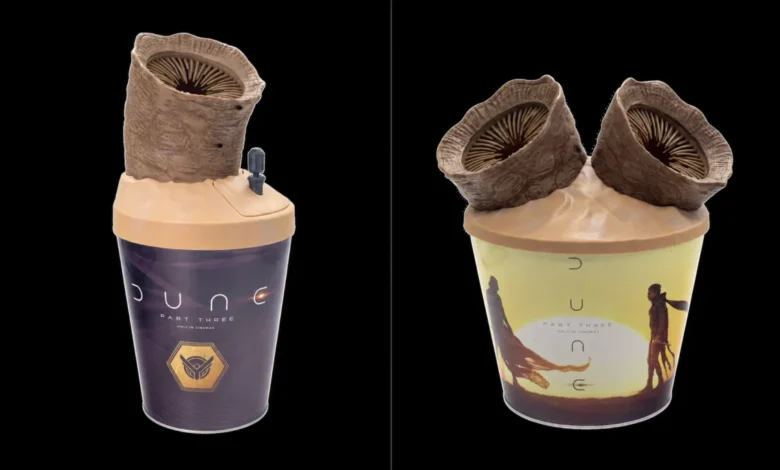
The phenomenon of the movie theater popcorn bucket has evolved from a simple functional container into a cornerstone of modern cinematic marketing, and AMC Theatres is doubling down on its most successful franchise tie-in to date. Following the viral success of the promotional merchandise for Dune: Part Two, the exhibition giant has announced the release of two distinct, high-concept vessels to coincide with the highly anticipated debut of Dune: Part Three, scheduled for wide release on December 18. The new offerings, dubbed the Sandworm Thumper Collectible and the Double Sandworm Collectible, represent a strategic expansion of AMC’s premium merchandising program, which has become an increasingly vital revenue stream for cinema chains navigating a shifting post-pandemic theatrical landscape.
A Chronology of the Popcorn Bucket Frenzy
The trajectory of the "collectible bucket" trend can be traced back to early 2024, when the initial Dune: Part Two promotional bucket—a molded, rubberized representation of the film’s iconic desert predator—captured the public imagination. While intended as a tribute to Frank Herbert’s sprawling sci-fi epic, the design inadvertently became the subject of intense social media scrutiny. By the time the film premiered in March 2024, the bucket had transcended its purpose as a snack container to become a meme, eventually landing a spotlight on Saturday Night Live.
In a now-infamous sketch, actor Marcello Hernández portrayed a student who expressed a bizarre, romanticized attachment to the merchandise, underscoring the absurdity of the item’s design. Despite the unintended sexualized subtext that fueled its viral status, the bucket was a resounding financial success. Marcus Gonzalez of the Zinc Group, the designer behind the original vessel, later clarified to the Wall Street Journal that the design was intended strictly for fans of the franchise’s lore, noting that the creature’s aesthetic was dictated by the film’s source material rather than any deliberate attempt at shock value.
The success of the Dune: Part Two bucket acted as a catalyst for an industry-wide shift. Throughout the remainder of 2024 and 2025, theater chains recognized that audiences were no longer just paying for popcorn; they were paying for limited-edition physical assets. This realization led to a surge in high-ticket merchandise, including Regal’s $80 bucket for The Fantastic Four: First Steps, setting a new benchmark for how much moviegoers are willing to spend on experiential memorabilia.
Analyzing the Economics of Theatrical Merchandising
The decision by AMC to produce two separate designs for the third installment of Denis Villeneuve’s saga is a calculated move to maximize engagement. By diversifying the offering—the "Thumper" variant, which mirrors the device used by Fremen to summon sandworms, and the "Double Sandworm" unit—AMC is catering to both casual moviegoers and "completist" collectors.
From an analytical perspective, these buckets represent a sophisticated form of "upselling." By bundling these collectibles with large popcorn portions, theaters increase their per-patron spend significantly. In an era where streaming platforms continue to compete with the theatrical experience, the physical, tactile nature of these items provides a unique value proposition that cannot be replicated in a home viewing environment.
Industry data suggests that food and beverage (F&B) margins are among the highest in the exhibition business. By transforming a paper bucket into a high-margin collectible, chains like AMC can offset the rising costs of cinema operations, including labor and digital projection maintenance. Furthermore, these items act as "walking advertisements." When a customer carries a uniquely shaped bucket through a mall or into a theater lobby, they create organic social media content that promotes the film, providing free, high-visibility marketing that traditional billboards cannot match.
Official Perspectives and Design Strategy
Hank Green, Senior Vice President of Food & Beverage at AMC Theatres, emphasized that the company’s primary objective was to maintain the momentum established by the previous release while acknowledging the heightened expectations of the fanbase. "The AMC Sandworm popcorn bucket for Dune: Part Two became a viral phenomenon, and we knew that Dune fans would have high expectations for what came next," Green stated. "From the moment we started planning the Dune: Part Three collectibles, our goal was to exceed those fan expectations. The Sandworm Thumper and Double Sandworm collectibles take the experience to the next level with designs straight from the movie."
The designs reflect a move toward more intricate, screen-accurate representations. While the first bucket was criticized by some for its simplicity, the new iterations incorporate elements of the film’s "Thumper" technology—a critical narrative device in the Dune universe. This focus on narrative integration is a shift from generic branding to "artifact-level" merchandising, signaling that AMC is treating its merchandise as a premium extension of the cinematic world-building.
Broader Implications for the Film Industry
The anticipation surrounding Dune: Part Three is already at record levels, even without the influence of its marketing accessories. Advance ticket sales in key markets, such as London’s BFI IMAX, have shattered records previously held by Christopher Nolan’s The Odyssey. This suggests that the film is poised to be a dominant cultural force upon its release. The presence of these collectibles is expected to further cement the film’s status as a "must-see" event, turning the act of going to the movies into a participatory experience.
However, the trend also raises questions regarding consumer culture. The high price point of these items—often ranging between $25 and $50, with some specialty items reaching even higher—suggests that movie merchandising is becoming a luxury market. While this benefits the theater’s bottom line, it also risks alienating families or casual fans who may feel priced out of the "full experience."
Furthermore, the environmental impact of producing millions of plastic and silicone-based collectibles has become a point of discussion within the industry. As theaters pivot toward sustainability, the long-term viability of high-volume plastic production for merchandise may face increased scrutiny. For now, however, the demand remains robust.
The Global Rollout and Future Outlook
The availability of the Dune: Part Three collectibles will extend beyond the United States, with AMC’s European branch, Odeon Cinemas, slated to carry the inventory. This international availability ensures that the viral nature of the buckets remains a global conversation. In addition to the buckets, AMC has announced a suite of supporting merchandise, including thematic drinkware, "mystery" blind-box keychains, and a plush version of the sandworm, creating a comprehensive retail ecosystem within the theater lobby.
As the industry approaches the December 18 release date, the exact pricing for the individual buckets remains unconfirmed, though analysts expect them to be priced at a premium given the complexity of the molds. The success of this release will likely dictate the strategy for future blockbusters. If the "Double Sandworm" and "Thumper" buckets achieve the same viral velocity as their predecessor, it is almost certain that other major studios will mandate similar merchandise programs for their tentpole releases.
In conclusion, the evolution of the popcorn bucket from a simple, disposable container to a highly coveted, limited-edition collectible is a testament to the changing nature of the cinema experience. It represents a bridge between the digital world of social media virality and the physical world of theatrical exhibition. As AMC prepares to deploy these items to theaters worldwide, the strategy serves as a clear indication that for the modern moviegoer, the experience begins well before the lights dim, and for the theater operator, the bottom line is increasingly found at the bottom of a very specialized bucket.
Related posts: