Michigan Senate Race Splits Democratic Representative Haley Stevens Between Party Loyalty and Fiancé Jason Turkish Over Abdul El-Sayed Candidacy

The political
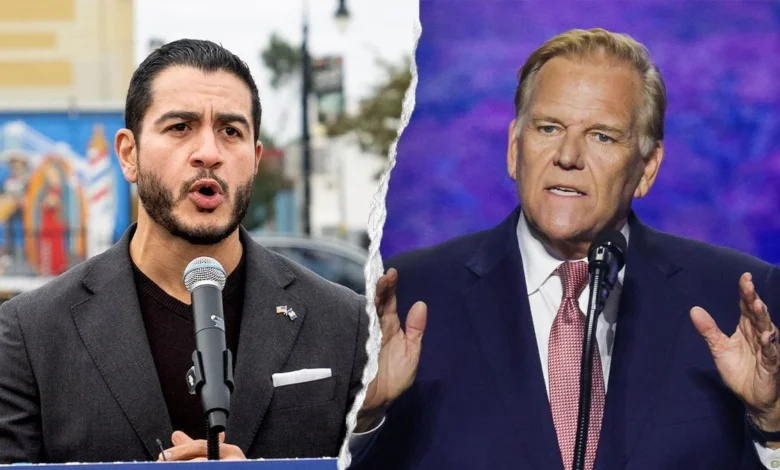
landscape of Michigan has been thrown into sharp relief by an extraordinary internal fracture within a prominent Democratic household. Jason Turkish, a prominent Michigan attorney, Jewish community advocate, and the fiancé of Democratic U.S. Representative Haley Stevens, announced that he cannot support the party’s nominee for the United States Senate, Abdul El-Sayed. Instead, Turkish has committed his vote to the Republican nominee, former U.S. Representative Mike Rogers.
This public division highlights a wider rift within Michigan’s electorate, particularly among Jewish voters and moderate Democrats who find themselves alienated by the progressive wing of the party. While Turkish’s stance places him at odds with the national party machinery and his own household, Representative Stevens has maintained her endorsement of El-Sayed, characterizing their situation as representative of a "house divided" during an election cycle where she believes control of the Senate is vitally at stake.
The Public Defection at the Townsend Hotel
Turkish’s declaration became official during a campaign event hosted by the Republican Jewish Coalition at the historic Townsend Hotel in Birmingham, Michigan. Speaking to reporters on the sidelines of the gathering, Turkish explained that his decision was rooted in what he views as a dangerous escalation of rhetoric from El-Sayed regarding the conflict in the Middle East and domestic social issues.
"I waited, and I watched and I listened for Abdul to moderate—but he didn’t moderate, he escalated," Turkish told local media outlets. "He’s gotten worse, and worse, and worse as this general election campaign has gone on. Rather than bringing people together, he’s just driven them further and further apart."
Turkish’s appearance at the Republican-sponsored event signals a willingness among some traditional Democratic donors and community leaders to cross party lines over foreign policy and identity politics. Turkish, who has a history of contributing to Democratic candidates while occasionally supporting Republicans, framed his vote as an act of putting country before party. He specifically warned that El-Sayed’s persistent use of the term "genocide" to describe Israel’s military operations in Gaza has inflamed tensions and directly imperiled the safety of Jewish Americans.
"When he says genocide over and over again, when he refuses to condemn an ad that says Jews are to blame for the price of bananas, he makes my community less safe," Turkish said, adding that Jewish residents in Michigan have increasingly faced threats and intimidation as the rhetoric surrounding the Middle East conflict intensifies.
Representative Stevens’s Stance and the House Divided
Despite the intense personal and political pressure stemming from her fiancé’s defection—and a secondary blow when her former campaign chair, attorney David Kramer, similarly announced his support for Rogers—Representative Stevens has refused to withdraw her support from the Democratic nominee.
The primary battle this past summer between Stevens and El-Sayed was fiercely contested, leaving lingering scars within the state party. While Stevens ultimately endorsed El-Sayed following the primary results, her public visibility alongside the nominee has been notably sparse. Aside from a mandatory unity breakfast immediately following the primary, Stevens has not campaigned or appeared publicly with El-Sayed.
When questioned about the deep division in her personal life by national media networks, Stevens acknowledged the tension but reiterated her broader strategic priorities. "Like a lot of households across America, we’re a house divided," Stevens told CNN. "I still very much want our Democratic nominee, his name is Abdul, to win this race. There’s so much on the line."
Political analysts note that Stevens’s balancing act reflects the broader anxieties of moderate Democrats nationwide who are tasked with holding a diverse, often fractious coalition together ahead of crucial legislative battles in Washington. While she has faced sharp criticism from some progressive allies for perceived lukewarm support of the nominee, her refusal to completely abandon the party ticket underscores the high stakes of maintaining Democratic numbers in the upper chamber of Congress.

Controversial Ties and Ideological Flashpoints
At the center of Turkish’s criticism—and a broader debate among Michigan voters—are El-Sayed’s past associations and his rhetorical posture on foreign affairs. Turkish specifically highlighted El-Sayed’s refusal to fully distance himself from California-based political commentator and streamer Hasan Piker. Piker has faced intense scrutiny and condemnation for controversial remarks regarding American foreign policy, including past commentary concerning the September 11 terrorist attacks.
Turkish expressed frustration over how El-Sayed has handled media inquiries regarding these associations. "I watch him in recent weeks as he has become verbally combative with any reporter who has the gall, as he sees it, the gall to ask him about Hasan," Turkish remarked. "Everything we hear from Abdul El-Sayed includes equivocation, and it includes equivocations to try to explain away hate, and there is no explaining away hate. And I predict to you that Michigan will reject this."
El-Sayed, a progressive physician and former executive director of the Detroit Health Department who previously ran for governor in 2018, has consistently defended his positions, arguing that his campaign focuses on economic justice, healthcare expansion, and human rights. However, his outspoken criticism of Israeli military tactics and his characterization of the Gaza conflict have drawn severe rebukes from pro-Israel organizations and moderate members of his own party.
The campaign has also seen fierce clashes between El-Sayed and his Republican opponent, Mike Rogers. During recent debates, the two candidates sparred over national security, border policy, and unverified allegations concerning historical ties to Islamist organizations—allegations that El-Sayed’s campaign has categorically rejected as Islamophobic smears designed to undermine his candidacy.
Republican Strategy and the Broadening Coalition
For Mike Rogers and the Michigan Republican Party, the public departures of high-profile figures from Stevens’s inner circle represent a significant political windfall. Rogers has sought to capitalize on these divisions by framing himself as a pragmatic, steady hand on national security issues who can appeal to disaffected Democrats and independent voters.
During his speech at the Townsend Hotel, Rogers leaned heavily into foreign policy credentials forged during his tenure in the U.S. House of Representatives and as chairman of the House Intelligence Committee. Addressing the crowd, Rogers directly targeted El-Sayed’s foreign policy stances without explicitly dwelling on Turkish’s endorsement during his prepared remarks.
"This is not someone we can let into the United States Senate," Rogers told the gathered crowd. "If you don’t know Iran is our enemy and you can’t condemn a Hezbollah-inspired attack, you have no business being in the United States Senate."
Rogers’s campaign has increasingly targeted suburban voters in Wayne, Oakland, and Macomb counties—areas traditionally crucial to statewide Democratic victories. By emphasizing safety, national security, and moderation, Republicans hope to peel away enough traditional Democratic constituencies, including Jewish voters, Arab Americans dissatisfied with both major parties, and moderate business professionals, to secure a decisive victory in November.
Broader Implications for the Michigan Senate Race
The polarization visible in Representative Stevens’s household is emblematic of a broader national phenomenon where foreign policy flashpoints intersect directly with domestic electoral politics. Michigan, home to both one of the largest Arab-American populations in the country and a vibrant, politically active Jewish community, has become a primary crucible for these tensions.
As the general election enters its final stretch, the ability of candidates to bridge these profound community divides—or effectively mobilize their respective bases despite internal defections—will likely determine the outcome of the race. While El-Sayed works to consolidate progressive enthusiasm and repair relationships with skeptical moderate factions within his party, the steady drip of high-profile defections to the Republican camp serves as a constant reminder of the fragile coalition supporting the Democratic ticket.
Ultimately, the public stand taken by figures like Jason Turkish and David Kramer demonstrates that for a segment of Michigan’s electorate, ideological purity and rhetoric surrounding international conflicts have superseded traditional party loyalties. Whether this trend remains isolated to a few prominent community leaders or translates into a broader shift at the ballot box remains one of the defining questions of the Michigan Senate race.