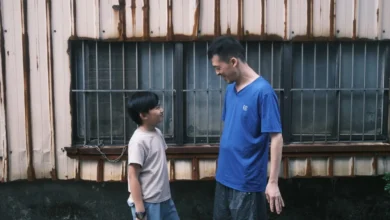
Between Us explores the heavy burden of unresolved trauma through the lens of two fractured families

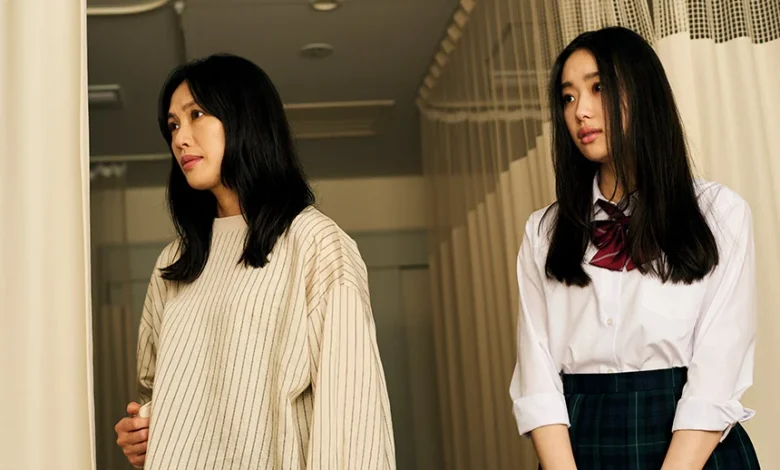
The Tokyo International Film Festival has unveiled a contemplative addition to its Nippon Cinema Now section with the premiere of Between Us, the fourth feature film from writer-director Shingo Matsumura. The narrative examines the profound, long-term psychological fallout of a singular, life-altering tragedy that irrevocably severed the ties between two middle-class families. While the film is characterized by a high degree of emotional ambition and a series of nuanced performances from its lead actresses, it occupies a complex space between effective character study and uneven storytelling, highlighting the challenges of depicting grief without resorting to melodrama.
A Chronology of Loss: The Camping Trip Incident
The narrative architecture of the film is built upon a brief but pivotal prologue set six years prior to the main events. Two families, long-time friends, organized a countryside camping excursion. The planned trip was intended to serve as a bonding experience for the children, Kasumi and Makoto, along with Makoto’s younger brother, Kenji.
Due to unforeseen circumstances—a sudden illness affecting Makoto and an urgent work summons for her father—the party was significantly diminished. Ultimately, only eight-year-old Kenji accompanied the other family to the site. The tragedy unfolded with brutal, quiet swiftness: while exploring the periphery of the campsite with a butterfly net, the child disappeared. The subsequent investigation, as hinted at in the film, failed to provide closure, leaving both families in a state of indefinite, agonizing limbo.
The Domestic Fallout: Six Years Later
The passage of time has not served as a panacea for either household. The film presents a study in contrast regarding how trauma manifest across different domestic settings.
In the household of the missing boy, the decay is total. Emi, portrayed by Akiko Kikuchi, exists in a state of near-catatonic grief, triggered by the most mundane social interactions, such as a colleague’s inquiry about her "little one." Her husband, having lost both his son and his professional identity, has been relegated to the precarious gig economy as a delivery driver, their marriage having effectively dissolved under the weight of their shared failure.
Conversely, the family that accompanied Kenji—led by Fumiko (Asami Usuda)—appears to maintain a facade of normalcy. They have expanded their family with a second daughter, Chika. However, the film reveals that this normalcy is a brittle construct. The younger child’s observation that her father never smiles serves as a barometer for the underlying tension and the stifled atmosphere of guilt that pervades their home.
Narrative Analysis: The Efficacy of Restraint
One of the most debated aspects of Matsumura’s directorial approach is his choice to reveal the specifics of the disappearance via an intrusive, external news report heard over a car radio. Critics note that this decision acts as a narrative shortcut, providing the audience with information that remains inaccessible to the characters. By confirming the police’s suspicion of foul play early on, the film inadvertently shifts the audience’s expectations toward a procedural or mystery genre, a path the screenplay subsequently chooses not to pursue.
This deviation from the "show, don’t tell" principle creates a dissonance in the film’s tone. Where the director excels is in the quiet, observational moments—the flinching of a mother at a grocery store or the strained silence between parents at a dinner table. By opting to clarify the plot through a news bulletin, the film sacrifices some of the atmospheric tension that might have otherwise sustained the audience’s engagement with the mystery of the trauma.
The Role of the Younger Generation in Reconciliation
The emotional heart of Between Us lies in the unlikely reconnection of the two girls, Makoto (Ririka Kawashima) and Kasumi (Anna Kurasawa). Now both in high school, the two find themselves as the sole members of their school’s drama club. This setting acts as a crucible for their suppressed emotions.
While their parents remain paralyzed by the conflict between their respective realities—one family defined by absence, the other by the guilt of proximity—the daughters move toward a form of radical honesty. They choose to utilize their drama production as a meta-textual tool to confront the hostility that has defined their families for half a decade. Through this medium, they attempt to articulate the "suffocating sense of loss" that their parents are unable to verbalize.
Contextualizing Grief in Japanese Cinema
Matsumura’s work fits into a broader lineage of Japanese and East Asian cinema that grapples with collective and individual trauma. The film invites comparison to Lee Jong-un’s 2019 drama Birthday, which explored the aftermath of the Sewol ferry disaster. Both films prioritize the long-term, psychological residue of catastrophe over the spectacle of the event itself.
However, where Birthday succeeded in its unflinching look at the bureaucratic and personal hurdles of the grieving process, Between Us sometimes falters by keeping its adult characters in a state of static suffering. The lack of meaningful friction or dialogue between the parents, who remain largely isolated in their own bubbles of grief, limits the film’s potential for a truly cathartic resolution.
Implications and Critical Reception
The film’s commercial prospects are likely confined to independent film festivals and specialist art-house circuits. Its value lies primarily in its role as a showcase for its lead performers, particularly Ririka Kawashima, whose portrayal of the shellshocked Makoto provides the film with its most grounded emotional stakes.
For the Tokyo Film Festival, the inclusion of Between Us underscores a commitment to nurturing emerging voices that are willing to take risks with non-linear storytelling and thematic density. While the execution may not consistently reach the heights of its conceptual ambition, the film serves as a functional, if imperfect, exploration of the "malignant, festering" nature of unprocessed grief.
Conclusion
Between Us stands as a testament to the fact that trauma is rarely a static experience; it is a dynamic, evolving burden that changes form as time passes. While Matsumura’s latest feature may struggle with pacing and an occasionally heavy-handed approach to exposition, it remains a valuable piece of contemporary drama. By highlighting the emotional maturity of the younger generation in the face of parental paralysis, the film offers a perspective on reconciliation that is both melancholic and cautiously optimistic. It is a work that, despite its structural flaws, demonstrates a sincere, well-intentioned engagement with the complexities of human recovery in the wake of irreparable loss.