Tiananmen Square Survivor Turned Congressional Candidate Lily Tang Williams Warns of Democratic Control and Beijing Influence

The political landscape in the United States continues to experience intense polarization as questions of national security, foreign influence, and domestic ideological shifts take center stage in congressional campaigns. Among the prominent voices driving these debates is Lily Tang Williams, a Republican congressional nominee for New Hampshire’s 2nd Congressional District and a survivor of communist China following the historic 1989 Tiananmen Square massacre. Williams has raised alarms regarding the potential ramifications of a Democratic-controlled Congress, asserting that such a political shift could expose vulnerabilities exploited by the Chinese Communist Party (CCP) and compromise American national security.
In recent commentary, Williams has drawn heavily from her personal history under an authoritarian regime to caution voters against what she characterizes as a creeping alignment between radical progressive ideologies within American politics and the principles governing communist states. Her warnings arrive at a crucial juncture in the electoral cycle, as both parties vie for control of the House and Senate, and as foreign policy analysts increasingly scrutinize the intersection of domestic partisan politics and international espionage.
Personal History and Ideological Warnings
Williams’ political perspective is deeply rooted in her formative years in China, where she experienced firsthand the suppression of political dissent during the pro-democracy movement centered in Beijing’s Tiananmen Square. Having emigrated to the United States to escape authoritarian rule, Williams frequently emphasizes her appreciation for American constitutional liberties, free-market capitalism, and the rule of law.
In her assessment of current American politics, Williams has articulated a profound fear that the country she adopted is increasingly adopting characteristics of the governance model she fled. Specifically, she contends that a political environment marked by progressive policy platforms—such as relaxed immigration enforcement, criminal justice reform initiatives, and economic proposals favoring systemic redistribution—serves to weaken the institutional resilience of the United States. According to Williams, the CCP closely monitors these domestic policy debates, viewing political polarization and ideological shifts as strategic openings to expand its soft power and intelligence-gathering operations within North America.
Concerns Over Foreign Influence and Domestic Alliances
At the core of Williams’ critique is the relationship between elements of the modern American left and foreign political entities. She pointed specifically to recent diplomatic and political exchanges, such as delegations organized by the Democratic Socialists of America (DSA) involving high-ranking members traveling to foreign nations, including China. Critics from conservative and moderate political factions argue that such interactions risk legitimizing authoritarian regimes and fostering narratives favorable to foreign adversaries.
Williams contends that the growing institutional footprint of the DSA within the broader Democratic Party structure represents a fundamental transformation of traditional American liberalism. Even in scenarios where moderate Democrats hold leadership or legislative sway, Williams argues that the ideological momentum of progressive and socialist factions threatens to pull the party platform leftward. She asserts that this dynamic creates opportunities for foreign actors seeking to amplify internal divisions within the United States.
Furthermore, Williams has linked domestic border security debates to broader geopolitical vulnerabilities. In her view, lax enforcement along the U.S. southern border does not merely present a domestic humanitarian and administrative challenge; it also introduces a significant national security risk. She suggests that compromised border protocols could potentially allow foreign intelligence operatives—including those acting on behalf of Chinese state security apparatuses—to enter the country undetected, thereby facilitating industrial espionage and the infiltration of critical infrastructure.
The Broader Political Context in New Hampshire’s 2nd District
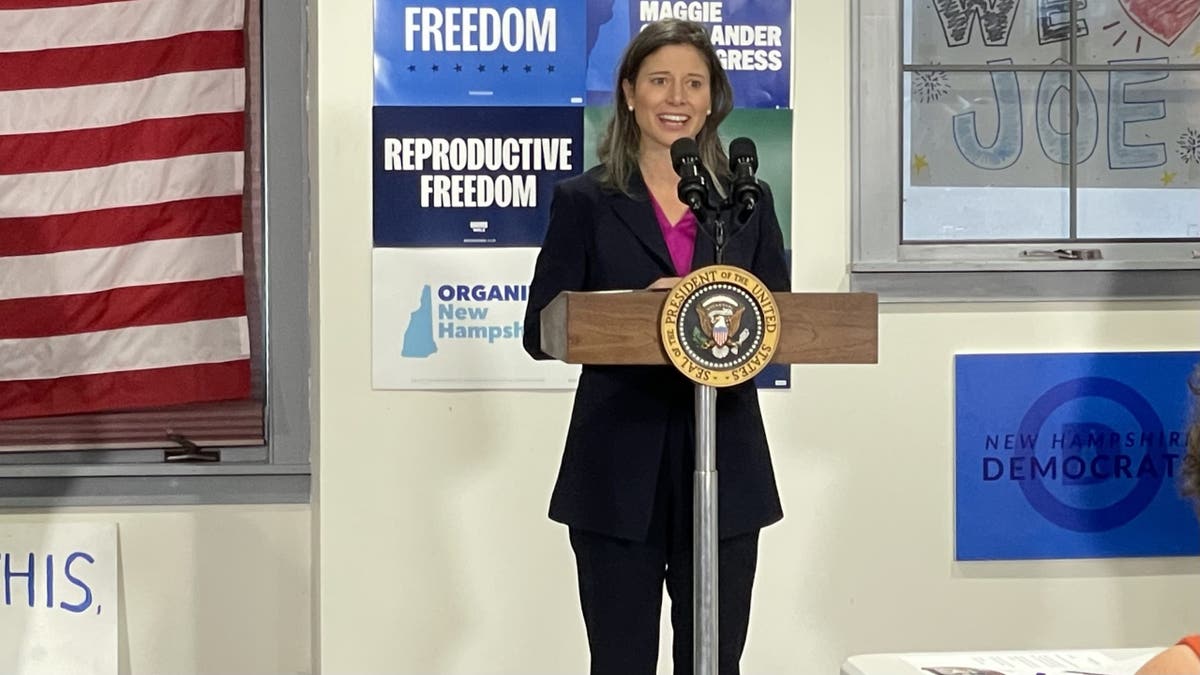
The electoral contest in New Hampshire’s 2nd Congressional District pits Williams against her Democratic opponent, Rep. Maggie Goodlander. The district has long been a focal point of competitive congressional races in New England, reflecting broader national trends where suburban and rural constituencies weigh competing economic visions and foreign policy priorities.
Throughout the campaign, debates have frequently centered on inflation, cost-of-living concerns, reproductive rights, and immigration policy. However, Williams’ integration of national security and foreign espionage into the local discourse has elevated the conversation to encompass international relations and defense strategy. By frequently challenging her opponent to explicitly disavow Marxist and radical socialist figures, Williams seeks to frame the election as a referendum on fundamental governance philosophies rather than traditional partisan disagreements.
Opponents and campaign representatives for Rep. Goodlander, as well as spokespersons for the Democratic Party and the DSA, have largely declined to engage directly with Williams’ specific assertions regarding national security and foreign infiltration, withholding immediate comment on the allegations.
Polling Data and the Rise of Socialist Sentiment in the United States
Williams’ warnings align with broader national discussions regarding shifting public attitudes toward economic and political systems. Recent data from reputable polling organizations, including a Gallup survey indicating that approximately 43% of Americans maintain a positive view of socialism—the highest recorded level since 2010—have intensified debates over the ideological direction of the United States.
This statistical shift has coincided with an increase in the number of self-identified democratic socialists and progressive candidates running for municipal, state, and federal office. Proponents of democratic socialism argue that their platform focuses on strengthening the social safety net, addressing economic inequality, and expanding access to healthcare and education, aligning with social democratic models observed in Western Europe rather than authoritarian state communism.
However, conservative critics maintain that the mainstreaming of socialist rhetoric within American politics diminishes historical awareness of the catastrophic failures and human rights abuses associated with Marxist-Leninist regimes in the twentieth century. Lawmakers from the Republican party have increasingly called for heightened congressional scrutiny regarding security clearances and access to classified information for lawmakers associated with fringe ideological organizations, citing potential counterintelligence concerns.
Implications for the 120th Congress and National Security
As the nation looks toward the convening of the next Congress, the debate over ideological entryism and foreign influence is expected to remain a prominent feature of legislative oversight and committee work. National security experts emphasize that foreign adversaries, particularly state actors like China and Russia, utilize multifaceted influence operations designed to exploit societal divisions, manipulate public opinion, and infiltrate political networks.
While intelligence agencies and bipartisan congressional committees continue to work on defensive measures to counter foreign interference, debates over the domestic drivers of national vulnerability continue to divide lawmakers. Whether Williams’ warnings resonate with a broader electorate outside her district will likely depend on how voters weigh economic anxieties against concerns over foreign threats and ideological extremism.
Ultimately, the discourse surrounding the New Hampshire 2nd Congressional District race underscores a recurring theme in modern American politics: the porous boundary between domestic ideological debates and international grand strategy. As candidates like Lily Tang Williams bring lived experiences from totalitarian regimes into the American legislative arena, the dialogue concerning the preservation of democratic institutions, border integrity, and national security is anticipated to remain a defining element of future electoral cycles.