Inside the Digital Bastion: How Minecraft Became an Unlikely Safe Haven for Global Free Expression

For nearly fifteen years, Minecraft has retained its position as one of the best-selling and most enduring video games in global history without relying on high-end graphics, scripted cinematic plotlines, or complex combat mechanics. Instead, the sandbox title developed by Mojang thrives on limitless exploration, architectural creation, and open-ended experimentation within a virtually infinite procedurally generated universe. For millions of players logging onto multiplayer servers daily, the game offers a profound sense of agency and spatial freedom that is frequently restricted in the physical world.
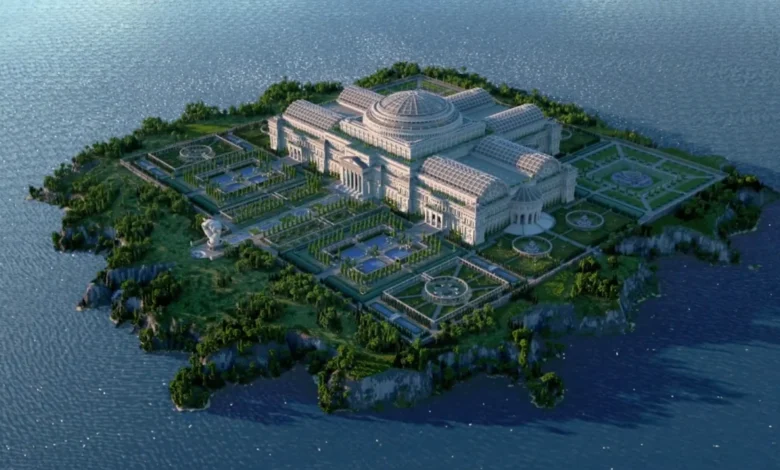
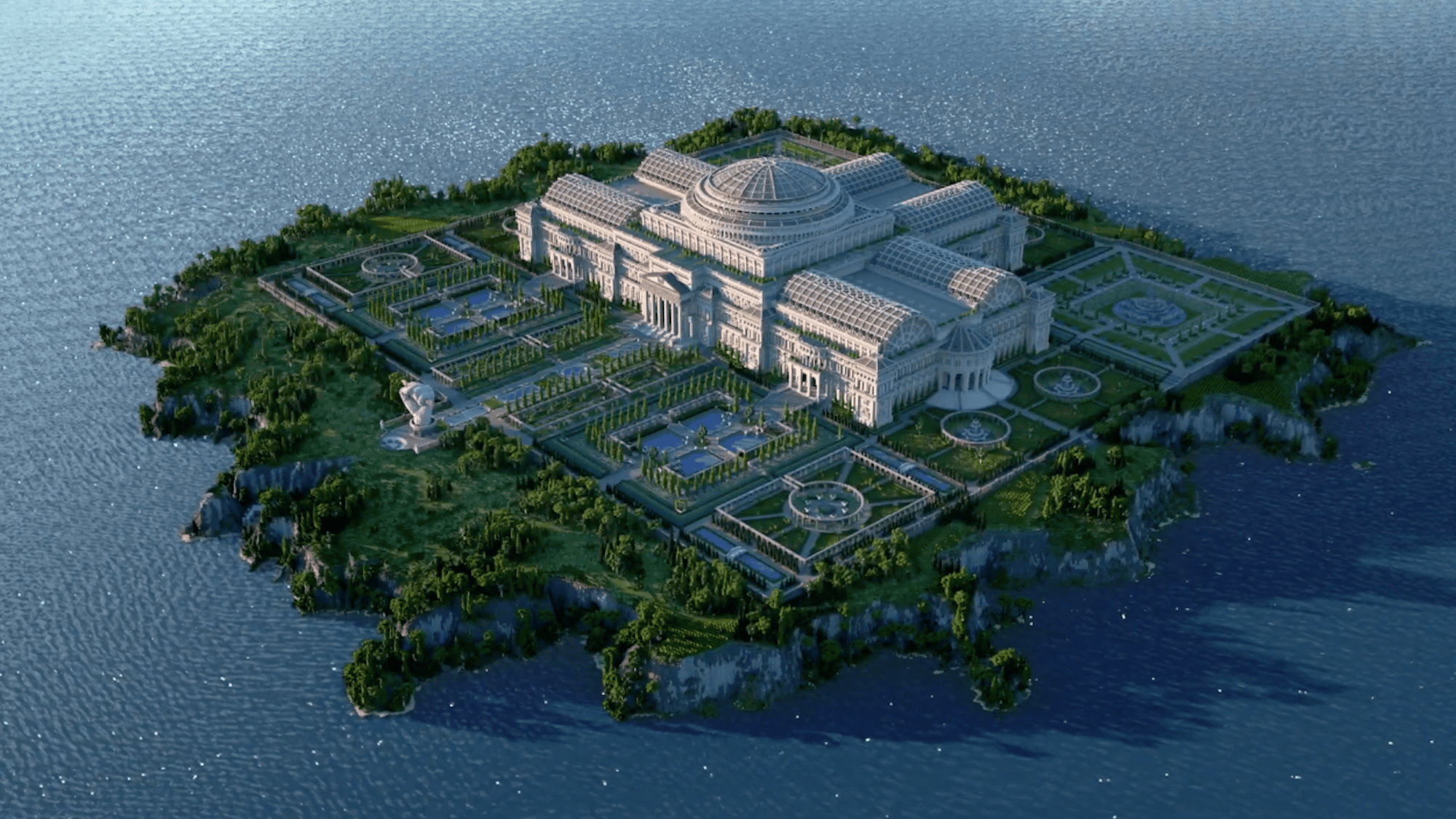
However, this digital autonomy extends far beyond personal entertainment or virtual architectural projects. In 2020, the international press freedom and advocacy organization Reporters Without Borders (RSF), known globally as Reporters Sans Frontières, leveraged this virtual architecture to establish a radical countermeasure against information suppression. Collaborating with the prominent Minecraft design collective BlockWorks, RSF constructed the Uncensored Library—a monumental, neoclassical digital archive designed to permanently house banned essays, journalistic investigations, and books written by authors routinely silenced, imprisoned, or exiled by authoritarian governments.
The Genesis and Architecture of the Uncensored Library
Launched to coincide with World Day Against Cyber Censorship, the Uncensored Library is physically modeled after iconic monumental architecture, drawing heavy inspiration from neoclassical structures like the New York Public Library and the Pantheon. Situated on a meticulously rendered, pixelated island surrounded by water, the sprawling digital building serves as a stark visual metaphor for enlightenment, preservation, and institutional permanence.
Inside the library’s vast halls, visitors can explore distinct wings dedicated to specific nations notorious for restricting press freedom. Within these virtual rooms, books written by silenced journalists are encoded into the game’s book-and-quill mechanics. Because Minecraft features a robust in-game reading system where players can open, read, and even copy text blocks, users can sit at virtual desks and digest suppressed investigative journalism word-for-word. Crucially, because the library operates within the infrastructure of a widely played video game, it bypasses traditional web filtering and state-mandated firewalls that normally block access to independent news outlets in repressive regions.
"Freedom of expression is a fundamental human right, and yet, there are countries that seek to censor their citizens or prevent them from accessing certain information," RSF explains in its official project documentation. "This is why The Uncensored Library exists; a grand digital library meant to combat censorship—and it’s all accessible through Minecraft."
Expanding Horizons: From Global Autocracies to Domestic Press Pressures
Over the six years since its initial launch, the Uncensored Library has evolved from a novel conceptual art project into a globally recognized institution. It regularly trends across social media platforms like TikTok and YouTube, attracting millions of visitors who tour its expansive wings. RSF and BlockWorks provide continuous updates, maintaining an interactive map that guides users through wings representing countries where independent reporting is systematically targeted.
Initially, the repository focused on writers contending with severely repressive regimes across eight nations, including Iran, Saudi Arabia, Russia, Egypt, Vietnam, Mexico, Brazil, and Eritrea. These early exhibits preserved investigations into government corruption, human rights abuses, and state-sanctioned violence—topics that could cost local journalists their freedom or their lives.
In a significant expansion of the project’s scope, RSF added a dedicated section for the United States. This decision followed a series of escalating tensions and pushbacks against the media landscape under the Trump administration, including targeted friction involving major news organizations and outlets such as CNN, MSNBC, and Politico, alongside high-profile clashes between political figures and cultural commentators.
The inclusion of the United States marked a philosophical shift for the project, signaling that systemic threats to journalistic independence are not exclusive to traditional authoritarian regimes. Clayton Weimers, the executive director of RSF North America, addressed the inclusion by noting that suppressing stories often takes subtle, institutional forms rather than overt, heavy-handed state censorship. Weimers emphasized that the decision was intended to remind the global public that fully authoritarian governments do not hold a monopoly on press freedom violations.
Accessibility and Technical Resilience
One of the most remarkable engineering aspects of the Uncensored Library is its accessibility and resilience against cyberattacks and state-sponsored disruption. Traditional digital archives hosted on standard web domains are vulnerable to distributed denial-of-service (DDoS) attacks, domain seizures, and government-enforced Internet shutdowns.

The Uncensored Library circumvents these vulnerabilities by decentralizing its infrastructure. The entire digital world can be experienced in two primary ways: online through dedicated multiplayer servers via the domain visit.uncensoredlibrary.com, or offline by downloading the complete world save file directly to a personal computer.
By allowing users to download the map locally, the project creates an immutable, offline copy that cannot be remotely deleted, altered, or blocked by external actors. Once the map files are saved to a user’s local drive, the library exists independently of central servers, rendering it virtually impervious to institutional takedown requests. This technical redundancy ensures that even if state actors successfully block the server domain within their borders, citizens can still access the materials via physical storage media or peer-to-peer file sharing.
Implications and the Future of Digital Activism
The longevity and sustained relevance of the Uncensored Library highlight a broader trend in modern civil disobedience: the repurposing of commercial consumer spaces for political activism and human rights advocacy. As physical public squares shrink and authoritarian governments increasingly tighten control over traditional digital communications networks, activists are forced to look toward alternative virtual ecosystems.
Video games, with their massive, engaged global user bases and sophisticated user-generated content engines, have effectively become the new frontier for free expression. Platforms like Minecraft offer a unique jurisdictional gray area where international audiences converge, making them fertile ground for democratic education and historical preservation.
As media fragmentation and skepticism toward institutional journalism continue to grow globally, projects like the Uncensored Library serve as both a practical archive and a symbolic warning. They demonstrate that the fight for a free press requires innovation, crossing the boundary between entertainment and activism to ensure that historical truth survives, regardless of how heavily physical or digital borders are fortified.
Related posts: