JetBlue Lowers 2026 Outlook and Reports Wider Third-Quarter Loss While Vowing Return to Profitability by 2027

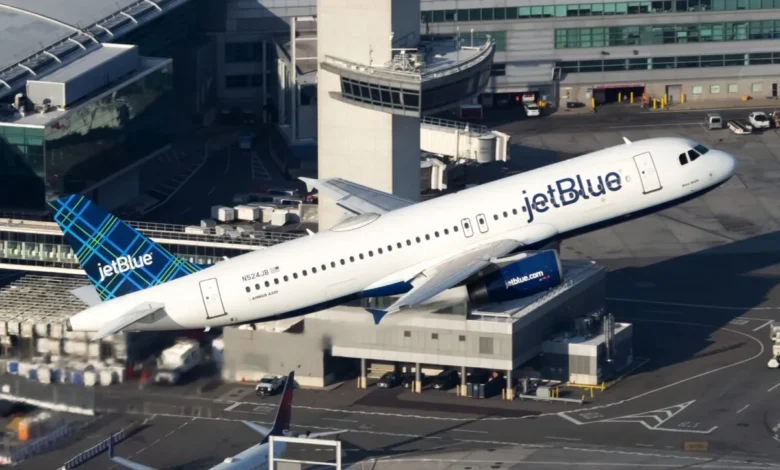
JetBlue Airways has revised its financial outlook downward for 2026 while simultaneously reporting a wider net loss for the third quarter, a dual announcement that initially rattled investors before a sharp rebound in after-hours trading. Despite the near-term headwinds, airline executives emphasized that the carrier remains firmly on track to achieve sustained operating profitability by 2027. The unexpected disclosure—released a day ahead of its originally scheduled morning window—serves as a pivotal moment for the New York-based carrier as it battles severe market skepticism, macroeconomic pressures, and operational transformations designed to shore up its balance sheet.
The release of the financial figures arrived against a backdrop of intense speculative pressure. In the days leading up to the earnings report, JetBlue shares experienced a precipitous slide, dropping more than 20 percent over the course of a single week. Market anxiety had reached a pitch where unverified rumors regarding a potential Chapter 11 bankruptcy filing began circulating among retail and institutional investors. When the regular trading session closed on Monday, the stock was valued at a meager $2.37 per share, reflecting deep-seated fears about the carrier’s liquidity runway and capacity to navigate ongoing industry headwinds.
However, the immediate market reaction to the actual earnings data defied the gloom. In after-hours trading following the report, JetBlue shares surged by more than 10 percent, clawing back a portion of the steep losses accumulated over the preceding week. Wall Street analysts suggested that the relief rally was triggered by the company’s explicit reaffirmation of its long-term strategic guidance, alongside management’s assurances that aggressive cost-cutting measures are already yielding tangible results.
A Closer Look at the Third-Quarter Financial Metrics
The core financial figures released by JetBlue for the third quarter underscored the ongoing difficulties facing low-cost and ultra-low-cost carriers in the post-pandemic aviation landscape. The airline posted a wider net loss compared to the same period in the previous fiscal year, driven by a combination of fluctuating jet fuel prices, lingering operational inefficiencies, and a softer domestic demand environment for leisure travel during the late summer shoulder season.
While specific top-line revenue figures pointed to steady passenger demand, elevated unit costs continued to compress profit margins. JetBlue has struggled with structural cost inflation, including higher labor expenses resulting from newly ratified pilot and flight attendant contracts, as well as maintenance backlogs driven by aerospace supply chain constraints. These supply chain bottlenecks have disproportionately impacted JetBlue due to its reliance on Pratt & Whitney geared turbofan engines, which have forced the grounding of several Airbus aircraft for routine inspections and repairs.
Despite these persistent challenges, executive leadership highlighted several bright spots within the quarterly performance. Unit costs, excluding fuel—a critical metric for evaluating airline operating efficiency—are projected to experience a meaningful step-down in the fourth quarter. This anticipated contraction in non-fuel unit costs is viewed by financial analysts as a critical turning point, indicating that the airline’s internal cost-containment initiatives are finally gaining traction after quarters of runaway inflation.
Reaffirming Long-Term Targets and the JetForward Strategy
Central to JetBlue’s messaging during the earnings release was its unwavering commitment to its multi-year strategic roadmap, known internally as the JetForward strategy. Launched under the leadership of current executives, JetForward focuses on restructuring the airline’s network, optimizing its fleet utilization, enhancing the customer experience on core profitable routes, and ruthlessly trimming unprofitable flying.
JetBlue reaffirmed its ambitious long-term financial guidance, which targets $1 in earnings per share (EPS) and positive free cash flow by 2028. Furthermore, management reiterated confidence that the carrier will achieve sustained operating profitability by 2027. Executives argued that the combination of disciplined capacity deployment, revenue-diversification initiatives like the Paisly vacation packaging platform, and the upcoming cost reductions will bridge the gap between current operational losses and future financial stability.
"Together with continued JetForward execution, this reinforces our confidence in achieving sustained operating profitability in 2027 and delivering at least $1 EPS and positive free cash flow by 2028," company representatives stated in the financial briefing.
Chronology of Events Leading to the Announcement
The weeks leading up to JetBlue’s emergency-adjacent earnings release were characterized by escalating market tension and strategic repositioning by the airline. Understanding the timeline of these events provides crucial context for why the carrier chose to alter its reporting schedule and address solvency rumors head-on.
Mid-September 2025: Macroeconomic indicators begin signaling a cooling in domestic U.S. leisure travel demand, putting downward pressure on airline yields heading into the fall. JetBlue’s management initiates a comprehensive internal review of its 2026 capital expenditure and fleet delivery schedule.
Early October 2025: Unsubstantiated rumors regarding JetBlue’s financial viability begin circulating on social media and financial message boards, fueled by the carrier’s low stock price and broader industry concerns regarding high debt loads in the airline sector.
Mid-October 2025: JetBlue stock drops precipitously, losing over 20 percent of its value in a single week and closing at $2.37 per share on Monday, October XX. The severe market sell-off prompts executive leadership to accelerate the release of its third-quarter financial results to quell market speculation.
Late October 2025 (Monday After-Hours): JetBlue releases its third-quarter earnings report a day ahead of schedule. The report reveals a wider-than-expected quarterly loss and a lowered 2026 outlook, but counters panic by reaffirming 2027 profitability targets and 2028 EPS goals. Investor sentiment stabilizes, pushing shares up over 10 percent in after-hours trading.
Macroeconomic and Industry-Wide Implications
JetBlue’s current struggles are not occurring in a vacuum. The broader U.S. domestic airline industry has experienced a distinct bifurcation in financial performance post-pandemic. While legacy network carriers like Delta Air Lines and United Airlines have reported robust premium revenue and steady profits, low-cost and point-to-point carriers have faced severe margin compression.
Factors contributing to this industry-wide squeeze include overcapacity in certain domestic leisure markets, aggressive fare discounting by competitors, and sharply rising overhead costs. For JetBlue specifically, the environment has been further complicated by the regulatory block of its planned $3.8 billion acquisition of Spirit Airlines. That merger, which was struck down by a federal judge on antitrust grounds, forced JetBlue to abruptly abandon its growth-by-acquisition strategy and pivot entirely toward a grueling standalone turnaround plan.
The decision to lower its 2026 outlook reflects a realistic reappraisal of how long it will take for the domestic market to rebalance and for JetBlue to fully absorb the financial fallout of the blocked Spirit merger. Analysts note that by pushing out its expectations for peak profitability, JetBlue is attempting to manage Wall Street expectations while buying itself the necessary operational runway to execute the JetForward plan without resorting to emergency capital raises that would heavily dilute existing shareholders.
Analyst Reactions and Future Outlook
Reactions from Wall Street equity research analysts have been cautiously nuanced. While many praised management for transparency in addressing the bankruptcy rumors directly, others emphasized that execution risk remains extraordinarily high.
"JetBlue has laid out a credible path toward cost containment and margin recovery, but the margin for error is razor-thin," noted a senior aviation analyst at a major New York financial institution who requested anonymity. "The market overreacted to bankruptcy fears, which created a buying opportunity for speculative investors, but the hard work of lowering unit costs and restoring structural profitability still lies entirely ahead of them."
The primary challenge for JetBlue over the next twelve to eighteen months will be proving that it can successfully execute its capacity cuts and cost-reduction targets while simultaneously preserving customer loyalty and revenue generation. If the airline can deliver on its promise of a meaningful step-down in fourth-quarter unit costs, it will go a long way toward convincing skeptical institutional investors that the worst of the financial storm has passed.
As the aviation industry watches closely, JetBlue remains a high-stakes test case for the viability of the independent mid-tier carrier model in an era dominated by consolidation, inflation, and shifting consumer travel habits. For now, the immediate crisis of confidence has been averted, leaving the airline with a clear, albeit challenging, roadmap toward its stated goal of sustained profitability by 2027.