Southwest Airlines Claims Transformation Is Working Despite Heavy Reliance on Asset Sales and Accounting Gains

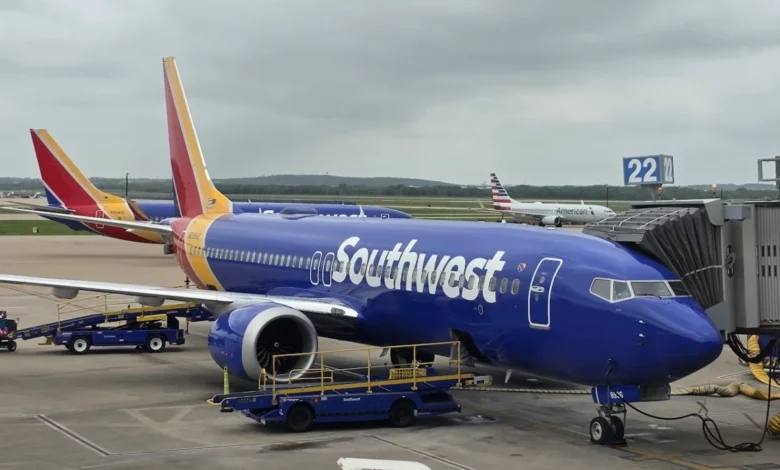
Southwest Airlines has publicly declared that its ongoing corporate transformation is yielding tangible results, pointing to improved earnings in the third quarter of 2026 compared to both the previous quarter and the same period last year. However, a granular analysis of the airline’s financial disclosures reveals a more complex reality: the carrier’s bottom line is being heavily bolstered by one-time asset sales, such as aircraft sale-leaseback agreements, and increased revenue from its co-branded Chase credit card partnership. These non-operational sources account for a significant portion of the company’s $428 million in adjusted pretax profit, raising questions about the underlying health of its core passenger-carrying business.
The Financial Dissection: Operational Profit vs. Accounting Gains
In its latest quarterly report, Southwest recorded $214 million in gains attributed to aircraft and engine transactions. When these non-recurring items are stripped away, the company’s operating profit falls to $238 million, down from the headline-grabbing $452 million figure. This adjustment highlights a stark contrast in margin performance. While Southwest reported an adjusted operating margin of 5.4% for the third quarter, the margin drops to just 2.83% once asset-sale gains are removed. By comparison, competitors such as Delta Air Lines and United Airlines maintain more robust, organic operating margins, suggesting that Southwest is currently playing a different financial game to achieve its year-over-year growth.
The practice of selling aircraft and subsequently leasing them back is a common tactic for airlines seeking to bolster liquidity or balance sheets in the short term. While this provides immediate cash, it creates a long-term obligation in the form of recurring lease payments, effectively trading future cash flow for present-day earnings. Financial analysts have noted that when these accounting credits are added back into the expense column, Southwest’s non-fuel cost growth accelerates from a reported 3.8% to approximately 7.4%, placing it in direct parity with the cost structures of United and Delta. This effectively erodes the narrative that the company is maintaining a unique cost-control advantage.
Comparative Performance: A Market Analysis
The landscape of the U.S. airline industry in late 2026 remains defined by high volatility and shifting consumer behavior. Southwest’s revenue growth of 21.2% in the third quarter significantly outpaced United (17.4%) and Delta (15.7%). However, this growth occurred against the backdrop of a 0.4% reduction in total capacity and a stagnant load factor of 79.8%.
The data indicates that while Southwest is generating more revenue per seat mile—up 21.6%—the actual number of revenue passengers has declined by 3.2%. The airline has pivoted toward longer average journeys, which typically carry higher price points, to offset the decline in passenger volume. This strategy reflects a broader departure from the carrier’s historical model of low-cost, short-haul, high-frequency flights. Whether this shift represents a successful evolution or a forced reaction to mounting competitive pressure remains a subject of intense debate among industry observers.
Chronology of the Transformation Strategy
Southwest’s strategic pivot did not happen in a vacuum. The timeline of its transformation can be traced back to early 2025, when management began signaling a departure from its "no-bag-fee" ethos and traditional open-seating policy.
- March 2025: Southwest held an investor presentation where it explicitly excluded fleet-transaction gains from its operating-profit targets, aiming to provide transparency regarding the health of its underlying business.
- September 2025: Leadership emphasized a new revenue framework, projecting that bag fees and assigned seating would contribute over $2 billion in annual operating profit.
- Late 2025/Early 2026: Implementation of "Basic Economy" fare structures began to roll out, attempting to compete more directly with the tiered pricing models of legacy carriers like United and American Airlines.
- October 2026: Southwest reported its Q3 earnings, beating Wall Street’s per-share expectations (66 cents vs. 57 cents) but simultaneously lowering its full-year earnings guidance from a range of $3.25–$4.25 down to $2.60–$2.85.
The lowering of the full-year outlook serves as a sobering reminder of the macroeconomic headwinds facing the entire sector, including rising fuel costs and an increasingly price-sensitive consumer base.
The Role of Ancillary Revenue and Credit Card Partnerships
A central pillar of the "new" Southwest is the aggressive pursuit of ancillary revenue. In previous years, the airline’s internal research suggested that introducing bag fees would result in a net loss of $300 million due to the erosion of brand loyalty and passenger defection. However, current leadership has set aside these earlier projections, arguing that modern booking channels and shifting market dynamics have made the implementation of fees and assigned seating a necessity for profitability.
Furthermore, the Chase credit card deal has become an indispensable engine for the airline’s financials. By recognizing revenue from these partnerships more immediately rather than deferring it against future travel, Southwest has artificially smoothed its earnings volatility. While credit card revenue is a legitimate and highly lucrative component of the modern airline business model, its current role as a primary driver of year-over-year improvement suggests that the "transformation" is as much about financial engineering as it is about operational excellence.
Broader Industry Implications and Outlook
The implications of Southwest’s transformation are profound. For decades, the airline served as the industry’s outlier—a low-cost, high-service carrier that eschewed the complex, fee-laden structures of its legacy peers. As it moves closer to the operational models of its competitors, it risks losing the brand equity that defined its success for half a century.
If the current transformation succeeds, Southwest will essentially complete its metamorphosis into a legacy carrier, distinguished primarily by its corporate culture rather than its business model. However, the path to this transition is fraught with risk. The airline is currently navigating a period where it must simultaneously invest in new infrastructure, manage rising labor and fuel costs, and convince a legacy customer base to accept a product that is becoming increasingly indistinguishable from its competitors.
Looking ahead to 2027, the financial comparisons will become cleaner as the "old" and "new" models begin to converge. Analysts expect that by then, the impact of one-time asset sales will diminish in the reporting, forcing the airline to rely entirely on its ability to sell seats, bags, and seats with extra legroom in a highly competitive market.
Ultimately, Southwest’s Q3 2026 results represent a snapshot of a company in the midst of a high-stakes transition. While the top-line revenue growth is impressive, the reliance on accounting maneuvers and credit card windfalls suggests that the true test of the airline’s strategy—sustainable, organic, and profitable growth—has yet to be fully realized. As Southwest accelerates its transformation, the industry will be watching closely to see if the carrier can retain its unique identity while operating under the fiscal realities of a modern, full-service airline.