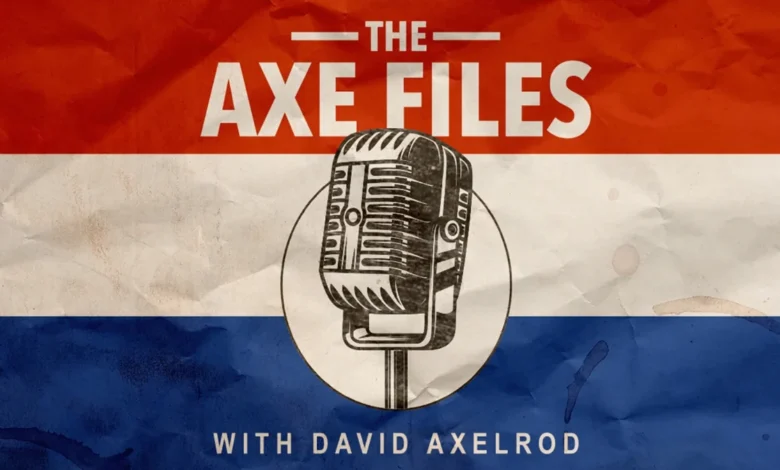
The conclusion of CNN’s acclaimed political podcast, The Axe Files, hosted by veteran strategist and commentator David Axelrod, marks the end of an influential era in political journalism and deep-dive interviewing. Over the course of nearly a decade, the program served as a staple for political junkies, policymakers, and academics seeking to peer past the carefully curated talking points of modern political discourse. As the show winds down with its milestone 605th episode featuring U.S. Ambassador to Japan Rahm Emanuel, media analysts and political observers alike are reflecting on the legacy of a podcast that reshaped how voters and insiders understand the human element behind the machinery of American governance.
Main Facts and the Final Sign-Off
The final episode of The Axe Files, released on December 19, 2024, featured a poignant and candid conversation between host David Axelrod and his longtime friend, outgoing U.S. Ambassador to Japan Rahm Emanuel. Emanuel, widely known throughout his career for his combative style and sharp political acumen as White House Chief of Staff and Mayor of Chicago, reflected on his tenure in Tokyo. Despite initial skepticism regarding how his characteristically brash demeanor would mesh with a diplomatic culture rooted in immense social deference and order, Emanuel successfully navigated the geopolitical currents of the Indo-Pacific region.
Throughout the 65-minute interview, Emanuel discussed the delicate balance of power between the United States and China, the escalating geopolitical tensions in the Middle East, the historical trajectory of the tumultuous 2024 presidential election, and his impending return to domestic life. His appearance capped off a robust final stretch of episodes that addressed the tectonic shifts in American politics following the November 2024 elections.
The closure of the podcast brings to a close a unique partnership between Axelrod—founder and director of the University of Chicago Institute of Politics and senior political commentator for CNN—and the network’s digital audio division. For years, the production team provided listeners with unvarnished, long-form dialogues that deliberately rejected the fleeting cadence of 24-hour cable news.
Chronology and Historical Context
Launched in 2015 as the presidential election cycle began to heat up, The Axe Files was conceived as an antidote to the soundbite-driven culture of contemporary political media. Axelrod, drawing upon his decades of experience as a prominent Democratic strategist—most notably masterminding Barack Obama’s successful 2008 and 2012 presidential campaigns—utilized his extensive network of contacts to bring heavy-hitters from across the political spectrum to the microphone.
The show quickly established a format that prioritized biography over immediate news cycles. Guests were routinely asked about their childhoods, formative ideological awakenings, and career-defining failures before pivoting to contemporary policy and electoral strategy. This approach allowed the podcast to weather multiple historic political epochs, including the 2016 election of Donald Trump, the COVID-19 pandemic, the 2020 election of Joe Biden, and the unprecedented dynamics of the 2024 race.
Reaching its 600th episode milestone in late October 2024, the podcast featured a special crossover appearance by CNN anchor Anderson Cooper. Cooper interviewed Axelrod about the origins of the series, the evolution of political interviewing, and the overarching lessons Axelrod gleaned from sitting down with hundreds of lawmakers, campaign managers, journalists, and cultural figures. Just weeks later, as the dust settled on the 2024 general election, the show pivoted swiftly to post-mortems, inviting key architects from both sides of the aisle to dissect the results.

Supporting Data and Key Final Episodes
In its final months, The Axe Files maintained its signature breadth of perspective, capturing the immediate aftermath of a historic electoral shift through the eyes of those who shaped it:
- Episode 604 (December 12, 2024) – Scott Jennings: The conservative commentator and CNN contributor sat down to discuss his deep roots in Republican politics, his early days in rural Kentucky, his mentorship under Senator Mitch McConnell, and the imperative for conservative viewpoints to maintain a robust presence within mainstream media spaces.
- Episode 603 (December 5, 2024) – Representative Marie Gluesenkamp Perez: The moderate Democratic congresswoman from Washington State reflected on her working-class background running an auto repair shop, her skepticism toward insular Washington political staffers, and the urgent lessons Democrats must learn regarding cultural humility to retain working-class voters.
- Episode 602 (November 21, 2024) – Chris LaCivita: Fresh off managing Donald Trump’s successful 2024 presidential campaign, the veteran Republican operative and former Marine discussed his hard-nosed strategic philosophy, the strategic evolution of Trump’s campaigns from 2016 to 2024, and the impact of contentious cultural issues on the electorate.
- Episode 601 (November 14, 2024) – John Anzalone: Prominent Democratic pollster John Anzalone offered an unvarnished critique of modern polling methodologies, addressed the pitfalls of Kamala Harris’s presidential campaign, and outlined a roadmap for the Democratic Party to rebuild its economic messaging around the American Dream.
- Episode 598 (October 17, 2024) – John King: CNN anchor John King discussed his multi-state reporting venture, "All Over the Map," detailing how the realities of suburban and rural voters often diverge sharply from the orthodoxies of the Washington, D.C. political establishment.
Official Responses and Industry Legacy
While CNN and David Axelrod framed the conclusion of The Axe Files as a natural termination point rather than a casualty of corporate restructuring, media critics have been quick to eulogize its unique space in the audio landscape. In an era where political podcasts frequently tilt toward partisan cheerleading or reactionary outrage, Axelrod maintained a demeanor of curious skepticism and professional courtesy, often finding common ground with ideological adversaries without sacrificing rigorous cross-examination.
Political scientists and journalism educators frequently cited the podcast as a masterclass in qualitative political analysis. By treating guests as complex individuals rather than mere avatars of political parties, the show cultivated an environment where conservative firebrands like Chris LaCivita and Scott Jennings could converse candidly with a premier architect of the modern Democratic Party.
Furthermore, the podcast served as an essential extension of the University of Chicago Institute of Politics’ mission to foster civil discourse and practical engagement among students and the broader public. Axelrod’s ability to transition seamlessly from a high-stakes television news analyst to an inquisitive, retrospective interviewer ensured that the podcast remained essential listening for practitioners on both sides of the aisle.
Broader Impact and Implications for Political Media
The departure of The Axe Files leaves a noticeable void in the ecosystem of long-form political journalism. As audiences increasingly fragment into echo chambers tailored to specific ideological niches, podcasts that intentionally bridge political divides and prioritize historical context are becoming scarcer.
The success and longevity of Axelrod’s project proved that there remains a hungry, engaged audience for thoughtful dialogue that refuses to treat politics merely as a blood sport. Whether future media ventures will successfully replicate this balance of insider access and reflective inquiry remains to be seen. However, as Washington prepares for a new administration and a shifting political landscape, the archive of 605 episodes stands as a comprehensive audio history of American politics during one of its most transformative decades.
For listeners who tuned in weekly to hear Axelrod utter his signature opening remarks, the conclusion of the series is undeniably bittersweet. Yet, the foundational ethos of The Axe Files—that understanding the opposition requires genuine listening—remains an enduring legacy for the future of political reporting.