Supreme Court Weighs Colorado Climate Accountability Case in Landmark Constitutional Battle

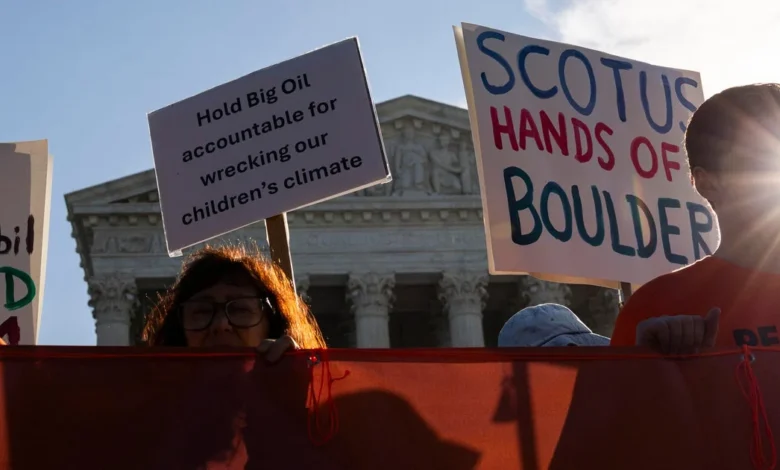
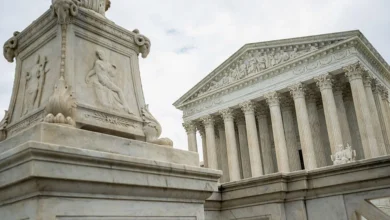
The Supreme Court on Monday grappled with a complex dispute involving an effort by the city and county of Boulder, Colorado, to hold major energy companies accountable for the localized financial impacts of global climate change. Eight of the court’s nine justices convened for nearly two hours of oral arguments in the case of Suncor Energy v. Commissioners of Boulder County, a pivotal showdown that could determine the scope of state-level tort litigation against the fossil fuel industry. Justice Samuel Alito recused himself from the proceedings without providing an official reason, though his 2025 financial disclosures reveal individual holdings in energy firms ConocoPhillips and Phillips 66. This vacancy leaves the court in a position where a 4-4 deadlock remains a distinct possibility; should that occur, the lower court’s ruling—which allowed the litigation to proceed—would remain in effect.
The core of the legal contest centers on whether Boulder’s claims against Exxon Mobil and Suncor Energy can be adjudicated in state courts or if they are preempted by federal environmental statutes, specifically the Clean Air Act. While the defendants argue that the case represents an overreach of state authority into inherently federal and international domains, the plaintiffs contend that their lawsuit is a narrow, fact-specific tort claim focused on deceptive marketing practices rather than a regulatory attempt to dictate national emissions standards.
A Chronology of the Legal Battle
The current Supreme Court hearing is the culmination of an eight-year legal odyssey that began in 2018 when Boulder County, along with the city of Boulder, filed its initial complaint in state court. The lawsuit alleged that Exxon and Suncor—a company that operates two major oil refineries in Colorado—engaged in the systematic, deceptive marketing of fossil fuel products while possessing internal knowledge regarding the environmental consequences of their use.
Following the 2018 filing, the energy companies attempted to remove the litigation to federal court, a common defense strategy in climate-related tort suits. However, federal courts repeatedly remanded the case back to the Colorado state judiciary. In 2024, the Colorado Supreme Court affirmed the right of the plaintiffs to pursue their claims under state law, prompting the energy companies to appeal to the U.S. Supreme Court. The resulting hearing in October 2026 represents the highest level of scrutiny the case has faced to date, with a final ruling anticipated by the summer of 2027.
Constitutional Arguments and Judicial Scrutiny
During the oral arguments, Justice Brett Kavanaugh signaled significant skepticism regarding the state’s role in adjudicating issues of interstate pollution. Citing a line of four Supreme Court precedents dating back to 1972, Kavanaugh argued that the framework for handling interstate environmental impacts is firmly established under federal law. "We don’t have to reinvent the wheel, because we’ve said this multiple times and Congress, presumably when doing the Clean Air Act and doing the Clean Air Act amendments, has relied on this court’s precedents establishing that this kind of pollution is a federal-law matter," he remarked.
The Trump administration has formally aligned itself with the energy sector, filing briefs that characterize Boulder’s litigation as an "egregious" exceedance of constitutional limits. Solicitor General representatives argued that allowing such a lawsuit to proceed would empower state courts to effectively regulate global energy policy, a power they contend is reserved for the federal government.
Conversely, Justice Ketanji Brown Jackson questioned the procedural posture of the case, suggesting that the Supreme Court’s intervention might be premature. She pointed to a lack of sufficient evidence regarding whether the specific theories proposed by the energy companies—that the case is inherently federal—are fully applicable to the nuances of the Boulder complaint.
Parallels to Historical Tort Litigation
Justice Elena Kagan provided a crucial analytical lens during the proceedings, drawing direct comparisons between the Boulder lawsuit and historical precedents involving the tobacco industry in the 1990s and the pharmaceutical industry’s response to the opioid epidemic. In those instances, plaintiffs successfully utilized state tort laws to hold corporations accountable for deceptive marketing and the failure to disclose known risks.
Kevin Russell, representing Boulder, emphasized this distinction. He argued that the lawsuit is not an attempt to regulate carbon emissions, but rather a request for the defendants to bear their "fair share" of the local costs associated with climate change—such as infrastructure damage from extreme heat and wildfires—which he claims were exacerbated by the defendants’ conduct. "Under our deception theory, they can continue to produce as much fossil fuels as they like… when consumers are properly informed about the consequences of that decision," Russell stated.
Broader Implications for Municipal Litigation
The potential impact of this case extends far beyond the borders of Colorado. Kannon Shanmugam, the lead counsel for Exxon and Suncor, warned the justices of the "floodgate" effect, noting that there are approximately 90,000 municipalities across the United States. Should the Supreme Court rule in favor of Boulder, Shanmugam argued that it would invite a tsunami of similar lawsuits, each seeking potentially catastrophic damages from energy producers.
Chief Justice John Roberts appeared to validate this concern, asking, "How would you think that will work out on the ground?" if thousands of jurisdictions were to pursue similar claims. However, the Chief Justice also offered a counterpoint, noting that state courts have historically been permitted to handle mass tort litigation with broad, interstate effects, such as complex pharmaceutical or internet-based consumer protection cases. He questioned what, specifically, distinguishes the climate change context from those accepted legal avenues.
Economic and Environmental Context
The data underpinning these local lawsuits is substantial. Municipalities like Boulder are increasingly reporting significant budget strains due to climate-related events. Climate data indicates that the Western United States has seen a marked increase in the frequency of "megafires" and record-breaking heat waves over the last decade, events that local governments argue are linked to the global rise in greenhouse gas concentrations.
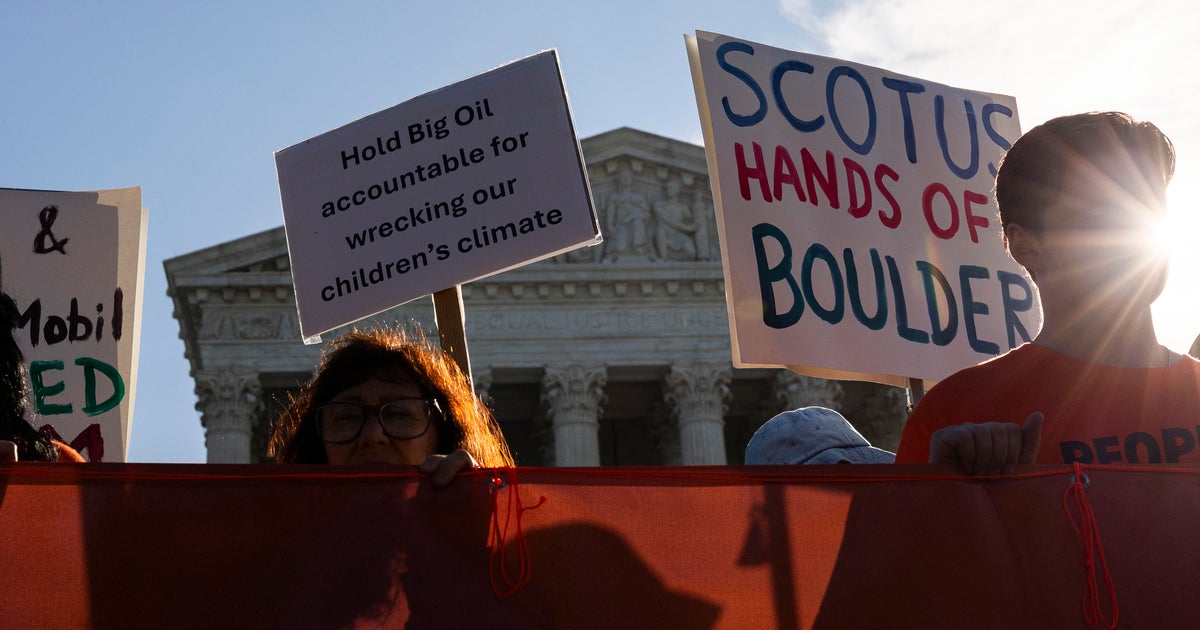
Boulder Mayor Aaron Brockett, speaking outside the Supreme Court after the rally, framed the issue as an existential one for his constituents. "People care very much about climate change in Boulder. They recognize the existential threat that it provides to our society," Brockett said. The city argues that the current legal system provides no other mechanism for local taxpayers to recoup the costs of adapting to these environmental realities.
The Path Forward
The Supreme Court’s final decision will be a watershed moment for environmental law in the United States. The justices are effectively choosing between two distinct interpretations of the federalist system:
- The Federal Preemption Model: This view, supported by the energy companies, posits that the complex, global nature of climate change necessitates a single, federal approach to regulation and litigation, preventing a "patchwork" of state-level rulings.
- The State Tort Model: This view, supported by the plaintiffs, maintains that states and local governments retain the traditional authority to seek damages for tortious conduct—specifically, fraud and deceptive marketing—that causes local harm, regardless of where the underlying corporate activity took place.
If the court issues a 4-4 tie, the victory for Boulder would be limited in scope, as it would not set a nationwide Supreme Court precedent, likely leaving the door open for future litigation in other circuits. A majority ruling, however, would definitively set the boundaries for climate-related litigation for years to come. As the legal community awaits the 2027 decision, the case remains a stark reminder of the intensifying conflict between local government attempts at accountability and the established structures of national energy policy.