ETH Zurich Researchers Unveil Autonomous Robotic Hand Capable of Bipedal Fingertip Walking and Complex Object Manipulation

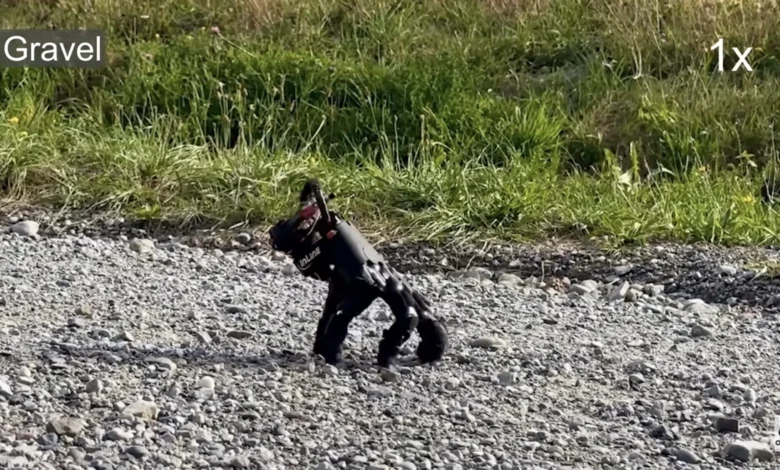
Engineers at the Soft Robotics Lab at ETH Zurich have introduced a breakthrough robotic appendage capable of independent mobility, balancing, and advanced interaction with human-designed environments. Inspired by the famous disembodied character from popular culture, the newly developed robotic hand moves far beyond traditional stationary manipulation tasks. Weighing just 1.8 pounds, the device can balance on its fingertips, crawl across 14 distinct indoor and outdoor terrains, recover independently from falls, and perform delicate tasks such as typing on a keyboard and playing puzzle games.
While the concept of a walking robotic hand offers undeniable novelty, the underlying engineering represents a significant leap forward in robotics, particularly regarding the control of asymmetrical morphologies. Human hands—and standard humanoid robotic replicas—are defined by uneven finger lengths and opposing thumbs. While this asymmetry is essential for grasping diverse tools, it poses a profound challenge for upright locomotion. Previous attempts to create walking robot hands required structural modifications, forcing engineers to equalize finger lengths to maintain stability. The ETH Zurich team successfully bypassed this limitation, preserving the natural asymmetry of a standard humanoid hand while unlocking dynamic locomotion through advanced reinforcement learning algorithms.
Chronology and Development of the Autonomous Hand
The project began as an investigation into overcoming the constraints of robot morphology. Historically, robotic locomotion has focused primarily on bipedal or quadrupedal systems with symmetrical designs, such as humanoid legs or robotic dogs. Robotic hands, conversely, have remained anchored to wrists or mounted on fixed laboratory arms, limited to grasping, sorting, and assembling objects.
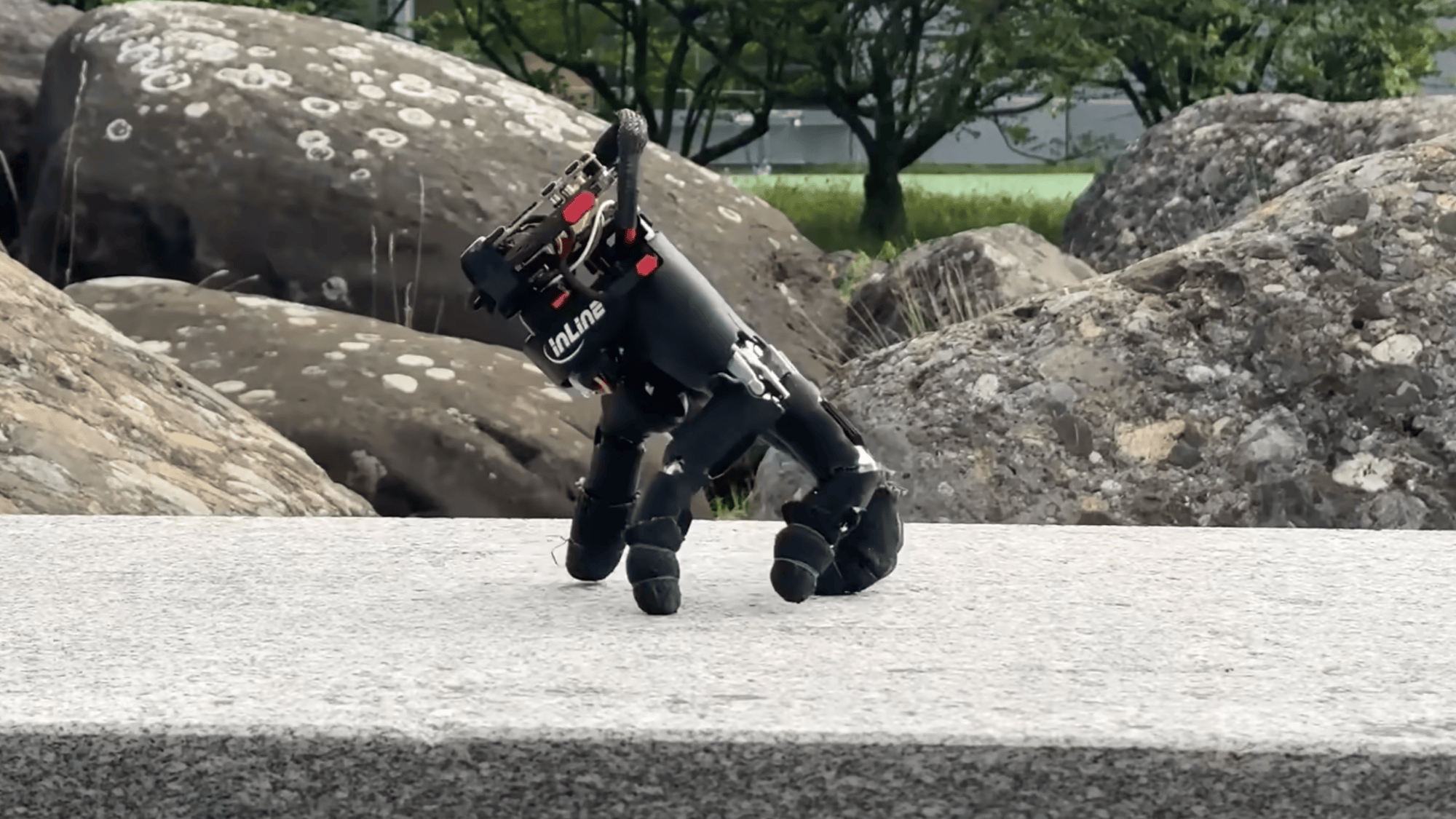
To challenge these boundaries, the research team acquired an off-the-shelf mechanical hand designed for humanoid robots, featuring five fully articulated fingers and 20 actuated joints. Recognizing that mobility required onboard processing and power, engineers mounted a compact battery, an array of inertial motion sensors, and a miniature computer to the dorsal side of the hand, bringing the total weight to 1.8 pounds.
Because traditional programming cannot easily account for the chaotic physics of balancing an asymmetric multi-jointed structure on its fingertips, the team utilized simulation-based reinforcement learning. In this virtual environment, the control software was subjected to thousands of trial-and-error iterations, receiving positive reinforcement only when the hand successfully maintained equilibrium. Crucially, the training regime assigned unique timing and target positions to each individual finger, allowing the software to dynamically coordinate the asynchronous movement of fingers varying in length.
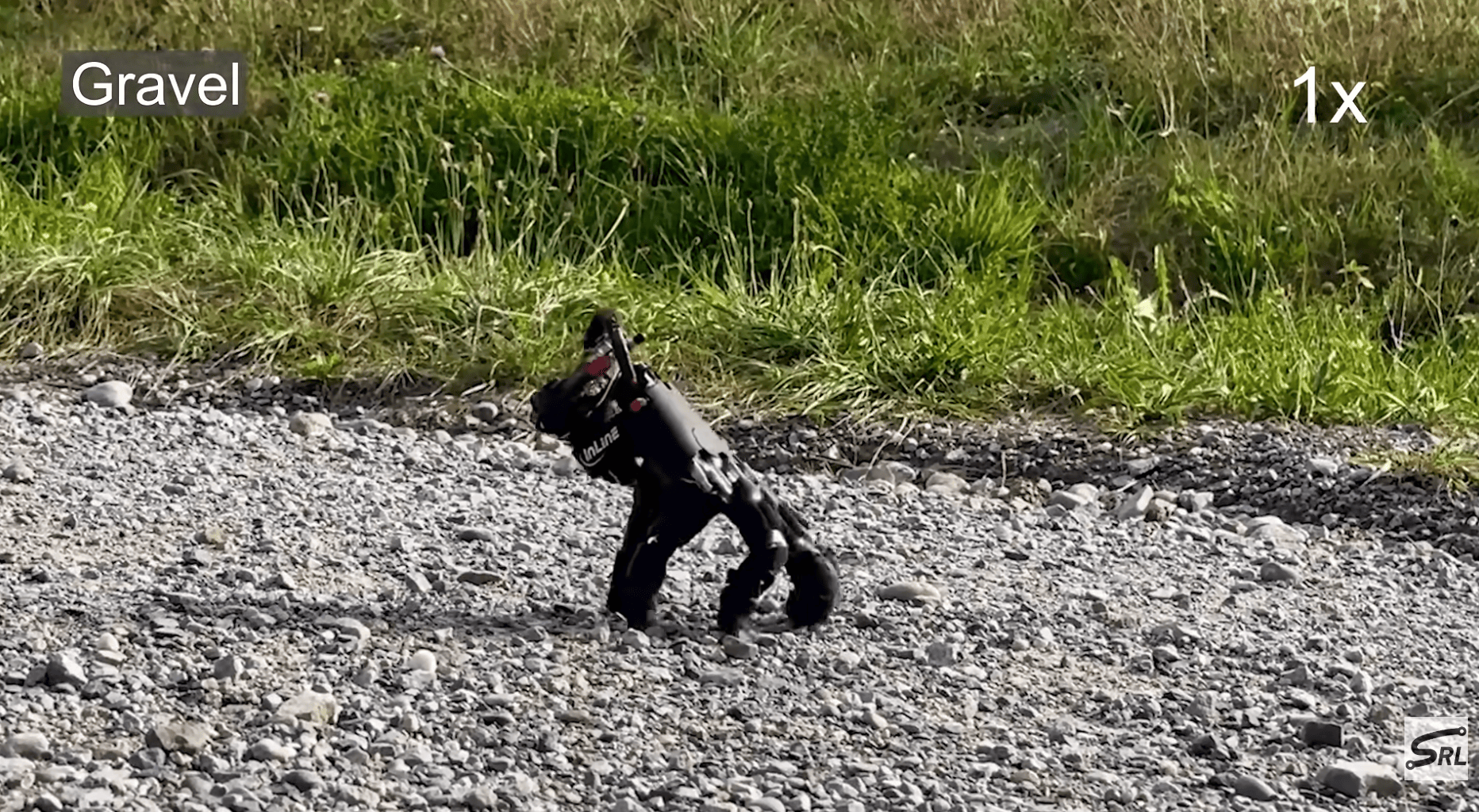
Following successful simulation trials, the team transitioned the hardware to physical testing. The hand underwent rigorous evaluation across 14 diverse surfaces, including gravel, grass, metal grates, and standard indoor carpeting. In each scenario, the appendage demonstrated a spider-like, springy gait, utilizing rapid micro-adjustments in its finger joints to prevent tipping.
Precision Manipulation and Real-World Testing
Beyond basic locomotion, the research team tested the hand’s capacity for fine motor control while maintaining balance. By resting on a subset of its fingers, the robot successfully manipulated small objects, pushing a cube across a flat surface with controlled precision.

In perhaps the most striking demonstration of its dexterity, the hand was tasked with typing characters on a standard computer keyboard. Operating independently, it successfully struck the correct keys 29 out of 32 times—a metric of accuracy that rivals or exceeds human proficiency in certain typing tasks. Furthermore, the robot successfully played Sokoban, a classic puzzle-solving video game, by executing precise sequences of directional arrow key presses.
Another critical operational milestone was the hand’s self-recovery mechanism. When tipped over or placed in a flat, resting position on a surface, the robot utilized its articulated joints to leverage its fingers, lifting its main chassis back into an upright, ready-to-walk posture without external human intervention.
Broader Industry Context and Humanoid Robotics Integration
The introduction of a mobile robotic hand arrives at a pivotal moment for the commercial robotics industry. Major technology and automotive corporations are aggressively developing bipedal humanoid robots intended for deployment in structured human environments, such as manufacturing plants, automated warehouses, and eventually residential homes.
Companies including Tesla and Figure are refining general-purpose bipeds designed to work alongside human labor. Concurrently, large-scale industrial adoption is accelerating; notably, Toyota announced plans to invest billions annually starting in 2028 to integrate hundreds of thousands of robots into its manufacturing facilities, emphasizing collaborative workflows between human operators and robotic systems. Despite these advancements, contemporary humanoid robots frequently encounter physical bottlenecks, including limited reach, heavy power requirements, and high operational costs.
According to the ETH Zurich researchers, the development of modular mobility for robotic appendages could directly address spatial limitations in confined workspaces. In theoretical industrial or disaster-response applications, a humanoid robot operating in a cramped or obstructed environment could detach its hand to crawl through narrow gaps, retrieve a misplaced tool or component, and return it to the main chassis.
Furthermore, the algorithms developed to stabilize an asymmetric hand during bipedal walking offer immediate applications for stationary robotic manipulators. Enhancing individual finger coordination and balance control directly translates to improved dexterity, allowing future robots to handle delicate, uniquely shaped objects with greater reliability.
Implications and Future Outlook
While the research paper currently exists as a preprint awaiting formal peer review, the technological implications extend far beyond academic curiosity. By demonstrating that complex, uneven mechanical structures can be successfully trained to navigate unstructured terrain using reinforcement learning, the ETH Zurich team has opened new avenues for biomimetic design.
As commercial entities scale up the production of humanoid robots for commercial and domestic markets, the demand for adaptable, highly dextrous end-effectors will continue to rise. Whether disembodied crawling hands become a standard feature of future industrial robotics remains to be seen, but the underlying control frameworks promise to make next-generation robotic systems significantly more versatile, resilient, and capable of operating seamlessly within spaces originally engineered exclusively for humans.