Paramount and Warner Bros Discovery Finalize $110 Billion Mega-Merger as Industry Leaders Navigate Seismic Shifts in Global Entertainment

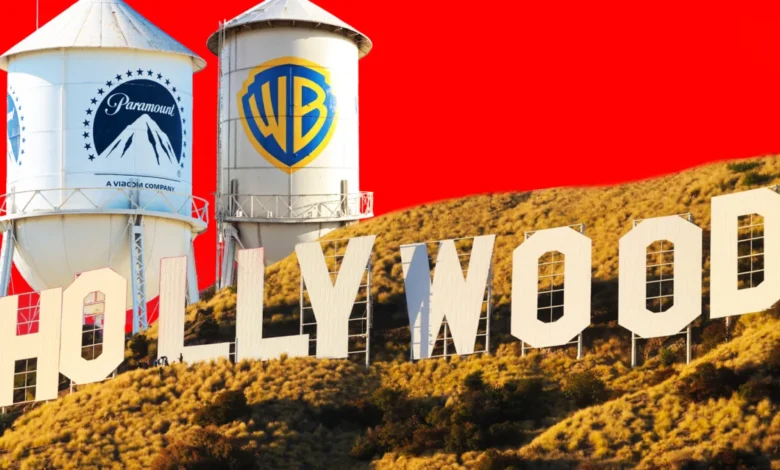
The global entertainment landscape has been irrevocably altered following the official regulatory clearance and finalization of one of the largest corporate transactions in media history. The staggering $110 billion mega-merger uniting Paramount and Warner Bros. Discovery (WBD) has cleared its final legal and governmental hurdles, culminating in the formal establishment of a consolidated media titan set to officially launch its unified operations.
The swift and decisive conclusion to the transaction caught many industry analysts off guard. Initial projections from legal and financial experts suggested that David Ellison, spearheading the acquisition, would face protracted scrutiny and fierce opposition from international regulatory bodies across the United Kingdom and continental Europe, alongside antitrust probes led by dozens of United States state attorneys general. However, a decisive legal settlement paved the way for the merger to be waved through, shifting the industry focus at lightning speed toward immediate executive restructuring, leadership appointments, and broader operational integrations.

Executive Shakeups and C-Suite Restructuring
As the dust settles on the historic union, the newly formed entity has waste no time implementing a streamlined leadership structure. The C-suite winners and losers became apparent almost immediately following the regulatory greenlight. Among the high-profile departures is Cindy Holland, whose exit from Paramount-WBD was confirmed amid internal restructuring. Industry insiders widely anticipate that her streaming responsibilities across the combined behemoth will be assumed by HBO chief Casey Bloys, signaling a strategic pivot toward the operational stability and prestige traditionally associated with the HBO brand.
In a parting communication to staff, Holland offered a pointed observation regarding the corporate realignment, hinting at Ellison’s strategic emphasis on optimizing for HBO’s established model—a remark widely interpreted as a barbed nod to her incoming successor. Concurrently, international strategy remains a focal point, with long-serving executives expected to coordinate regional output. Gerhard Zeiler retains oversight of international markets for the legacy Warner assets, while Kevin MacLellan manages parallel responsibilities for Paramount’s overseas footprint. Sarah Aubrey is expected to remain a key pillar alongside Bloys as the company evaluates its international streaming footprint beyond the domestic U.S. market.
Adding a surprise element to the executive shuffle, Ynon Kreiz—the Israeli-born former CEO of Endemol Group and Mattel—was officially named co-CEO of the newly minted Paramount-Warner entity. Sharing executive leadership duties directly with David Ellison, Kreiz brings decades of multinational content production and global brand management expertise to the highest echelon of the company. Rumors briefly circulated regarding a separate international leadership post before his appointment as co-chief was solidified, underscoring the aggressive talent acquisition strategy driving the new conglomerate.

Artificial Intelligence Dominates Discourse at RTS London
While corporate boardrooms grappled with multi-billion-dollar transactions, the broader television and film sectors converged in the British capital for the annual Royal Television Society (RTS) London Convention. Against a backdrop of widespread industry contraction—marked by workforce reductions across the BBC and Channel 4, alongside concurrent consolidation waves involving Sky-ITV and Banijay-All3Media—the dialogue quickly centered on the rapid integration of artificial intelligence into traditional production pipelines.
The convention spotlighted starkly contrasting philosophies regarding automated technologies. Kelly Day, Prime Video’s head of international operations, delivered an unabashed defense of artificial intelligence, describing the technology not as an existential threat to traditional artistry, but rather as "creativity unleashed." Day’s remarks underscored a growing corporate appetite among major streamers to harness machine learning for workflow optimization, localization, and content generation.
Conversely, the proposition drew immediate skepticism from traditional creators and public service broadcasters. BBC Director-General Matt Brittin surprised attendees by recounting an encounter with a fully AI-generated episode of the iconic science-fiction franchise Doctor Who, offering a cautiously positive assessment that the output was "pretty good." The remark reportedly prompted audible unease among staff commissioners present in the auditorium. The tension between commercial adoption and creative preservation was further highlighted by acclaimed creator Steven Knight, known for his vocal opposition to automated writing tools. Knight, who was on hand to discuss his expanding slate for Amazon MGM—including his writing duties for the forthcoming James Bond cinematic project—navigated intense media speculation regarding the identity of the next 007 actor with characteristic composure, deflecting persistent inquiries with firm professionalism.

Institutional Shifts and the Evolution of Fandom
Beyond corporate mergers and technological disruptions, international industry gatherings continued to map out the future of theatrical distribution and independent filmmaking. During a high-profile keynote session at the Zurich Film Studio, Academy Chief Executive Bill Kramer joined Mattel Studios President Robbie Brenner and Sony Pictures Classics co-president Michael Barker to examine the shifting paradigms of audience engagement.
The panel dissected the unprecedented breakout success of grassroots, digital-first intellectual properties such as Obsession and Backrooms, which have successfully bridged the gap between independent internet creators and mainstream cinematic distribution. Kramer emphasized that these phenomena reflect a fundamental democratization of audience loyalty. According to the Academy head, the traditional boundaries separating studio-backed franchises from independent digital productions are dissolving, driven primarily by the sheer potency of modern fandom, irrespective of its origin.
Meanwhile, international co-productions and localized content strategies continue to yield formidable global breakouts. French broadcaster TF1’s art-heist drama series Cat’s Eyes—adapted from a cult 1980s Tokyo-set manga—has emerged as a benchmark for cross-border television success, following a high-performing freshman run on Hulu in the United States and securing an early renewal for its second season.

Global Industry Roundup and Market Developments
The broader entertainment economy reflected continued volatility and strategic repositioning across global markets:
- Cyber-Thriller Casting: Production is advancing on C.L.A.Y., an ambitious psychological cyber-thriller directed by Simon Afram, featuring an ensemble cast comprising Nicolas Cage, Michael Sheen, Jordi Mollà, Emilio Sakraya, and Adrian Topol.
- Woody Allen Project: Casting details have been finalized for Woody Allen’s upcoming feature film project, with actors Marton Csokas and Jemima Kirke confirmed to lead the principal cast ahead of scheduled production in Madrid.
- Banijay Restructuring: Independent production and distribution giant Banijay formally unveiled its reorganized global sales structure under the leadership of Cathy Payne. The structural overhaul includes prominent promotions, such as Rachel Job securing a senior distribution role, alongside planned departures of several long-serving executives.
- Theatrical Releases: Indian rural horror feature Kaali Keti, starring Jackie Shroff, has secured an official theatrical release date slated for October 23, signaling continued appetite for culturally distinct genre cinema in international territories.
- Corporate Insolvency: True Brit Entertainment, the United Kingdom-based sales entity previously associated with high-profile titles including The Death of Robin Hood, has formally filed for administration and business closure, highlighting ongoing financial pressures within independent European distribution networks.
- European Film Honors: The European Film Academy inaugurated its new Community Award framework, naming veteran industry figures Beki Probst, Marin Karmitz, and Sandra den Hamer as the inaugural recipients in recognition of their enduring contributions to continental cinema.
- Franchise Continuity: Following the success of prior iterations, multiple independent production labels operating under the BBC Studios umbrella are widely expected to submit formal tenders to secure production rights for future seasons of Doctor Who, ensuring fierce competition for one of British television’s most valuable intellectual properties.
- Box Office Strategies: Netflix leadership, including co-CEO Ted Sarandos, confirmed aggressive theatrical exhibition plans for upcoming franchise extensions, including KPop Demon Hunters 2, which is targeting a broad global theatrical footprint prior to its streaming debut.
As the industry absorbs the monumental ramifications of the Paramount-WBD consolidation and prepares for the final quarter of the fiscal year, stakeholders across production, distribution, and exhibition face an evolving ecosystem defined by aggressive cost optimization, technological adaptation, and shifting global consumer habits.