The Celebrity Traitors season two records a historic premiere for BBC television

The second season of the U.K.’s The Celebrity Traitors has officially shattered viewing records, cementing the psychological reality competition as a dominant force in modern British broadcasting. According to overnight ratings data, the season premiere, which aired this past Thursday, drew an impressive audience of 8.8 million viewers, with the broadcast peaking at 9 million during its high-stakes opening. This performance indicates that more than 50% of the total television-viewing audience in the United Kingdom was tuned into the BBC at the time of the broadcast, effectively positioning the show as the most-watched program of the evening across all networks.
This substantial turnout represents a significant milestone for the franchise. When compared to the inaugural celebrity season and the previous civilian iteration, the show has seen an increase of approximately 3 million viewers for its launch episode. Industry analysts suggest that this number is expected to climb steadily over the coming week as catch-up viewing on BBC iPlayer is integrated into the consolidated seven-day ratings.
A Star-Studded Return to the Castle
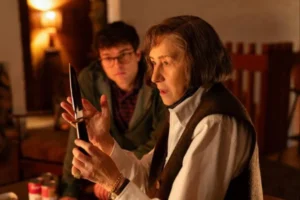
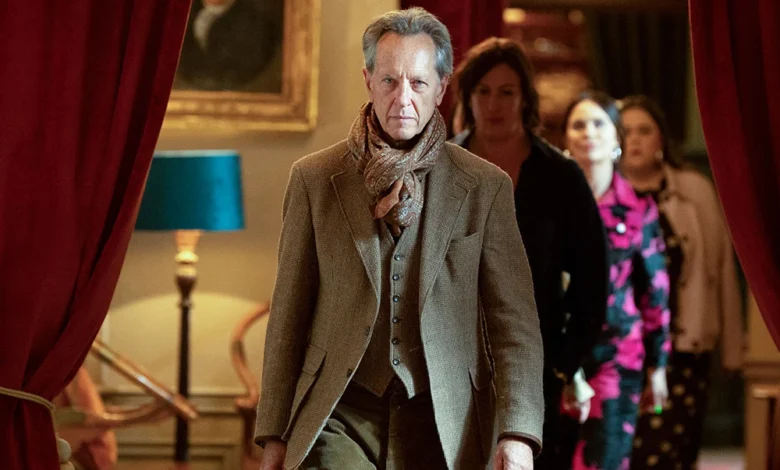
The production, set once again within the atmospheric confines of a sprawling Scottish castle, features a curated ensemble of high-profile personalities. Host Claudia Winkleman returns to helm the proceedings, bringing her signature blend of wit and psychological scrutiny to the game. This season’s roster includes notable figures from film, television, music, and comedy, such as Richard E. Grant, Bella Ramsey, Myha’la, Maya Jama, James Acaster, Jerry Hall, and James Blunt, among others.
Early reactions from the viewing public and critics have centered on the unpredictable dynamics fostered by this specific cast. Richard E. Grant, in particular, has emerged as a focal point of the premiere, with viewers noting his rapid adaptation to the game’s manipulative nature. His active engagement in the early stages of the competition has introduced a volatile element to the castle’s social hierarchy, a move that producers likely anticipated when selecting such a high-caliber group. The series is scheduled to air on BBC One and iPlayer every Thursday and Friday at 8:00 p.m. BST for the next four weeks, with the second episode slated for release tonight.
The Evolution of The Traitors Franchise
The success of The Celebrity Traitors in the U.K. is not an isolated phenomenon but rather the latest iteration of a global television juggernaut. The format, which originated in the Netherlands as De Verraders, relies on a "social deduction" premise where a small group of "Traitors" must eliminate "Faithfuls" to claim a prize fund, while the Faithfuls work to identify and banish the Traitors before the game concludes.
The U.K. version has seen a rapid ascent in popularity since its inception. The civilian version of the show became a cultural touchstone almost immediately upon its debut, with social media discourse playing a crucial role in its viral growth. By pivoting to a celebrity format, the BBC has successfully bridged the gap between traditional reality television and high-end event programming. This strategy has allowed the network to capture a broader demographic, appealing to both the younger, digital-native audience that frequents iPlayer and the older, traditional terrestrial television demographic.
Supporting Data and Comparative Analysis
To understand the scale of the current premiere, one must look at the trajectory of the franchise over the past three years. When the U.K. version of The Traitors first launched, it was considered a bold experiment for the BBC. Initial viewing figures were modest but saw an exponential increase as word-of-mouth spread. By the time the final of the first civilian season aired, the show was a ratings phenomenon.
The move to include celebrities was a calculated risk that has paid significant dividends. By drawing in 8.8 million viewers for the premiere, the BBC has outperformed many long-running scripted dramas and established light entertainment programs. This level of viewership is rare in the current media landscape, where fragmented streaming options and social media competition often erode the reach of linear broadcasts.
Internationally, the franchise has proven equally robust. In the United States, the Peacock-exclusive version, hosted by Scottish actor Alan Cumming, has garnered critical acclaim and a dedicated following. The U.S. celebrity version, which combines stars from other reality franchises like Survivor, Big Brother, and The Real Housewives, has effectively exported the British-style psychological game to a global market. The recent launch of the U.S. civilian spinoff, titled New Blood, in September further highlights the aggressive expansion of the brand.
Official Responses and Strategic Outlook
While the BBC has not issued a formal statement regarding the specific demographic breakdown of the viewership, industry insiders suggest that the network is pleased with the "cross-pollination" of audiences. The casting choices—ranging from the gravitas of actors like Michael Sheen to the comedic timing of James Acaster—were designed to maximize appeal across various segments of the British public.
Looking ahead, the BBC has already confirmed that the fifth season of the U.K. civilian edition of The Traitors is scheduled to premiere early next year. This creates a continuous pipeline of content that keeps the brand at the forefront of the public consciousness. By alternating between celebrity and civilian versions, the network ensures that the format does not suffer from "viewer fatigue," while maintaining a consistent presence in the television calendar.
Broader Implications for Reality Television
The success of The Celebrity Traitors has wider implications for the television industry. Firstly, it demonstrates that the "event television" model is still viable if the content is sufficiently engaging to necessitate live or same-day viewing. In an era where "binge-watching" has become the norm, the deliberate pacing of The Traitors—releasing episodes on a weekly basis—retains the social tension and water-cooler conversation necessary to build a sustainable audience.
Secondly, the show highlights a shift in how celebrities are utilized in unscripted programming. Rather than participating in "fly-on-the-wall" lifestyle shows, high-profile talent is increasingly gravitating toward high-stakes, competitive, and intellectually taxing environments. This trend suggests a change in celebrity branding, where demonstrating wit, strategic thinking, and resilience under pressure is seen as more valuable than the traditional curated appearance.
Finally, the international success of the format serves as a case study in localization. The U.K. iteration of The Traitors succeeded not by importing a carbon copy of the Dutch original, but by tailoring the tone, the host, and the casting to reflect British sensibilities. The dry humor, the focus on social interaction over physical challenges, and the dramatic setting of a Scottish castle have become the hallmarks of the British version, providing a blueprint for how global formats can be adapted to suit specific cultural markets.
Conclusion: A New Standard
As the second season progresses, the challenge for the production team will be to maintain the momentum generated by the record-breaking premiere. The high viewing figures place the show in a precarious position where expectations are elevated; however, the early signs—specifically the chaotic energy introduced by the cast—suggest that the show has the necessary ingredients to continue its upward trajectory.
The Celebrity Traitors has successfully transcended the boundaries of its genre. It is no longer merely a reality show; it has become a significant cultural event that defines the viewing habits of millions. As the competition deepens and the paranoia within the castle walls intensifies, the U.K. audience is likely to remain tethered to the screen, watching as their favorite stars navigate a game where trust is the ultimate liability. For the BBC, the success of this season is a vindication of its investment in the format and a testament to the enduring power of high-quality, well-produced, and strategically marketed television content.