PNOĒ 2.0 Launches Self-Administered Metabolic Testing Mask to Bring Elite Health Metrics to the Masses

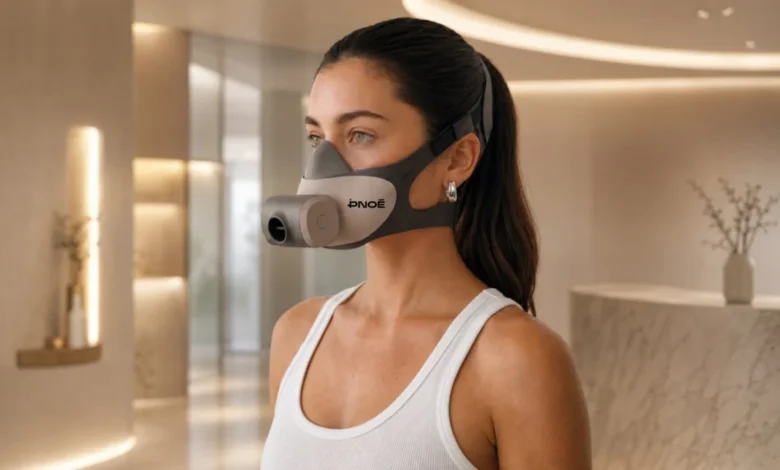
At first glance, the newest diagnostic device from health-tech firm PNOĒ bears a striking resemblance to the iconic face-covering worn by the fictional comic-book villain Bane. Fastened securely around the back of the head and sealing tightly over both the nose and the mouth, the apparatus certainly looks cinematic. However, its intended application is entirely constructive rather than destructive. The device is engineered to measure the precise volume of oxygen consumed and carbon dioxide exhaled by an individual, subsequently translating that complex respiratory data into actionable, personalized insights regarding nutrition, physical training, and long-term health optimization.
Headquartered in Malden, Massachusetts, with substantial research and operational facilities located in Athens, Greece, PNOĒ is preparing for the official global launch of its flagship product, the PNOĒ 2.0, scheduled for October 1. The defining technological evolution of this new iteration—distinguishing it sharply from its predecessor—is its fully self-administered testing capability. According to co-founder and Chief Executive Officer Apostolos Atsalakis, the testing process has been streamlined to eliminate the barrier of specialized supervision. A user can walk into a partner gym or wellness center, don the mask, press a single start button, remain seated, and breathe naturally for a brief eight-minute window. As Atsalakis describes it, the entire process is designed to be frictionless and accessible.
This architectural shift is pivotal for the company’s commercial expansion. The earlier generation of PNOĒ hardware necessitated the active presence of a certified, trained operator to conduct the assessment, thereby restricting its deployment to controlled clinical environments or high-end athletic training centers. By pivoting to a self-serve model, PNOĒ opens lucrative new avenues for distribution, including unmanned fitness facilities, boutique athletic clubs, and community pharmacies.
The Evolution and Science of Metabolic Testing
The fundamental biological science underpinning PNOĒ’s technology is far from novel. Metabolic testing—a physiological methodology that analyzes the chemical composition of exhaled gases to evaluate how efficiently the human body converts nutrients into cellular energy—has a clinical history spanning over a century. For decades, cardiopulmonary exercise testing (CPET) utilizing metabolic carts has served as the undisputed gold standard for quantifying VO₂ max. This metric represents the absolute maximum volume of oxygen an individual can utilize during exhaustive physical exertion and remains universally acknowledged by sports physiologists as the single most reliable indicator of cardiorespiratory fitness.
Despite its clinical utility, traditional metabolic testing has long suffered from severe logistical limitations. The required equipment has historically consisted of bulky, expensive carts and stationary systems confined strictly to advanced sports science laboratories, university departments, and major hospital networks. Consequently, comprehensive metabolic profiling has remained an exclusive privilege of elite Olympic athletes, professional sports franchises, and high-net-worth participants in executive longevity programs.
The decade-old startup PNOĒ has centered its corporate mission on democratizing this diagnostic capability, promising laboratory-grade accuracy within a portable, modular package supported by proprietary software algorithms. By automating the interpretation phase, the platform transforms raw respiratory ratios into bespoke lifestyle blueprints. Atsalakis emphasizes that the core objective has always been widespread accessibility.
Comprehensive Biomarkers Beyond the Bloodwork
The PNOĒ 2.0 device captures a comprehensive suite of 23 distinct physiological biomarkers during a standard assessment. Beyond calculating VO₂ max, the system measures resting metabolic rate—quantifying the exact caloric expenditure of the body at complete rest—and evaluates metabolic flexibility, which measures the physiological efficiency with which the body switches between burning lipids and carbohydrates for fuel.
Atsalakis argues persuasively that these dynamic respiratory metrics address critical health questions that traditional static blood panels simply cannot answer. While a standard lipid or metabolic blood draw offers a snapshot of chemical concentrations at a single moment in time, breath analysis reveals real-time functional capacity, energetic efficiency, and the body’s metabolic response to stress and recovery.
The market timing for this commercial release aligns favorably with broader cultural and scientific shifts. In recent years, VO₂ max has transitioned from an obscure academic metric into a prominent buzzword within the burgeoning longevity and biohacking communities. This shift has been driven largely by peer-reviewed epidemiological research linking superior cardiorespiratory fitness directly to reduced all-cause mortality and increased healthspan. Atsalakis characterizes VO₂ max as the single strongest biological predictor of human longevity, positioning his company’s diagnostic data as an essential scorecard for individuals seeking to actively manage their biological aging process.
Engineering and Infection Control Innovations
The architectural redesign of the PNOĒ 2.0 involved a significant miniaturization process. The hardware footprint has been substantially reduced, featuring fewer internal components to enhance operational reliability and minimize potential points of mechanical failure. The industrial design was executed in close collaboration with Milan-based Design Group Italia. According to Atsalakis, the final product emerged only after undergoing an exhaustive series of iterative design prototypes, necessitated by the unprecedented challenge of engineering a reliable, self-administered metabolic testing device for public use.
Furthermore, the hardware architecture directly resolves a primary hygiene concern for post-pandemic consumers: shared device sanitation. The sophisticated electronic sensor modules detach seamlessly from the medical-grade silicone mask and adjustable fabric straps. This modular design allows commercial venues to invest in a limited number of costly electronic hardware units while individual users retain or purchase their own personal silicone masks, ensuring complete sanitary separation between tests.
Regulatory Boundaries and Future Clinical Horizons
Despite its advanced diagnostic capabilities, PNOĒ maintains a cautious and strictly defined regulatory posture. The device currently lacks clearance from the U.S. Food and Drug Administration (FDA) as a medical diagnostic tool. Atsalakis is explicit regarding the company’s operational boundaries, stating firmly that the firm does not issue medical recommendations or clinical diagnoses.
Instead, PNOĒ positions its platform securely within the wellness and preventative lifestyle sector. Atsalakis compares the device to standard consumer body-composition scales, emphasizing that licensed physicians cannot legally prescribe pharmaceutical interventions based solely on PNOĒ diagnostic readouts.
Nevertheless, the company’s long-term roadmap extends well beyond general wellness. Medical researchers have long investigated whether volatile organic compounds and distinct molecular signatures present in human breath can serve as early warning biomarkers for systemic pathologies, including oncological diseases and metabolic disorders. Atsalakis acknowledges that the vast, growing repository of respiratory data collected by the platform could eventually serve as a foundational dataset for machine-learning models designed to flag emerging health abnormalities. However, he remains transparent about regulatory timelines, conceding that full diagnostic clearance and clinical validation are several years away due to stringent regulatory hurdles.
Corporate Chronology, Funding, and Growth
PNOĒ’s corporate origins trace back to the academic research of Apostolos Atsalakis during his doctoral studies in advanced sensing technologies at the University of Cambridge. Immersed in the nascent wearable technology boom of the early 2010s, Atsalakis became fascinated by the untapped diagnostic potential of human respiration. He subsequently co-founded the enterprise alongside his childhood friend Panos Papadiamantis, who currently serves as the company’s chief product officer.
The startup reached a critical inflection point when it was accepted into the prestigious Y Combinator Winter 2019 accelerator cohort—arriving on the venture capital scene well before the current consumer obsession with longevity reached its present commercial scale. To date, PNOĒ has successfully raised approximately $22 million in total venture financing. This capital accumulation includes a recently finalized $11 million funding round backed by prominent institutional investors, including venture firm 50 Years and Google Maps co-founder Lars Rasmussen, who is currently based in Athens.
Operating on an exclusive business-to-business (B2B) distribution model, PNOĒ sells its hardware and software infrastructure directly to commercial clients rather than individual consumers. These enterprise clients then integrate the testing services into their own customer offerings. The company’s prestigious client roster includes high-end fitness operator Equinox—where the technology is deployed across nearly all club locations—alongside Four Seasons hotels, Red Bull athletic programs, the National Basketball Association (NBA), the Mount Sinai Health System, and the national medical spa franchise Restore Hyper Wellness.
Geographically, approximately 85% of PNOĒ’s total revenue originates within the United States, a market Atsalakis characterizes as the most mature and economically advanced global landscape for longevity-focused services. Capitalizing on this momentum, the enterprise is actively scaling its commercial presence throughout Europe and establishing strategic distribution partnerships across Latin America and Asia.
Business Model and the Competitive Landscape
Commercial clients access the PNOĒ ecosystem through a recurring software-as-a-service subscription model, ranging from $400 to over $1,000 per month. This comprehensive fee structure encompasses the physical hardware, analytical software licenses, staff training programs, and customized marketing collateral—a turnkey package Atsalakis describes as a complete "business in a box."
Partner businesses routinely utilize the metabolic test during customer onboarding, positioning the assessment at a strategic midpoint between a comprehensive clinical examination and the rudimentary cardiovascular estimations provided by commercial smartwatches.
This intermediate market tier is becoming increasingly competitive. Consumer wearable giants such as Apple, Garmin, and Whoop routinely estimate VO₂ max indirectly via continuous heart-rate variability and accelerometer data. Concurrently, targeted consumer wellness gadgets like Lumen analyze breath samples to provide daily insights into macronutrient burning preferences. At the upper tier of the market, traditional clinical metabolic carts maintain their entrenched dominance within hospital settings and elite research institutions.
Employing a global workforce of 110 professionals, PNOĒ reports that it has recently achieved corporate profitability while sustaining year-over-year revenue growth in excess of 100%. Looking forward, Atsalakis confirms that the company intends to initiate a Series B fundraising campaign within the next six to twelve months, providing the necessary capital to scale production and place its distinctive diagnostic mask—Bane comparisons notwithstanding—on a rapidly expanding number of faces worldwide.