White House Blocks CNN From Air Force One Pool Coverage Ahead of Presidential Trip to Tennessee

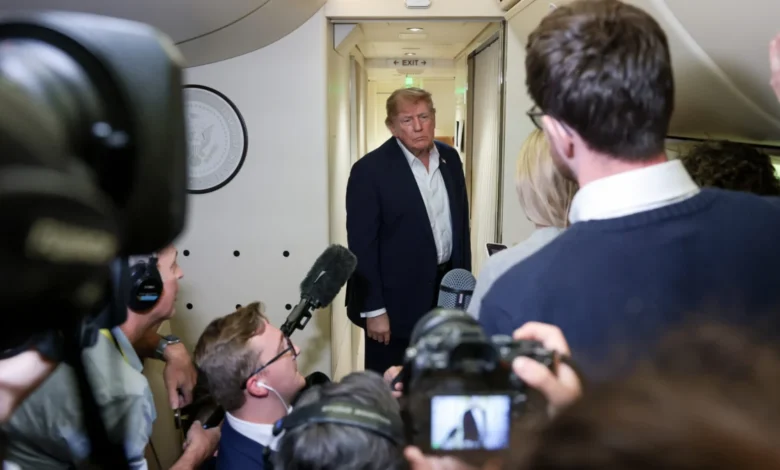
Tensions between the executive branch and the mainstream media escalated further on Saturday as the White House barred CNN from boarding Air Force One to serve as the rotating television pool network for President Donald Trump’s official travel to Tennessee. The decision marks the latest flashpoint in an ongoing battle over press access, constitutional protections, and the mechanics of reporting on the presidency.
A spokesperson for CNN confirmed the development on Saturday morning, noting that the network had been removed from the scheduled pool rotation for the presidential journey. Under standard White House protocols, physical space limitations aboard Air Force One necessitate a press pool system. In this arrangement, a rotating single television network, alongside representatives from print, photography, and radio, travels with the president and shares reporting materials—including footage, audio, and transcripts—with a broader consortium of domestic and international news organizations.
The latest exclusion occurs against a backdrop of intensifying legal and political friction between the Trump administration and several prominent media outlets, raising profound questions regarding the boundaries of executive authority and the First Amendment rights of journalists.
Chronology of Escalating Tensions
The roots of Saturday’s travel ban extend back to a series of escalating actions initiated by the administration earlier in the month. The timeline of events underscores a rapidly deteriorating relationship between administration officials and the press corps:
- Mid-September: The White House issues executive directives barring representatives from CNN, Politico, and MS NOW from entering the White House grounds, effectively cutting off daily on-site reporting access for those organizations.
- Thursday: Following an expedited legal challenge, a federal district judge issues an injunction ordering the White House to reinstate press credentials for the banned outlets. The court rules that the administration’s ban constituted a violation of the Fifth Amendment’s due process rights, noting that arbitrary revocation of press access without clear, constitutional standards is impermissible.
- Sunday: In the wake of the initial White House ban, the administration takes secondary action by removing CNN from the official television pool rotation. In response to this move, the four remaining networks in the rotation—CBS, NBC, ABC, and Fox—stage a collective demonstration of solidarity. All four networks decline to fill CNN’s vacant slot, effectively suspending standard television pool coverage of the White House for the majority of the week. This rare industry-wide boycott results in a significant scarcity of official video imagery emanating from the executive mansion.
- Friday: Normal television pool operations temporarily resume after CNN is reinstated to the rotation, seemingly signaling a brief de-escalation following the federal court ruling.
- Saturday: The fragile detente shatters as the White House blocks CNN from participating in the traveling press pool for President Trump’s weekend trip to Tennessee.
Understanding the Press Pool System
To fully comprehend the significance of the White House’s actions, it is necessary to examine the operational framework of the White House press corps. The White House Press Association (WHPA) and the White House press office coordinate the logistics of covering the commander-in-chief. Because no single commercial aircraft or standard press plane can accompany Air Force One on every domestic and international journey, a small group of reporters, known as the "pool," is embedded with the president.
The television pool rotates daily or weekly among the major broadcast and cable networks. The designated network is responsible for capturing the visual record of the president’s movements, public remarks, and arrivals and departures, which is then distributed via a closed-circuit feed to all other subscribing news organizations. By removing a network from this rotation, the administration effectively limits that organization’s ability to gather independent, primary-source visual journalism from inside restricted government spaces.
Legal scholars and media watchdogs note that while the White House possesses broad discretion in managing its physical workspace and travel logistics based on logistical constraints, the targeted exclusion of specific news organizations based on their editorial content or perceived critical coverage crosses into constitutional territory protected by the First and Fifth Amendments.
Official Responses and Industry Repercussions
The decision to bar CNN from Air Force One has drawn swift condemnation from journalism advocacy groups, press freedom organizations, and legal analysts. Major professional bodies have reiterated that a free and independent press is a cornerstone of American democracy, vital for ensuring government transparency and accountability to the electorate.
While representatives for the White House have defended their logistical decisions by pointing to space constraints and the executive branch’s inherent authority to manage press operations, critics argue that the sequence of events points toward a pattern of retaliation against specific journalistic entities.
The solidarity demonstrated earlier in the week by CBS, NBC, ABC, and Fox—refusing to cross the picket line created by CNN’s removal—underscores a rare moment of unified resolve among competing broadcast organizations. Industry insiders note that such collective action by the major networks is unprecedented in modern presidential reporting, reflecting deep-seated anxiety over the erosion of traditional press access norms. However, with Saturday’s targeted travel ban, the fragile cooperation between the networks and the administration faces renewed strain as they navigate the competing demands of professional solidarity and the mandate to cover the presidency.
Broader Implications for Government and Media Relations
The ongoing dispute between the White House and CNN carries significant implications for the future of executive-press relations in the United States. As legal battles wind their way through the federal court system, the judiciary is increasingly being asked to arbitrate disputes that were historically resolved through negotiation and adherence to unwritten norms of Washington reporting.
Legal experts suggest that the federal judge’s initial ruling on due process sets a crucial precedent regarding the arbitrary withdrawal of press credentials from government property. However, the administration’s subsequent actions—shifting tactics from physical bans on White House grounds to manipulating internal pool rotations and travel logistics—demonstrate the complex hurdles courts face when evaluating executive oversight of press operations.
For the public, the restrictions translate directly into a fragmented information ecosystem. When major news outlets are intermittently barred from traveling with the president or accessing standard government briefings, the diversity and depth of reporting available to citizens are inevitably diminished. As the legal challenges continue and the political landscape remains polarized, the boundary between legitimate administrative management and unconstitutional press suppression will remain a central battleground in American politics.