Los Angeles Dodgers Flaw Against Elite Opponents Threatens Postseason Ambitions After Series Loss to San Diego Padres

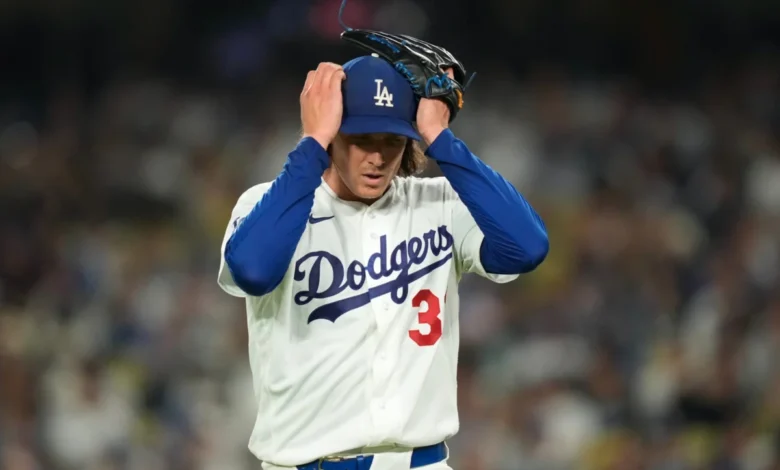
Entering the final stretch of the regular season, the Los Angeles Dodgers appeared to be ascending toward October with unstoppable momentum. Having captured the National League West division crown and secured a commanding position near the top of the National League playoff seedings, the franchise seemed to have successfully synchronized every facet of its roster. The starting rotation, high-leverage bullpen arms, and a previously inconsistent offensive lineup all appeared to be functioning in harmony.
Yet, beneath the surface of a dominant 14-3 stretch lay a significant caveat: a remarkably lenient late-season schedule. For nearly a full month, the two-time defending World Series champions had coasted through matchups against non-contending clubs, avoiding elite competition entirely. That isolation from high-caliber opponents came to an abrupt end during a crucial mid-week series against the surging San Diego Padres at Chavez Ravine.
A Disappointing Reality Check in the Final Tune-Up
The three-game series against San Diego was universally viewed as a rigorous pre-October examination—and potentially a preview of an impending National League postseason clash. By the conclusion of Thursday night’s 4-2 rubber-match defeat, the Dodgers had decisively failed their final true tune-up before the playoffs.
While the club officially clinched a coveted first-round playoff bye prior to Thursday’s first pitch—courtesy of an Atlanta Braves loss to the Cincinnati Reds—the celebratory atmosphere was severely undercut by ongoing concerns regarding their performance against quality opponents. The Padres capitalized on Los Angeles’s vulnerabilities, securing their own postseason berth by taking the final two games of the series.

Within the Dodgers’ clubhouse, leadership and players naturally downplayed the immediate significance of the series outcome. Officials pointed to Tuesday night’s dominant 7-0 bullpen shutout and argued that Wednesday’s 5-1 defeat was significantly closer than the final scoreboard indicated. From a macro-level perspective, Thursday’s loss did not impact their postseason seeding or immediate tournament status. Nevertheless, dropping consecutive games to a primary division and pennant rival highlighted a troubling trend that has shadowed the franchise throughout the 2026 campaign.
The Statistical Reality: Struggles Versus Above-.500 Teams
The central narrative of the Dodgers’ regular-season campaign has been their paradoxical difficulty when facing elite competition. Despite compiling a formidable overall record, Los Angeles sits at a lackluster 25-28 against opponents currently holding a winning record and tracking toward a postseason berth (excluding the uniquely positioned American League West leaders).
That vulnerability has only intensified in the second half of the season. Over the final two months of the schedule, the Dodgers have cratered to an alarming 2-14 record against high-caliber playoff contenders. This stretch of inefficiency features alarming series sweeps at the hands of the Boston Red Sox, Chicago Cubs, and Atlanta Braves, alongside a thoroughly uninspiring single victory in a four-game series against the Milwaukee Brewers.
For an organization with championship aspirations, these recurring struggles against premier clubs represent a glaring statistical anomaly. While beating up on the lower tier of Major League Baseball is sufficient to secure a division title and a first-round bye, sustaining success against top-tier pitching staffs and disciplined batting orders requires a higher level of execution that the Dodgers have largely failed to demonstrate since mid-summer.
Offensive Inertia and Wasted Opportunities
The series finale against San Diego encapsulated many of the offensive deficiencies that have plagued the Dodgers intermittently throughout the year. Following a four-run explosion in the second inning of Tuesday’s opener, the once-feared Los Angeles lineup went ice-cold, plating a meager six runs over its subsequent 25 offensive innings.

This offensive stagnation persisted even with the highly anticipated return of superstar Shohei Ohtani from the injured list on Wednesday. Although Ohtani provided a welcome spark by collecting multiple hits on Thursday—highlighted by a consolation RBI double in the bottom of the ninth inning—the broader lineup struggled mightily in high-leverage situations.
Throughout the series, Los Angeles generated consistent traffic on the base paths, managing to knock each of San Diego’s starting pitchers out of the game before they could complete five full innings. Yet, the inability to deliver the crucial hit proved fatal, as the Dodgers finished an abysmal 4-for-25 with runners in scoring position. This situational hitting failure erased the positive contributions of starting pitchers Yoshinobu Yamamoto, who surrendered just two earned runs over six strong innings on Wednesday, and Tyler Glasnow, who delivered 6.1 quality innings while allowing three runs on Thursday before departing.
Defensive Breakdowns and Bullpen Vulnerabilities
Beyond offensive inconsistencies, the series exposed uncharacteristic flaws in both team defense and bullpen execution—areas that had previously stabilized during the team’s September surge.
While the Dodgers’ relief corps performed admirably for the majority of the series, a disastrous three-run seventh-inning rally by the Padres on Thursday ultimately sealed the game. The frame was significantly aided by uncharacteristically shoddy defensive play from the Dodgers, pointing to a broader regression in fundamental execution when the defensive pressure mounts against elite adversaries. In previous seasons, championship pedigree and defensive reliability were hallmarks of the franchise; however, the recent uptick in fundamental errors against superior competition raises legitimate questions regarding the team’s readiness for high-stakes playoff baseball.
Broader Implications and Outlook for October
As the Dodgers transition from the regular-season grind to the precision of the postseason, the front office and coaching staff face a narrow window to address these lingering vulnerabilities. The overarching narrative of their season is one of profound capability overshadowed by an inability to conquer the league’s best teams.

With a first-round bye safely secured, Los Angeles will have crucial days to rest, recalibrate, and heal lingering minor ailments. However, the psychological hurdle of their 2-14 record against top-tier opponents over the final two months cannot simply be ignored.
If manager Dave Roberts and his coaching staff fail to ignite the situational offense and tighten up defensive execution before the Division Series begins, the Dodgers’ quest for a historic World Series three-peat could face an abruptly short and humbling conclusion. The regular-season metrics suggest that once the competition elevates to the absolute highest tier, the margin for error disappears entirely—a reality Los Angeles must confront before it is too late.