HHS Resumes COVID-19 Vaccine Ordering Amid Persistent Legal and Policy Confusion Surrounding CDC Guidelines

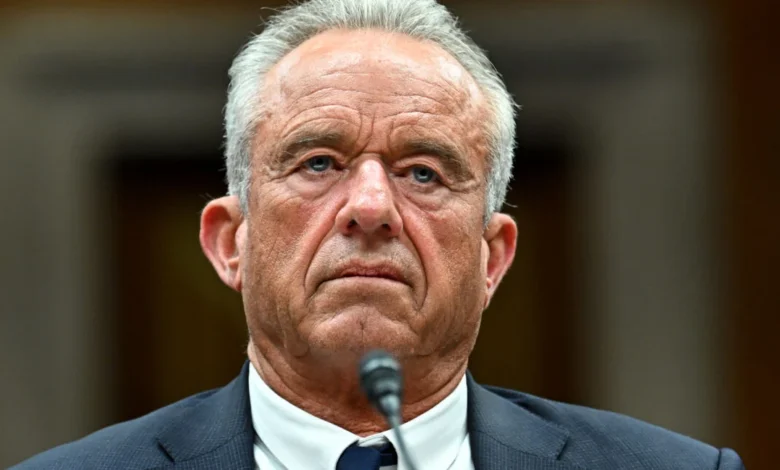
The Department of Health and Human Services (HHS) confirmed on Thursday that the ordering portal for COVID-19 vaccines has officially reopened, marking a resolution to an unexplained administrative pause that had left healthcare providers and immunization clinics in a state of uncertainty. Despite the resumption of supply chain operations, the agency declined to provide a formal explanation regarding the cause of the delay or the specific mechanisms used to resolve the disruption. This administrative silence has further complicated an already contentious landscape for public health policy, particularly as the agency continues to navigate the fallout from the tenure of Robert F. Kennedy Jr. and his ongoing influence on federal health guidance.
The recent operational interruption follows a multi-year campaign by Kennedy to challenge the efficacy and safety of COVID-19 vaccination efforts. Having long characterized the vaccines as the “deadliest vaccines ever made”—a claim that has been consistently refuted by the broader scientific community and verified clinical trial data—Kennedy has leveraged his positions within the federal health apparatus to obstruct access. His tenure as health secretary was marked by a unilateral decision to revoke the Centers for Disease Control and Prevention’s (CDC) universal recommendations for COVID-19 vaccines, a move that fundamentally altered the federal approach to pandemic-era mitigation.
A Chronology of Policy Instability
The current state of vaccine recommendation in the United States is the result of a fractured timeline that began in mid-2025. By July 2025, the CDC’s guidelines for children aged 6 months to 17 years had been refined to a dual-tiered approach: those who were moderately to severely immunocompromised were explicitly encouraged to receive the vaccine, while healthy children within the same age range were subject to “shared clinical decision-making.” This framework required parents and guardians to consult directly with pediatricians or pharmacists to weigh the individual risks and benefits, a significant departure from the earlier, more expansive universal vaccination recommendations.
The stability of these guidelines was further undermined in March 2026, when a federal judge issued an injunction halting subsequent revisions proposed by Kennedy and his appointees. This legal intervention effectively froze the CDC’s stance on COVID-19 vaccination, locking the clinical guidance into the framework established in July 2025. Consequently, as the 2026-2027 respiratory illness season approaches, federal guidance remains tethered to these older recommendations, leaving the agency in a position of forced inertia.
In a recent update to its clinical guidance, the CDC explicitly acknowledged this legal entanglement, stating: “Because of legal uncertainties and inquiries, the CDC states the recommendations for COVID-19 vaccination from the July 2025 immunization schedule remain in effect for the 2026-2027 respiratory illness season.”
Divergence Between Federal Guidance and Medical Associations
A critical tension has emerged between the federal government’s current policy and the recommendations issued by leading medical organizations, including the American Medical Association (AMA) and various pediatric specialty groups. These organizations argue that the federal policy is misaligned with the current epidemiological reality of the virus.
According to the latest guidance from these medical groups, the standard of care for the current season should be more robust. Their recommendations suggest that all infants aged 6 to 23 months should receive the COVID-19 vaccine, given their vulnerability to severe respiratory complications. Furthermore, they advocate that children and adolescents aged 2 to 18 years should be vaccinated if they fall into higher-risk categories or if there is an explicit parental desire to protect them from infection.
This gap between the CDC’s frozen guidelines and the recommendations of private medical associations creates a confusing environment for healthcare providers. When federal policy and professional medical consensus diverge, clinicians often face increased administrative burdens and potential liability concerns, which can ultimately lead to decreased vaccine uptake as providers struggle to reconcile competing sets of instructions.
The Impact of Administrative Uncertainty
The inability of HHS to clarify why vaccine ordering was halted—and for how long the disruption persisted—reflects broader concerns about the stability of the public health infrastructure. Vaccine distribution requires precise logistics, involving cold-chain management and inventory forecasting. When ordering portals go offline without clear communication, local health departments and private practices may lose their ability to plan for seasonal demand, potentially leading to supply shortages during the critical window for fall vaccinations.
Historically, the vaccine ordering process has been a highly predictable, automated function of the federal government. The disruption highlights a shift toward a more politicized administrative environment where standard operational procedures are susceptible to broader policy volatility. Public health experts have expressed concern that if the administrative functions of the CDC and HHS become entangled in litigation or political disputes, the long-term impact on public trust will be significant.
Analysis of the Public Health Implications
The implications of the current guidance framework extend beyond logistical inconveniences. By maintaining the July 2025 standards, the government is effectively ignoring updated clinical data that has emerged in the interim. Since that time, global studies have continued to track the evolution of SARS-CoV-2 variants, the duration of vaccine-induced immunity, and the long-term health impacts of pediatric COVID-19 infections.
The "shared clinical decision-making" model, while useful in some medical contexts, is viewed by many public health officials as an insufficient substitute for clear, evidence-based recommendations, especially when it comes to routine childhood immunizations. Critics argue that when the government abdicates its role in setting clear standards, the responsibility shifts entirely to individual doctors and parents, who may lack the resources to synthesize complex, changing data sets. This can lead to significant health disparities, as access to high-quality clinical consultation is not uniform across all socioeconomic demographics.
Moreover, the persistent rhetoric regarding the safety of the vaccines has contributed to a notable decline in public confidence. Even with the ordering portal now open, health officials fear that the confusion surrounding the recommendations will lead to lower vaccination rates. Lower immunization coverage during the fall and winter months historically correlates with increased hospitalizations and surges in respiratory illness, placing additional strain on the pediatric healthcare system.
Looking Ahead: The 2026-2027 Season
As the 2026-2027 respiratory season progresses, the onus for vaccine advocacy has largely fallen to private medical organizations. These groups are now tasked with filling the information void left by the federal government’s constrained position. For parents, the current landscape requires proactive engagement with their healthcare providers to determine the best course of action for their children, as the federal government has essentially ceded the authority to make broad public health recommendations.
The legal battles surrounding the CDC’s authority are likely to continue, with future rulings potentially forcing further shifts in policy. Until the federal judiciary or administrative leadership provides a clearer path forward, the disconnect between federal guidance and medical consensus remains a defining feature of the American response to COVID-19.
For now, the reopening of the ordering portal serves as a baseline for restoring functionality, though it does little to address the deeper concerns regarding the erosion of evidence-based health policy. The medical community remains focused on advocating for a more streamlined, data-driven approach, hoping that future policy cycles will prioritize clinical clarity over the legal and political controversies that have characterized the last several years. As the season peaks, the success of the vaccination effort will be measured not just by the availability of the product, but by the ability of the healthcare system to provide clear, consistent, and scientifically sound messaging to a public that has been subjected to months of conflicting directives.
Related posts: