California Leads a New Era of Environmental Reparations with Landmark Cash Aid Program for Oil-Impacted Families

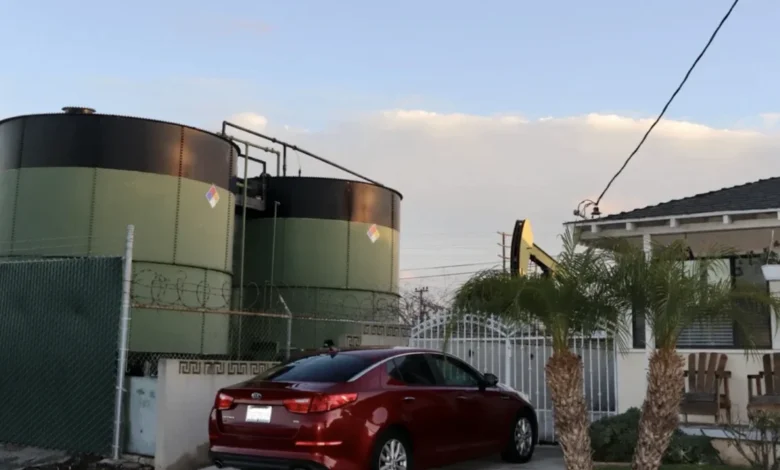
California stands on the precipice of a significant policy shift as Governor Gavin Newsom prepares to sign AB 1661, a pioneering legislative measure that seeks to provide direct financial restitution to residents living in the shadow of urban oil drilling. The bill, which directs $5 million in penalties collected from the Inglewood Oil Field toward 1,000 households suffering from respiratory or reproductive health issues, marks a transition from merely regulating industrial pollution to actively compensating the communities that have borne its historical costs.
For decades, neighborhoods like Inglewood, Ladera Heights, and Baldwin Hills—predominantly Black communities—have existed in close proximity to the nation’s largest urban oil field. Residents have long reported a pervasive, sulfurous odor and a correlation between the drilling activities and chronic health conditions. This legislation is not merely a public health initiative; it is an experimental framework for what proponents call "environmental reparations," a model that shifts the financial burden of industrial externalities from the individual back to the corporate entities profiting from the extraction.
A Century of Industrial Proximity and Health Disparities
The Inglewood Oil Field, which has been in operation for over a century, sits at the heart of a debate regarding urban land use and systemic environmental injustice. Historically, marginalized communities in Los Angeles have been subjected to "redlining" and zoning policies that placed residential housing in direct contact with refineries, major highways, and drilling sites.
Public health research has consistently highlighted the risks associated with living near these sites. Exposure to volatile organic compounds, particulate matter, and hydrogen sulfide—byproducts of oil extraction—has been linked to increased incidences of asthma, birth complications, and various forms of cancer. Regina Martin, who grew up near the field during the 1950s and 60s, serves as a poignant example of the generational impact. For residents like her, the "rotten-egg" smell of the oil fields was a constant, normalized feature of childhood, only later revealed to be a precursor to lifelong health struggles.
The legislative push led by Assemblymember Isaac G. Bryan aims to address these long-standing inequities by creating a community repair and reinvestment fund. By penalizing operators of low-producing, often leaking wells, the state is effectively monetizing the damage caused by industrial negligence to provide tangible support to those most affected.
Chronology of Legislative Action
The path to AB 1661 was paved by previous regulatory and legislative victories that sought to curb the environmental footprint of the Los Angeles basin’s oil industry:
- 2020-2022: Increased grassroots mobilization by local organizations, including Black Women for Wellness, brings sustained pressure on the Los Angeles County Board of Supervisors to address health disparities in the Baldwin Hills and Inglewood regions.
- 2024: Governor Newsom signs AB 2716, a critical precursor that mandates the closure of the Inglewood Oil Field by 2030 and establishes a rigorous penalty structure for low-producing wells, charging operators $10,000 per well each month.
- September 2026: The legislature passes AB 1661, formalizing the mechanism to distribute these penalty funds directly to affected residents.
- October 2026 (Anticipated): Governor Newsom is expected to sign the bill into law, triggering the implementation phase for the cash-assistance program.
Data and Economic Scope
The mechanics of the program are designed to be both targeted and substantial. The $5 million fund is intended to provide one-time or structured payments of up to $5,000 for 1,000 qualifying households. While this represents a fraction of the total population living within the 2.5-mile radius of the field—which encompasses tens of thousands of residents—it serves as a proof-of-concept pilot.
The revenue source is uniquely tied to the operational inefficiencies of the oil companies themselves. By penalizing wells that produce minimal oil but maximum pollution, the state incentivizes the decommissioning of these sites. The $10,000 monthly fine per well ensures a steady stream of capital for the community repair fund, which may eventually support broader infrastructure projects, including urban greening, park construction, and affordable housing initiatives.
Furthermore, California has moved to ensure that these payments remain in the pockets of the recipients. A companion legislative effort led by Assemblymember Tina McKinnor ensures that these reparations payments are shielded from taxation, preventing the state from reclaiming through the tax code the very relief it is providing through the reparation program.
Challenges in Implementation and Access
While the program is viewed as a landmark success by environmental justice advocates, its practical execution faces significant logistical hurdles. A primary concern among community organizers is the barrier to entry. If the application process requires rigorous, clinical documentation of medical history, many low-income residents—who may suffer from pollution-linked ailments but lack consistent access to healthcare or formal diagnoses—could be inadvertently excluded.
Tianna Shaw-Wakeman, the environmental justice program director with Black Women for Wellness, has been a vocal advocate for a simplified, "self-attestation" model. This approach would allow residents to certify their health impacts without the burden of producing expensive or difficult-to-obtain medical records. As Los Angeles County officials finalize the design of the distribution program, the tension between administrative accountability and accessibility will likely remain a central point of discussion.
Broader Implications for Environmental Policy
The "Inglewood Experiment" carries profound implications for the national climate justice movement. If successful, it provides a blueprint for how other municipalities can compel industrial actors to fund community remediation. It shifts the narrative from "regulation" to "restitution," acknowledging that when industrial sites are closed, the story does not end.
However, advocates warn that closing oil wells is only the first step. A major concern is that the departure of oil operations, while necessary, could trigger rapid gentrification. As the environmental "blight" is removed and the land is remediated, property values in areas like Inglewood and Baldwin Hills are likely to climb. Without strong tenant protections and community-led development strategies, the residents who lived through the era of pollution could be priced out of their homes just as the air quality begins to improve.
"We can’t replace toxic oil extraction with gentrification," Shaw-Wakeman emphasized during recent public hearings. The goal, she argues, is not merely to remove the machines, but to ensure that the people who were harmed by them are not displaced by the subsequent economic shift.
The Path Forward
The passage of AB 1661 underscores a growing consensus in California that the costs of environmental degradation should be internalized by the industries responsible for them, rather than borne by the lungs and bank accounts of local residents. While the 1,000-household limit is viewed by some as a modest start, the precedent it sets is transformative.
As the state transitions away from fossil fuels, the challenge will be to manage this transition equitably. The success of this program will be measured not just by the $5 million disbursed, but by the ability of the government to reach those who have been invisible to the policy process for decades. With no formal opposition from interest groups during the legislative process, the bill signals a shift in the political landscape, suggesting that the era of ignoring the human cost of urban oil production is nearing its end. Whether this model can be scaled to reach the thousands of other families residing near the Inglewood site and beyond remains the next great challenge for California’s environmental justice leaders.
Related posts: