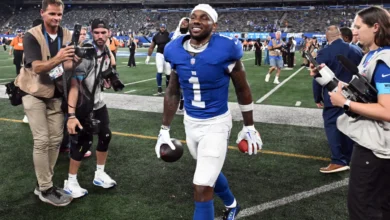
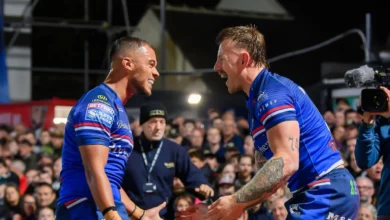
Arsenal starlet Max Dowman to link up with England senior squad after mass withdrawals – Paper Talk

The landscape of professional football is shifting as the 2026 autumn international break approaches, bringing with it a flurry of headlines regarding emerging talents, disillusioned stars, and strategic recruitment planning across the Premier League. As clubs prepare for the opening of the January transfer window, the intersection of youth development, competitive ambition, and contract expiration has created a complex web of rumors and tactical maneuvering that defines the current state of the sport.
The Rise of Max Dowman: An England Call-Up at 16
In a move that has captured the attention of scouts and supporters alike, Arsenal’s teenage prodigy Max Dowman is reportedly set to join the England senior squad training camp. This development follows a wave of mass withdrawals among established international players due to fatigue and minor injuries, providing an unexpected, yet significant, opportunity for the 16-year-old.
Dowman, who has been a standout performer in the Arsenal youth academy, has long been tipped for greatness. His integration into the senior England environment, even if primarily for training and exposure, signifies a growing trend of national associations fast-tracking elite prospects to secure their allegiance and accelerate their professional maturation. This tactical shift by the England coaching staff underscores a commitment to bridging the gap between academy football and the senior international stage. Arsenal officials are reportedly pleased with the recognition, viewing it as a testament to the club’s development program, which continues to produce players capable of performing under the scrutiny of the highest level of the game.
Manchester United and the JJ Gabriel Dilemma
The narrative surrounding JJ Gabriel and Manchester United serves as a poignant case study on the pressures of institutional transition. According to reports from the Daily Mail, the driving force behind Gabriel’s desire to depart Old Trafford is a growing concern regarding the club’s ability to compete with the established heavyweights of European football.
For a player of Gabriel’s caliber, the primary currency of his career is competitive relevance. After witnessing Manchester United’s struggles to maintain consistency in both domestic and continental competitions over the past few seasons, the midfielder has reportedly reached an impasse. The gap between the club’s historical stature and its current on-field performance has become a point of frustration. Historically, Manchester United has been a destination for the world’s elite, but in recent years, the club has faced challenges in building a cohesive, title-challenging squad. Gabriel’s intent to leave is symptomatic of a broader issue: the difficulty of retaining top-tier talent when the trajectory of the club’s project does not align with the immediate ambitions of its key personnel.
The Martial Conundrum: A New Chapter in Russia
Anthony Martial, once heralded as the future of Manchester United’s attack, finds himself at a career crossroads. Following his departure from the Premier League, the French forward has been linked with a potential move to the Russian Premier League. This transition, while unconventional for a player of his profile, highlights the search for meaningful playing time and a fresh start away from the intense media scrutiny of Western Europe.
Russian clubs, known for their financial capacity and willingness to invest in high-profile foreign imports, have reportedly initiated contact with Martial. For the former Manchester United man, this move could provide a platform to revitalize a career that has stalled due to injuries and fluctuating form. From a professional standpoint, the transition to a league like the Russian Premier League represents a strategic repositioning. If a deal is materialized, it would mark the end of an era for a player who, for several years, was one of the most talked-about prospects in the world.
Newcastle United’s Strategic Recruitment
As the January transfer window looms, Newcastle United is positioning itself to address specific gaps in their roster. Reports indicate that the Magpies are prioritizing the acquisition of a young, agile centre-half and a forward capable of operating on the right flank. This targeted approach reflects the long-term vision of the club’s hierarchy, which is focused on sustained improvement rather than short-term fixes.
The need for a young centre-half stems from the club’s desire to future-proof their defensive line, ensuring they have depth to compete across all competitions. Simultaneously, the pursuit of a right-sided forward indicates a desire to increase the team’s tactical flexibility and offensive output. Newcastle’s recruitment strategy, characterized by meticulous scouting and a focus on high-potential individuals, has been the bedrock of their resurgence. As they look toward both the winter window and the following summer, the club aims to bolster its squad to ensure it remains a perennial contender for European qualification.
Raphinha’s Commitment to the Barcelona Project
Amidst the churn of transfer speculation, Barcelona’s Raphinha has provided a statement of stability. The forward has expressed a clear desire to remain at the Camp Nou beyond the expiration of his current contract in 2028. This declaration comes as a boost to the Catalan club, which has been working to stabilize its squad amidst ongoing financial restructuring.
Raphinha’s evolution into a vital component of Barcelona’s attacking unit has been one of the success stories of the club’s recent history. His commitment to the project is not merely a professional choice but a testament to his belief in the team’s direction under the current management. By securing his long-term future, Barcelona avoids the uncertainty that often surrounds high-value assets approaching the final years of their deals. This stability is essential for the club as they look to challenge for domestic and continental honors in the coming seasons.
Broader Implications for the Football Ecosystem
The stories emerging from this week’s headlines are indicative of the broader trends shaping professional football. The integration of youth players like Max Dowman highlights the increasing importance of academy-to-senior pathways, as clubs and national teams look for cost-effective ways to refresh their squads. Simultaneously, the frustrations expressed by players like JJ Gabriel emphasize that talent retention in the modern era is predicated on institutional success and clear, ambitious project mapping.
The transfer market itself continues to be a volatile environment where the search for value—seen in Newcastle’s disciplined scouting and the potential move of Anthony Martial—is balanced against the need for squad continuity, as evidenced by Raphinha’s stance at Barcelona.
The upcoming January window will serve as a bellwether for how clubs prioritize their resources. Whether it is through the development of homegrown talent or the strategic pursuit of international stars, the objective remains constant: the pursuit of excellence. For fans, players, and administrators alike, the period between now and the winter window represents a time of anticipation, as the maneuvers made in boardrooms and training grounds today will ultimately dictate the success or failure of the 2026/27 campaign.
As the footballing world digests these developments, the focus will inevitably turn to the pitch. With the international break providing a brief interlude, the narratives surrounding these players—from the bright start of a 16-year-old in London to the potential relocation of a seasoned veteran to Russia—will continue to evolve, reminding us all that in the world of professional football, the story is never truly finished. The interplay of ambition, development, and market dynamics ensures that the cycle of change remains as constant as the game itself.
Related posts: