The Invisible Crisis: How Microplastics in Global Agricultural Soil Create a Toxic Trojan Horse Effect

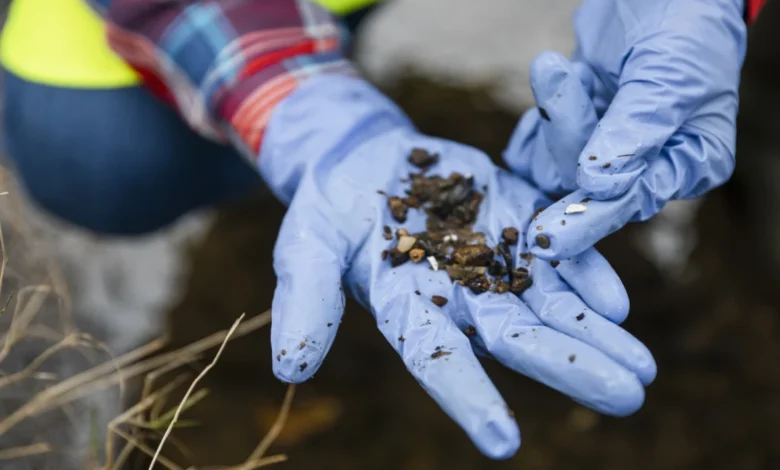
A landmark five-year research initiative funded by the European Union has unveiled a sobering reality regarding the state of our planet’s food-producing foundations: microplastics are now ubiquitous in agricultural soil, acting as a persistent and dangerous vector for environmental toxins. The project, which synthesized data from 227 individual field sites across 11 European nations, confirms that plastic contamination is no longer a localized issue but a systemic, continent-wide challenge that threatens the biological integrity of the earth beneath our feet.
The findings, which have resulted in 22 distinct peer-reviewed publications, describe microplastics as a "Trojan horse" for the biosphere. Once these synthetic polymers permeate the soil, they do not simply sit inert. Instead, they interact with agricultural chemicals, pathogens, and biological processes in ways that scientists are only now beginning to fully quantify. The implications for long-term food security, biodiversity, and soil health are profound, suggesting that current environmental policy is failing to account for the complex, synergistic ways in which modern pollution behaves.
A Chronology of Discovery and Research
The research, conducted under the Minagris project—an acronym for "Micro- and Nano-plastics in Agricultural Soils"—was established to address the significant knowledge gap regarding plastic accumulation in terrestrial environments. While the oceanic impact of plastic pollution has dominated public discourse for decades, the soil-based implications remained largely under-researched until the early 2020s.
- 2021–2022: Initial sampling phases were launched across the 11 target countries. Researchers utilized standardized soil extraction methods to identify polymers, including polyethylene, polypropylene, and polyester, in depths ranging from the surface to the plow layer.
- 2023: Early results began to show a 100% detection rate in the tested fields. Scientists observed that even in remote or supposedly "pristine" agricultural zones, the presence of tire-wear particles and plastic mulch fragments was statistically significant.
- 2024: The study shifted focus toward the "plastisphere"—the microbial community that colonizes plastic surfaces. Laboratory tests confirmed that these surfaces serve as breeding grounds for antibiotic-resistant genes.
- 2025: Final data synthesis confirmed that these particles were directly interfering with soil macro-fauna, specifically earthworms, and negatively impacting crop physiological metrics like biomass and photosynthetic efficiency.
The Mechanism of the Trojan Horse
The core danger of microplastics in soil, as highlighted by experts like Professor Edoardo Puglisi of the Catholic University of the Sacred Heart, lies in the surface-area-to-volume ratio of these particles. As plastics break down into smaller fragments—microplastics and eventually nanoplastics—their surface area increases exponentially. This makes them ideal surfaces for the adsorption of persistent organic pollutants, such as pesticides, heavy metals, and veterinary residues.
When these plastics enter the soil, they do not remain stationary. They are ingested by soil organisms, particularly earthworms, which are the "ecosystem engineers" responsible for soil aeration, nutrient cycling, and water infiltration. Research conducted during the project demonstrated that the ingestion of these plastic-pollutant complexes leads to a disruption of metabolic processes in earthworms. When earthworms are compromised, the physical structure of the soil degrades, leading to reduced fertility and lower crop yields.
Furthermore, the "plastisphere" phenomenon introduces a secondary layer of risk. Microplastics create a unique habitat where microbes can cluster. In the presence of agricultural pesticides, these microbial communities are forced to adapt, often through the horizontal gene transfer of antibiotic-resistant traits. This suggests that the soil is not just becoming polluted with chemicals, but is also becoming a laboratory for the development of drug-resistant pathogens that could potentially migrate into the human food chain.
The Failure of Conventional Assessment Models
One of the most critical takeaways from the Minagris findings is the inadequacy of current regulatory frameworks. Environmental assessments have historically treated pollutants as isolated variables. If a pesticide is deemed safe at a certain concentration, it is approved for use. However, the study proves that this "siloed" approach is fundamentally flawed.
When microplastics, pesticides, and veterinary drugs coexist in the soil, their toxicity is often multiplicative rather than additive. For example, a Swiss study conducted as part of the project revealed that fields with high concentrations of tire-wear particles also exhibited elevated levels of toxic metals. The plastics essentially "anchor" these toxins, keeping them in the soil profile longer than they would naturally persist and making them more bioavailable to plants.
This interaction is particularly detrimental during extreme weather events. As climate change increases the frequency and severity of droughts, the stress on crops is compounded. The study found that when drought conditions are combined with high microplastic contamination, the negative impact on lettuce biomass and chlorophyll content was far greater than the sum of the two stressors alone. Essentially, microplastics make crops less resilient to the climate crises they are increasingly likely to face.
The Myth of Biodegradability
As governments and corporations move to mitigate the plastic crisis, there has been a significant push toward "biodegradable" alternatives. However, the Minagris project cautions against viewing these materials as a panacea. The research indicates that many plastics marketed as biodegradable do not break down into harmless organic matter under standard agricultural soil conditions.
Instead, they often fragment into microplastics just as conventional petroleum-based plastics do. The difference is merely in the speed of degradation or the initial chemical composition, but the end result—the presence of synthetic, persistent particulates—remains the same. This suggests that the solution is not merely a material swap, but a systemic reduction in the reliance on synthetic polymers within agricultural infrastructure, such as plastic mulch films and irrigation piping.
Policy Implications and the Call for Transparency
The scientific community is now calling for a radical shift in agricultural policy. The current lack of standardized monitoring means that we do not have a comprehensive map of global soil contamination. Esperanza Huerta Lwanga, a soil physicist at Wageningen University, emphasized that without full manufacturer transparency and the implementation of rigorous, species-specific risk assessments, the long-term viability of food production is at risk.
Key policy recommendations emerging from the study include:
- Standardized Monitoring: Establishing universal protocols for the detection and measurement of microplastics in soil to allow for comparable data across national borders.
- Manufacturer Accountability: Requiring companies to provide full disclosure regarding the chemical additives in agricultural plastics, particularly those marketed as biodegradable.
- Holistic Risk Assessment: Shifting regulatory focus away from individual chemical safety toward the evaluation of "cocktail effects," where plastics are assessed as part of a complex, multi-pollutant system.
- Soil Restoration Initiatives: Investing in regenerative agricultural practices that prioritize soil health and microbial diversity, which may mitigate some of the negative effects of the plastisphere.
The Road Ahead
The findings from this five-year project serve as a final warning: soil is a finite, living resource, and our current agricultural practices are actively degrading its functionality. As we continue to rely on plastic-intensive farming methods, we are effectively baking pollution into the very medium that sustains human life.
The transition toward sustainable agriculture is no longer just about carbon footprints or nitrogen runoff; it is about the physical integrity of the soil microbiome. If society is to ensure long-term food security, policymakers must move beyond the cosmetic solutions of the past and address the structural, invisible, and persistent threat posed by microplastic contamination. The "Trojan horse" has already entered our fields; the challenge now is to determine whether we can neutralize its impact before the damage to our global food systems becomes irreversible.