Federal Judge Reinstates U.S. Attorney for Western Washington After Abrupt Ouster by the Trump Administration

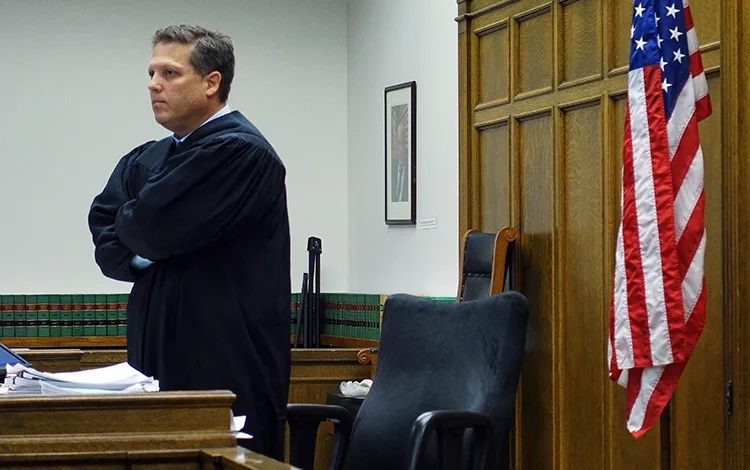
The ongoing constitutional and administrative tug-of-war over prosecutorial leadership in the Pacific Northwest escalated significantly when a federal judge ordered the immediate reinstatement of Roger Rogoff as the United States attorney for the Western District of Washington. Chief U.S. District Judge Stanley Bastian of the Eastern District of Washington delivered a decisive ruling from the bench, finding that the Trump administration had unlawfully exceeded its executive authority when it terminated Rogoff mere hours after he assumed office during the summer.
The legal controversy centers on the delicate balance of power between the executive branch and the federal judiciary regarding interim appointments to powerful prosecutorial posts. Emphasizing the necessity of adherence to statutory frameworks, Judge Bastian declared that upholding the rule of law outweighed executive maneuvering. "The court finds it is in the public interest that the law be followed and Mr. Rogoff take the office to which he has already taken the oath of office," Bastian stated during the proceedings. The preliminary injunction effectively restores Rogoff to the helm of a critical federal office, injecting fresh uncertainty into the Department of Justice’s staffing strategies under the current administration.
A Chronology of the Vacancy and the Appointment Clash
The roots of the dispute trace back to late 2023, following the departure of the previous presidentially appointed U.S. attorney for the Western District of Washington, which encompasses millions of residents across the Puget Sound and the state’s western counties. With the office left without a permanent, senate-confirmed leader, the federal district court system activated a lesser-known statutory mechanism designed to prevent prolonged vacancies in critical prosecutorial posts.
Under Title 28 of the U.S. Code, specifically Section 546(d), if a vacancy in the office of a U.S. attorney persists, the judges of the relevant federal judicial district are empowered to fill the position by appointment. This mechanism ensures that federal law enforcement and prosecution functions continue uninterrupted when the executive branch either cannot or chooses not to secure a timely nomination through the standard Senate confirmation process.
Exercising this authority, the U.S. District Court for the Western District of Washington formally announced its intention to step in and appoint an interim top federal prosecutor unless the administration put forward its own candidate by a strict February deadline. When the administration failed to install a preferred choice within the judicial district’s timeline, the local federal bench proceeded with its statutory mandate.
On July 15, the district court appointed Roger Rogoff—a seasoned litigator with a deep background in public service—to the post. Rogoff took the formal oath of office that very same day, preparing to manage an office responsible for prosecuting federal crimes, white-collar offenses, and civil actions on behalf of the government in western Washington.
However, Rogoff’s tenure was historic for its brevity. Less than an hour after he was sworn in and officially assumed his duties, the administrative machinery of the executive branch swung into action. According to court filings and contemporaneous reporting by Courthouse News Service, the deputy director of presidential personnel transmitted an abrupt email to Rogoff. The communication informed the newly minted U.S. attorney that President Donald Trump had directed his immediate removal from office, short-circuiting his administration of the district before he could settle into his duties.
Legal Arguments and the Judicial Rebuff
Faced with what he and his supporters viewed as a politically motivated and legally void ouster, Rogoff challenged the administration’s termination in federal court. The ensuing litigation focused intensely on the statutory interpretation of the Federal Vacancies Reform Act and Section 546 of the U.S. Code, which govern how interim U.S. attorneys are selected and removed.
During the arguments before Judge Bastian, legal counsel for Rogoff contended that the executive branch lacks the unfettered statutory authority to unilaterally displace a U.S. attorney who has been lawfully appointed by a federal district court under Section 546(d). The core of the plaintiff’s argument was that once the judiciary exercises its congressionally granted authority to fill a lingering vacancy, the appointee holds office pursuant to that judicial commission, insulating them from arbitrary executive removal designed to bypass the statutory framework.
The Trump administration countered that the executive branch retains inherent oversight and removal powers over all prosecutorial officers operating within the Department of Justice, regardless of whether their initial appointment originated from the White House, the attorney general, or a panel of local federal judges. Government attorneys argued that imposing a judicially appointed prosecutor against the explicit wishes of the sitting president infringes upon core executive branch prerogatives enshrined in Article II of the Constitution.
Judge Bastian, however, rejected the administration’s sweeping interpretation of executive removal power in this specific context. The court’s bench ruling emphasized that Congress explicitly created the judicial appointment mechanism to prevent the Department of Justice from indefinitely leaving critical districts under the control of acting officials or avoiding accountability when vacancies languish. By circumventing the established statutory procedure and firing an officially sworn-in officer without lawful cause under the governing statutes, the administration had overstepped its bounds.
Broader Context of Interim U.S. Attorney Appointments
The dispute in Washington state highlights a perennial structural tension within the American federal justice system: the appointment and tenure of United States attorneys. As the chief federal law enforcement officials within their respective jurisdictions, U.S. attorneys wield immense prosecutorial discretion, deciding which criminal cases to bring, how to allocate investigative resources, and how to negotiate high-stakes plea agreements.
Normally, these positions are filled through presidential nomination followed by confirmation by the United States Senate. However, because Senate confirmations can be politically contentious and time-consuming, interim appointments are exceptionally common. Administrations frequently rely on the Attorney General to appoint interim U.S. attorneys under Section 546(a) for limited 120-day periods. If a vacancy extends beyond that window without a Senate nominee pending, the local federal district court steps in under Section 546(d) to make an independent appointment.
Historically, clashes between federal judges and executive administrations over these interim posts are rare, but they tend to flare up during periods of divided government or when administrations seek to install loyalists in specific geographic regions while bypassing traditional vetting processes. The intervention by Judge Bastian represents one of the most direct judicial pushbacks against executive personnel decisions regarding U.S. attorney vacancies in recent memory.
Implications for the Western District of Washington and Beyond
The immediate practical effect of Judge Bastian’s ruling is the restoration of Roger Rogoff to the position of U.S. attorney for the Western District of Washington, placing him back at the head of an office handling sensitive matters ranging from public corruption and environmental crimes to complex cyberattacks and narcotics trafficking.
Beyond the immediate Pacific Northwest jurisdiction, the ruling carries significant implications for federal administrative law and executive-judicial relations. Legal scholars note that the decision could serve as a vital precedent for how courts view the autonomy of judicially appointed officers. If the ruling withstands expected appeals, it establishes a firm boundary on executive overreach, signaling that the White House cannot simply discard court-appointed prosecutors at will when statutory mechanisms have been strictly followed.
At the same time, the decision is almost certain to trigger an appeal by the Department of Justice to the Ninth Circuit Court of Appeals. Government attorneys may seek an emergency stay of Judge Bastian’s preliminary injunction to prevent Rogoff from exercising prosecutional authority while higher courts weigh the merits of the executive’s removal powers.
As the legal battle moves to the appellate level, the case underscores the deep institutional friction surrounding federal law enforcement appointments. For now, however, the federal judiciary in Washington state has drawn a hard line, insisting that statutory mandates and the rule of law must govern who occupies the highest local offices of federal justice.
Related posts: