From Carlos Reygadas to Hamaguchi’s Cinematographer, Tokyo’s Nippon Cinema Now Directors on Unexpected Connections

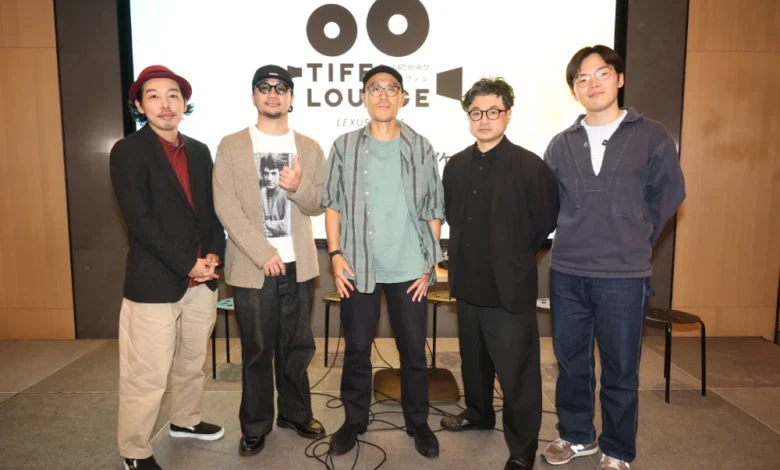
The 39th Tokyo International Film Festival (TIFF) served as a vital stage for the "Nippon Cinema Now" section, a program specifically curated to highlight the shifting paradigms of Japanese independent filmmaking. During a marquee panel discussion titled "How We Make Films," held at Tokyo Midtown Hibiya, five emerging directors—Ueda Shinichiro, Saito Kisin, Natori Satoshi, Matsumura Shingo, and Yaza Takenoshin—offered a rare, granular look at the logistical and creative risks that define their current work. Moderated by TIFF programming director Ichiyama Shozo, the session underscored a growing trend in Japanese cinema: the rejection of traditional production hierarchies in favor of agile, highly personal, and often unconventional collaborative models.
Contextualizing the Nippon Cinema Now Initiative
The Tokyo International Film Festival, established in 1985, remains the premier cinematic event in Japan. While the festival maintains a heavy focus on international competition, the "Nippon Cinema Now" segment has evolved into a barometer for the health and innovation of the domestic industry. In recent years, Japanese independent film has faced the dual challenge of declining theater attendance and a saturation of commercial streaming content. The directors featured in this year’s panel represent a response to these challenges, utilizing creative financing and non-traditional production paths to bring distinct visions to the screen.
The Evolution of Production Formats: From Microdrama to Feature
A primary focus of the discussion was the blurring of lines between digital-first content and feature-length cinema. Ueda Shinichiro, widely recognized for his breakthrough success with "One Cut of the Dead," brought a unique perspective with his latest film, "Earthlings in Love."
Ichiyama highlighted Ueda’s inclusion in the festival as a strategic move to examine how new formats influence cinematic grammar. "Earthlings in Love" began as a 30-episode microdrama series, originally designed for consumption on mobile devices in a vertical aspect ratio. Contrary to the industry standard, where such projects are produced with minimal budgets, Ueda approached the project with the discipline of a traditional theatrical feature.
"I’m from the theatrical film world," Ueda noted during the panel. "We were making it as if it were a film to start with… so it became appropriate for a theatrical release." This approach challenges the notion that vertical, digital-native content is inherently ephemeral, suggesting that high-caliber storytelling can transcend the platform on which it was conceived.
Creative Freedom and the Sponsor Paradox
For debut director Saito Kisin, the path to his feature film "Kefi" was marked by an ironic shift in creative control. Saito, a cinematographer by trade, initially entered into a project governed by a strict sponsor-mandated theme: "maternal love."
However, as production progressed, the sponsor granted the filmmakers total autonomy. The result was a film that departed entirely from its original premise, eventually becoming an exploration of three sisters grappling with their father’s death. Ichiyama described "Kefi" as a "strange film" that defies easy categorization, a sentiment echoed by the audience reception. Saito’s experience highlights a recurring theme in independent cinema: the "sponsor paradox," where the initial constraints of a commercial project inadvertently catalyze a more profound, personal artistic expression once those constraints are removed.
The Wilderness as a Laboratory: Natori Satoshi’s Vision
Perhaps the most visceral account of the creative process came from Natori Satoshi, director of "Chihiro | Akemi." Natori, a former advertising executive turned filmmaker, utilized his personal history as a hunter in eastern Hokkaido to inform the film’s atmosphere.
Natori’s approach to filmmaking is rooted in the physical and psychological shifts he experienced while living in the wilderness, far removed from his corporate life in Tokyo. He described the process of hunting—searching for prey, the act of the kill, and the consumption of meat—as a cyclical reality that he contrasted with urban existence.
"I really felt like my personality changed, and I was really interested in that shift, as if there was another person inside me," Natori explained. By stripping away his social identity in the Hokkaido woods, he tapped into an "uncanny" internal state that he sought to replicate on screen. Drawing influence from Andrei Tarkovsky’s "Nostalghia," Natori argued that the texture of a film—its color, light, and sensory depth—often supersedes the traditional narrative plot.
The film’s success at the Split Film Festival in Croatia facilitated a significant career pivot for Natori. Following a screening, Mexican director Carlos Reygadas, serving as a jury member, approached Natori with an offer of collaboration. This interaction has now set the stage for a prospective Japan-Mexico co-production, illustrating how international film festivals function as crucial networking nodes for independent filmmakers seeking to scale their operations globally.
Bridging the Gap: Direct Outreach and Collaborative Risk
The panel also addressed the practical barriers to entry for first-time filmmakers, particularly regarding the recruitment of experienced crew members. Yaza Takenoshin, director of "Hinotama: Ball of Fire," provided a candid account of his attempt to bridge the gap between amateur status and professional standards.
Lacking experience in feature-length production, Yaza took the unconventional step of messaging Kitagawa Yoshio, a cinematographer renowned for his work with the internationally acclaimed director Hamaguchi Ryusuke. Yaza’s curiosity was piqued by how such high-quality films were managed on relatively modest budgets.
"I was curious," Yaza admitted. "I assumed there must be some kind of trick to make films with a low budget like Hamaguchi does." Kitagawa’s subsequent agreement to join the project not only provided the film with technical expertise but also acted as a gateway for securing production and financial support. This "direct access" model of networking is increasingly prevalent in the digital age, where younger filmmakers are leveraging social media and direct correspondence to bypass traditional, often exclusionary, industry gatekeepers.
Broader Implications for the Japanese Film Industry
The collective experiences shared by these five directors reveal a significant shift in the Japanese independent landscape. Several key implications can be drawn from the panel:
- The De-Professionalization of Entry: The rise of direct outreach and digital-first production indicates that the traditional "apprenticeship" model of Japanese filmmaking is being supplemented, if not replaced, by a more egalitarian, risk-taking approach.
- Narrative Over Structure: As evidenced by Natori’s reliance on Tarkovskian principles, there is a growing trend toward "atmospheric" filmmaking where the emotional and physical texture of the setting takes precedence over rigid, three-act structure.
- Cross-Border Mobility: The international recognition of films like "Chihiro | Akemi" demonstrates that the Japanese independent sector is no longer insular. Collaborations with international auteurs like Carlos Reygadas suggest that Japanese directors are increasingly looking to globalize their production pipelines.
- Sustainability via Hybridity: By adapting social media-native formats into theatrical features, as Ueda did, filmmakers are finding ways to sustain their craft in an era where traditional theatrical exhibition is increasingly difficult to secure.
Conclusion
The "How We Make Films" panel at the 39th Tokyo International Film Festival served as more than just a promotional platform; it functioned as a vital record of the tactical evolution of contemporary Japanese cinema. By embracing the freedom of independent production, these filmmakers are not only challenging the conventions of their craft but are also establishing a new framework for sustainability and artistic integrity. As Natori Satoshi concluded, the primary objective for any first-time feature filmmaker should be the creation of a work that leaves them personally satisfied—a philosophy that appears to be the driving force behind the current wave of innovation in Japanese cinema.