
Ukraine Russia Invasion Anniversary
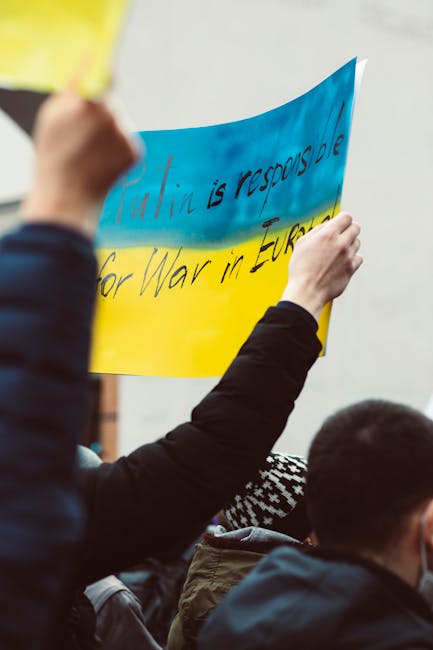
Ukraine Russia Invasion Anniversary: Two Years of Unfolding Devastation and Enduring Resilience
The full-scale invasion of Ukraine by the Russian Federation, commencing on February 24, 2022, marks a grim anniversary: two years of an unprovoked, brutal conflict that has reshaped global geopolitics, inflicted immense human suffering, and precipitated a humanitarian crisis of unprecedented scale in Europe since World War II. This invasion, a dramatic escalation of the conflict that began in 2014 with Russia’s annexation of Crimea and support for separatists in the Donbas, represents a fundamental challenge to the post-Cold War international order and the principles of national sovereignty and territorial integrity enshrined in international law. The initial objectives of the Russian leadership, widely understood to include a swift regime change in Kyiv and the subjugation of Ukraine, have been demonstrably unmet, yielding instead a protracted war of attrition characterized by devastating artillery duels, aerial bombardments, and fierce ground fighting.
The military landscape of the war has been a dynamic and brutal testament to Ukrainian resistance and Russian strategic miscalculations. In the opening weeks, Russian forces attempted a multi-pronged assault, targeting Kyiv from the north, Kharkiv from the northeast, and the south from Crimea. The Ukrainian armed forces, bolstered by a populace fiercely determined to defend its homeland, mounted a surprisingly effective defense, repelling the advance on the capital and inflicting significant casualties on Russian units. This early success was attributed to a combination of factors, including superior Ukrainian morale and tactical adaptability, Western intelligence sharing, and the provision of advanced weaponry. The failure to capture Kyiv led to a Russian strategic pivot, concentrating efforts on consolidating control over the Donbas region and securing a land bridge to Crimea. The subsequent months witnessed intense battles for cities like Mariupol, Severodonetsk, and Lysychansk, resulting in their eventual occupation by Russian forces but at an enormous human and material cost. Ukraine, in turn, launched counteroffensives in the late summer and autumn of 2022, notably in the Kharkiv and Kherson regions, reclaiming significant territory and demonstrating its capacity to regain lost ground. The frontlines have since largely stabilized, with both sides digging in for protracted trench warfare, punctuated by artillery exchanges and limited probing attacks. The introduction of more sophisticated Western military aid, including HIMARS rocket systems and advanced air defense capabilities, has allowed Ukraine to strike at Russian logistics and command centers, while Russia has increasingly relied on long-range missile and drone strikes targeting Ukrainian infrastructure and civilian areas.
The human toll of this conflict is staggering and continues to mount. The United Nations High Commissioner for Refugees (UNHCR) estimates that millions of Ukrainians have been displaced internally, and millions more have sought refuge in neighboring countries and beyond, creating the largest refugee crisis in Europe in generations. Cities have been reduced to rubble, with widespread destruction of residential buildings, hospitals, schools, and critical infrastructure. The deliberate targeting of civilian areas and infrastructure by Russian forces has been widely condemned as a violation of international humanitarian law, with numerous documented instances of war crimes. The psychological impact on the Ukrainian population is profound, with widespread trauma, loss, and displacement affecting individuals of all ages. Access to essential services like healthcare, clean water, and electricity has been severely disrupted in many frontline and occupied territories, exacerbating the humanitarian crisis. The long-term consequences for generations of Ukrainians, particularly children who have grown up amidst constant conflict and fear, are immeasurable and will require extensive support for years to come.
Beyond the immediate battlefield and humanitarian crisis, the invasion has triggered profound global economic repercussions. Sanctions imposed by Western nations and their allies on Russia, targeting its financial sector, energy exports, and key individuals, have aimed to cripple its war-making capacity. While these sanctions have undoubtedly impacted the Russian economy, they have also contributed to global energy price volatility and supply chain disruptions. Ukraine, a major global supplier of grain and other agricultural products, has seen its export capacity severely hampered, contributing to food insecurity in vulnerable regions worldwide. The rerouting of trade flows, the increased cost of energy and commodities, and the general uncertainty generated by the conflict have fueled inflation and economic slowdowns in many countries. The war has also prompted a significant reassessment of global energy security, with many nations accelerating their transition away from Russian fossil fuels and investing in renewable energy sources. The ongoing economic ramifications underscore the interconnectedness of the global economy and the far-reaching consequences of this regional conflict.
Geopolitically, the invasion has irrevocably altered the international landscape. The perceived threat from a resurgent and aggressive Russia has led to a significant strengthening of NATO, with Finland and Sweden abandoning their long-standing neutrality and joining the alliance. European nations have significantly increased their defense spending and commitments to collective security. The war has also exposed deep divisions within the international community, with some nations aligning with Russia and others with Ukraine. The United Nations, while providing a forum for condemnation and humanitarian aid, has been hampered in its ability to enforce international law or broker a lasting peace by the veto power of permanent Security Council members, including Russia. The conflict has reignited debates about the efficacy of international institutions and the future of global governance. Furthermore, it has highlighted the critical importance of information warfare and the pervasive influence of disinformation campaigns, with both sides engaging in extensive efforts to shape public opinion both domestically and internationally. The anniversary serves as a stark reminder of the ongoing struggle to uphold democratic values and resist authoritarian aggression on the international stage.
The international response to the invasion has been multifaceted, encompassing military aid, financial assistance, humanitarian support, and diplomatic efforts. Western allies have provided Ukraine with unprecedented levels of military hardware, ranging from anti-tank missiles and artillery to advanced air defense systems and armored vehicles. This sustained military support has been crucial in enabling Ukraine to defend itself and regain territory. Financial assistance packages have aimed to stabilize Ukraine’s economy and support its government functions. Humanitarian organizations have been working tirelessly to provide aid to displaced populations and those affected by the conflict. Diplomatic efforts, while proving largely unsuccessful in achieving a lasting ceasefire or peace agreement, have continued through various channels, including mediation attempts by third countries. The prolonged nature of the conflict, however, has led to concerns about "Ukraine fatigue" in some quarters and the challenge of maintaining sustained international attention and support. The anniversary prompts a renewed call for continued solidarity with Ukraine and a commitment to finding pathways towards a just and lasting peace.
Looking ahead, the future remains fraught with uncertainty. The war of attrition shows no immediate signs of abating, with both sides exhibiting a resolve to continue fighting. The potential for escalation, including the use of more destructive weaponry or the involvement of other actors, remains a persistent concern. The long-term consequences for Ukraine’s sovereignty and territorial integrity are yet to be determined, and the path to reconstruction and recovery will be arduous and immensely costly. The anniversary underscores the imperative for continued international pressure on Russia to end its aggression, coupled with robust support for Ukraine’s defense and its eventual post-war reconstruction. The lessons learned from these two years of conflict – about the fragility of peace, the importance of international law, and the enduring human cost of war – will undoubtedly shape the geopolitical landscape for decades to come. The resilience of the Ukrainian people in the face of overwhelming adversity stands as a powerful testament to their determination to preserve their nationhood and their right to self-determination. The ongoing struggle for Ukraine’s freedom and sovereignty remains a critical global imperative.
