Global Temperatures Reach Unprecedented Highs as Scientists Warn of Worsening Climate Pressures

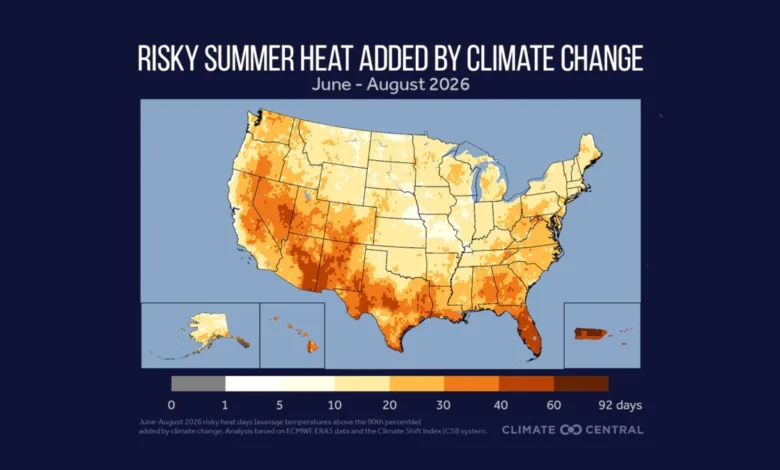
Record-shattering heat waves across the Northern Hemisphere during the meteorological summer of June through August have redefined global climate benchmarks. According to recent confirmations from the National Oceanic and Atmospheric Administration (NOAA) and detailed analytical reports released by the research group Climate Central, the summer of 2026 has officially broken records, highlighting a rapidly accelerating global climate crisis. The compounding effects of long-term anthropogenic global warming, regional atmospheric shifts, and the emerging influence of El Niño have converged to create a public health emergency spanning multiple continents, leaving experts to warn that even more severe climate milestones may lie ahead.
Main Facts and Statistical Overview of the 2026 Summer Heat
The statistical reality of the recent summer months underscores the magnitude of the meteorological anomaly. NOAA confirmed that the contiguous United States experienced its hottest meteorological summer on record, surpassing the previous historic highs recorded during the dust-bowl era of 1936 and the recent high of 2021 by a margin of 0.4 degrees Fahrenheit. When measured against the 20th-century baseline average, the continental U.S. was a staggering 3 degrees Fahrenheit warmer overall, with the month of August exhibiting an even more pronounced deviation at 3.5 degrees Fahrenheit above normal.
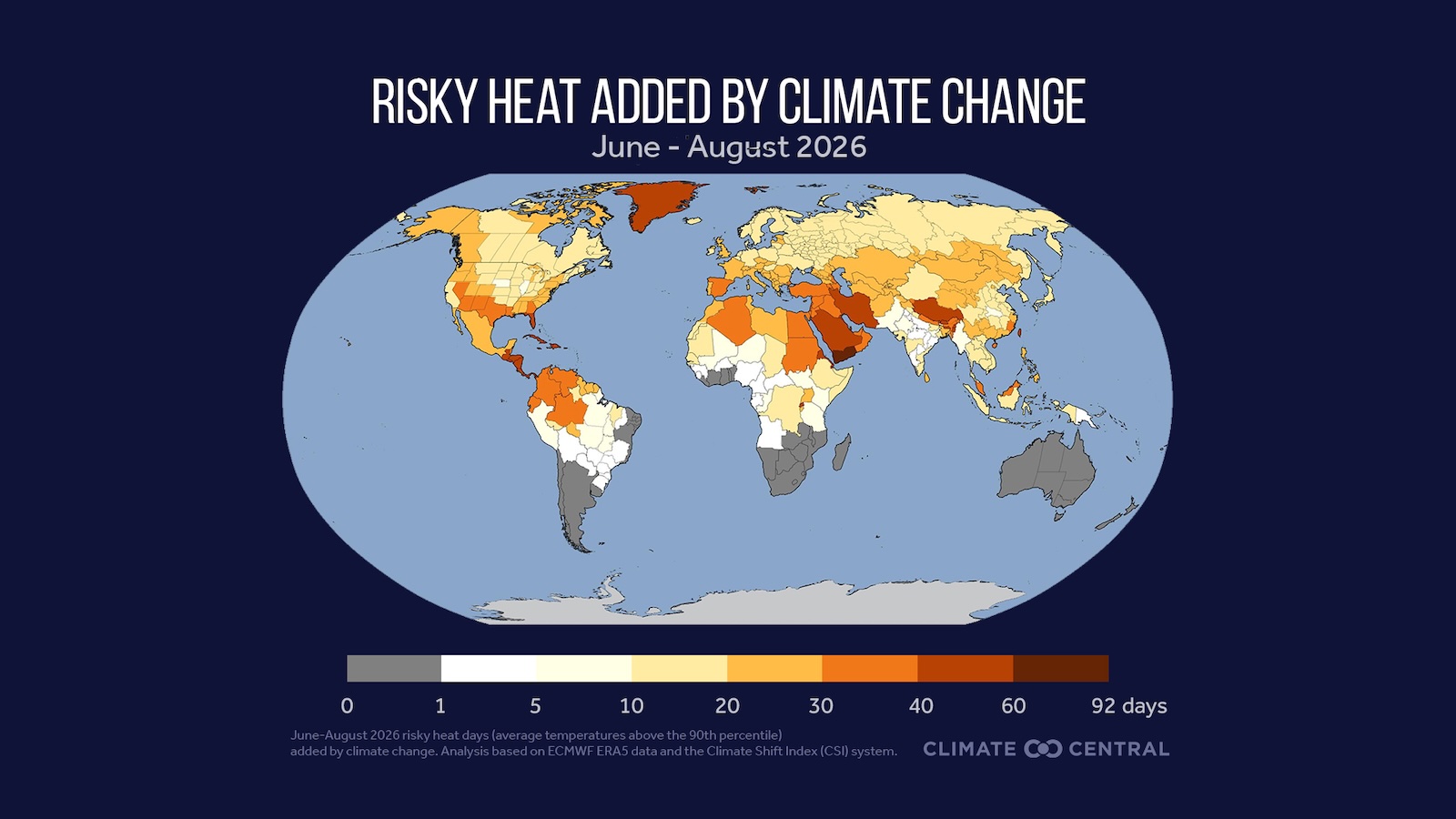
The domestic experience reflects a broader global pattern. Data from Climate Central reveals that approximately 293 million people in the United States—representing roughly 86 percent of the nation’s total population—endured at least 30 days of "risky heat." In this context, risky heat is defined as temperatures surpassing the 90th percentile of historical norms for a specific geographic location. The exposure scale was even more immense in Asia, where approximately 2.8 billion individuals faced comparable conditions.
Regionally, the American West bore the brunt of the domestic heat anomaly. Four out of the five states registering the highest number of climate-influenced risky days were located in the West: New Mexico, Nevada, Colorado, and Utah. Colorado experienced the most dramatic departure from historical averages, recording summer temperatures 4.4 degrees Fahrenheit above normal, while Utah and Nevada both observed average increases of 3.8 degrees Fahrenheit.
Chronology and Development of the 2026 Climate Crisis
The trajectory of the 2026 summer heat wave developed through a succession of escalating climate events across the globe.
In early June, as the meteorological summer officially commenced, early-season high-pressure domes settled over the southwestern United States and large portions of Southern and Western Europe. These persistent atmospheric blocking patterns trapped hot air masses for weeks at a time.

By mid-July, the intensity of the heat triggered widespread infrastructural strains. In Europe, electrical grids faced unprecedented demand driven by intensive air conditioning use—a relatively recent adaptation in regions historically unaccustomed to prolonged extreme heat. Renewable energy sources, particularly solar generation, played a critical role in stabilizing power networks during peak demand periods, though several regional grids still approached critical failure thresholds.
In August, peak temperatures forced NOAA and international meteorological agencies to issue continuous excessive heat warnings. Concurrently, Climate Central initiated comprehensive modeling to assess the human exposure metrics, culminating in the late-August and early-September releases quantifying the multi-billion-person exposure across the U.S. and Asia. Furthermore, throughout this period, the developing El Niño system in the Pacific Ocean began transitioning from a nascent formation phase into a robust weather driver, injecting additional thermal energy into the global atmosphere.
The European Epicenter and the "Pollution Paradox"
While North America recorded significant temperature anomalies, Europe maintained its status as the fastest-warming continent on Earth. Prolonged heat waves across the region contributed to devastating environmental consequences, including severe wildfires and a preliminary death toll estimated by health authorities to exceed 25,000 fatalities for the year.
Climatologists attribute Europe’s accelerated warming trend to two primary factors. The first is its geographic proximity to the Arctic Circle. The Arctic is warming at a rate multiple times faster than the global average, driven by an albedo feedback loop: as seasonal sea ice melts, it exposes darker ocean waters that absorb substantially more solar radiation rather than reflecting it back into space.
The second, more counterintuitive factor involves the "pollution paradox"—an unintended consequence of successful environmental regulations. Decades of aggressive clean-air policies across Europe and North America have successfully reduced industrial particulate matter and atmospheric aerosols. While these policies have drastically improved human respiratory health and reduced acid rain, aerosols also historically served to reflect incoming solar radiation back into space, creating a localized cooling mask.
"As we clean up our industrial processes and we have less aerosols in the atmosphere, which is the case in much of Europe, we’re unmasking that climate signal," explained Kristina Dahl, vice president for science at Climate Central. "Europe’s experiencing more of the full brunt of climate change because of that."
Public Health Implications and the Absence of Nocturnal Recovery
The human cost of sustained high temperatures extends far beyond immediate heat exhaustion. Public health officials and medical researchers emphasize that the most dangerous aspect of contemporary heat waves is the lack of nighttime cooling.
Historically, extreme daytime temperatures were followed by significant nocturnal relief, allowing the human body to dissipate accumulated heat and recover. However, as nighttime temperatures continue to rise globally at a faster rate than daytime maximums, that crucial recovery window is disappearing.
"The numbers are just really mind-boggling," Dahl noted. "Extreme heat on its own can cause health problems, but it can also exacerbate a lot of underlying health conditions."
When ambient nighttime temperatures remain elevated, the human body continues to store residual heat, creating a cumulative physiological burden. This phenomenon disproportionately impacts vulnerable populations, including the elderly—whose physiological mechanisms for thermoregulation are naturally diminished—and outdoor laborers, such as agricultural workers and construction crews, who return to strenuous shifts without having recovered from the previous day’s thermal exposure. Cardiorespiratory systems are placed under chronic strain, leading to increased rates of heatstroke, myocardial infarctions, and acute respiratory distress.
Future Outlook: The Looming El Niño Threat
As the Northern Hemisphere transitions out of the summer season, the scientific community’s attention has pivoted toward the Pacific Ocean, where a strengthening El Niño event is currently taking shape. El Niño, characterized by a sustained warming of ocean surface temperatures across the central and eastern tropical Pacific, inherently alters global atmospheric circulation and adds significant heat energy into the global climate system.
Although the current El Niño played a contributing role in amplifying the record-breaking temperatures of the 2026 summer, researchers emphasize that the event has not yet reached its peak maturity. The combination of baseline anthropogenic warming and a maturing, potentially super-strength El Niño raises serious concerns among meteorologists regarding the thermal baseline for the upcoming year.
"It’s still an event that’s taking shape," Dahl cautioned regarding the developing Pacific pattern, "so it’s nowhere near its peak."
As governments, urban planners, and public health agencies process the data from the summer of 2026, the imperative to adapt infrastructure, protect vulnerable outdoor workforces, and accelerate global decarbonization efforts has never been more urgent. The record-breaking temperatures of this year serve as a clear indicator of a shifting climatic baseline, signaling that without substantial intervention, contemporary extremes will soon become the standard baseline of the future.