The Silent Epidemic: Why Thousands of American Coal Miners Are Trapped in a Decades-Long Battle for Black Lung Benefits

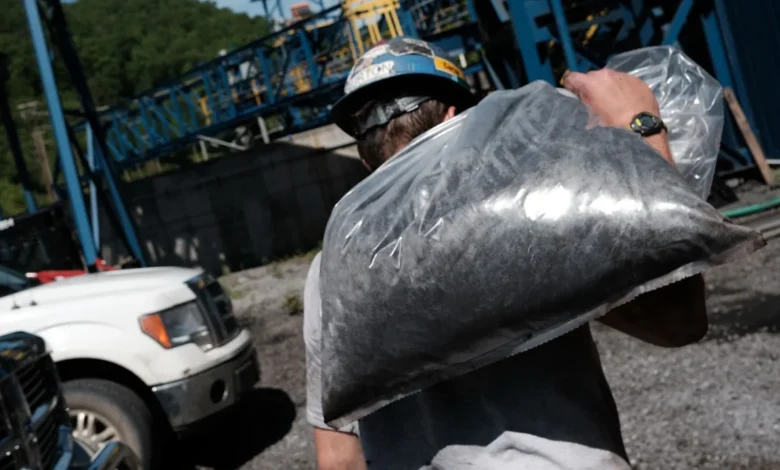
For 38 years, Josh Armes descended into the subterranean darkness of coal mines across West Virginia and Virginia, laboring in the narrow, dust-choked seams that have powered the American economy for generations. Today, at 74, his world has shrunk to the radius of his oxygen tank’s tubing. Like thousands of his peers, Armes suffers from coal workers’ pneumoconiosis (CWP)—the clinical name for black lung disease. It is a progressive, irreversible condition where inhaled coal and silica dust scar the lungs, effectively suffocating the victim from the inside out. Yet, for Armes and many others, the fight against the disease has become secondary to a far more grueling, bureaucratic war: a 12-year legal battle to retain the federal benefits promised to them under the law.
The federal black lung benefits program, established in 1969, was designed as a social contract between the nation and the miners who risked their health for its energy security. However, as the medical reality of the disease reaches a near 50-year peak in severity, that contract is fraying under the weight of systemic legal obstruction, indefinite regulatory delays, and an appeals process that many advocates describe as designed to outlive the claimants themselves.
A Surge in Cases and a Shift in Composition
The resurgence of black lung is not merely a historical footnote; it is an active public health crisis. Recent data published in the American Journal of Respiratory and Critical Care Medicine reveals that 32.5 percent of veteran underground coal miners in central Appalachia are now suffering from the disease. This prevalence rate has not been observed since 1978, a time when mining safety protocols were significantly less sophisticated than those today.
The nature of the disease has also evolved. While traditional black lung was associated with coal dust, the modern, more aggressive iteration is increasingly linked to silica dust. As coal seams become thinner and harder to access, miners are forced to cut through the surrounding rock, which is rich in crystalline silica. This substance is significantly more toxic than coal dust, causing more rapid and severe lung damage. Between 2020 and 2023 alone, more than 1,700 American coal miners succumbed to the disease, a grim statistic that highlights the lethal intersection of aging mining infrastructure and intensified extraction methods.
The Bureaucratic Labyrinth: A Timeline of Obstruction
The experience of the Armes family is emblematic of a broader, systemic failure. In 2014, after having received benefits for three years, Josh Armes was notified that his coal operator was appealing the decision. This triggered a decade-long cycle of litigation. The Government Accountability Office (GAO) confirmed in a May 2026 report that the experience of the Armes family is far from unique.
The timeline of a typical disputed claim is a testament to the exhaustion of the claimant. Between 2013 and 2024, approximately 40 percent of all claims approved by the Department of Labor were subsequently challenged by coal operators. The GAO report identified that the median length of an appealed claim is three years, but for many, it stretches far longer. Out of 53,000 claims closed in that same period, 11 dragged on for over a decade.
This process is financially and emotionally ruinous. Claimants are often required to undergo multiple medical evaluations, pay for independent testing, and secure specialized legal counsel—costs that are frequently prohibitive for retired miners living on fixed incomes. When a claim is appealed, the benefits are often suspended, forcing families to choose between medical care and basic survival. In at least 390 cases between 2013 and 2024, miners whose claims were initially granted had them stripped away after a successful appeal by the operator, sometimes forcing the miners to pay back the funds they had already spent on essential healthcare.
The Silica Rule and Regulatory Deadlock
The legislative and regulatory response to this crisis has been marked by partisan friction. In April 2024, a federal silica dust rule was finalized, aiming to mandate improved engineering and ventilation controls in mines. However, the implementation of this rule has been effectively neutered. In June 2024, Congress blocked funding for the enforcement of the rule, and the Mine Safety and Health Administration (MSHA) under the current administration has signaled a refusal to prioritize its application.
The administration has cited "pending judicial review" as the reason for the indefinite delay. Critics, however, view this as a transparent stall tactic. Rebecca Shelton, director of policy for the Appalachian Citizens’ Law Center, has been vocal in her condemnation, arguing that the government is "hiding behind a ridiculous legal process to delay action while miners get sick and die."
The implications of this regulatory paralysis are profound. By failing to enforce stricter exposure limits, the government allows the current, higher-risk mining environment to persist without the necessary safeguards. The United Mine Workers of America (UMWA) has repeatedly urged the administration to unfreeze the rule, with union president Brian Sanson stating, "A company’s profit margin cannot take precedence over a miner’s right to draw a breath."
Economic and Ethical Implications
The debate over black lung benefits touches upon the core of the American industrial legacy. Proponents of the coal industry often argue that the cost of these benefits and the associated regulations could cripple operations, particularly in an era of shifting energy markets. However, labor advocates and medical professionals counter that the "cost of doing business" should never include the premature, agonizing death of the workforce.
The economic reality is that when coal operators successfully shift the burden of care away from their own balance sheets, it is transferred to the taxpayer and the public health system. When a miner is denied benefits, they often turn to Medicare or Medicaid, meaning the public effectively subsidizes the long-term health consequences of private industrial extraction.
Furthermore, the legal strategy of "waiting for them to die" creates a moral hazard that undermines public trust in labor protections. When a family like the Armes’ is forced to spend 12 years in court just to prove that their father’s work-related injury is legitimate, the efficacy of the entire federal safety net is brought into question.
Official Responses and Future Outlook
The White House has consistently deferred inquiries regarding the black lung crisis to the Department of Labor. In response to recent criticism, a spokesperson for the MSHA stated: "Until pending litigation and limited rulemaking on respirable crystalline silica are resolved, MSHA continues to vigorously enforce the permissible exposure limit of 100 micrograms per cubic meter."
However, this standard is considered outdated by many respiratory health experts, who argue that it fails to account for the heightened toxicity of the silica dust encountered in modern mining operations. As long as the rule remains in limbo and the appeals process remains adversarial, the number of miners seeking justice is expected to rise.
For now, the situation remains in a state of suspended animation. Legislation introduced by a coalition of Democratic senators, including Mark Warner and John Fetterman, seeks to reform the system by increasing accessibility and shortening the window for appeals. Yet, in the current political climate, the prospects for such reform appear dim.
As Josh Armes continues to wait for his own appeal to be resolved, his daughter Crystal remains skeptical of the system’s capacity for change. "We’re hardworking, everyday Americans who go to work every day, pay our taxes, try to do the right thing, and then, we can’t get what was promised us," she noted. Her words resonate across the coalfields of Appalachia, where thousands of families are watching the same clock, waiting for the recognition and the care that their years of labor have earned them—care that is currently being denied in the name of policy, profit, and the cold logic of the law.
Related posts: