The High-Stakes Secrecy of AI World Models: Why the Industry’s Biggest Players Are Staying Silent

The artificial intelligence landscape is currently dominated by massive investments, soaring valuations, and public showdowns over large language models and generative video applications. Yet, just beneath the surface of consumer-facing chatbots lies a quieter, vastly more ambitious frontier: the development of AI world models. Promising to automate spatial intelligence and revolutionize everything from industrial robotics to advanced autonomous navigation, world models have captured the imagination of researchers and venture capitalists alike. However, despite commanding immense funding rounds and generating substantial industry buzz, the sector’s leading laboratories are operating under an unprecedented veil of secrecy.
As prominent AI research hubs race to build foundational simulations of physical reality, a distinct culture of quietude has taken hold. Companies such as Yann LeCun’s AMI Labs and Fei-Fei Li’s World Labs are spearheading this movement, yet they rank remarkably low on traditional commercialization scales. This deliberate silence—echoed from executive suites down to raw data suppliers—presents a fascinating paradox. In an industry historically defined by breathless product announcements and aggressive marketing campaigns, the world model ecosystem is behaving like a digital dark forest, where staying hidden is viewed as the primary prerequisite for long-term survival.
Decoding Spatial Intelligence: What Are World Models?
To understand the intense secrecy surrounding the sector, one must first examine the core technology. Unlike conventional large language models that predict the next token in a sequence of text, world models are designed to understand, predict, and simulate the physical mechanics of the real world. At their foundational level, these systems aim to automate spatial intelligence, bridging the gap between digital computation and physical reality.
The potential applications for this technology are as vast as they are lucrative. In autonomous driving, a robust world model serves as a continuously updating, navigable map that allows a vehicle to anticipate and react to complex traffic scenarios far beyond simple pattern recognition. In robotics, the same underlying architecture can provide humanoid machines with the physical intuition required to manipulate fragile objects, navigate cluttered warehouses, or assist in healthcare settings. Furthermore, in digital media and interactive entertainment, world models can transform a few seconds of video footage into fully explorable three-dimensional environments, rendering traditional CGI pipelines and manual game design obsolete.
Despite these expansive use cases, the path to monetization remains notoriously foggy. The technology is inherently heavy on research and development, requiring immense computational power and specialized datasets to accurately simulate physics, lighting, and spatial constraints. Consequently, while foundational research is progressing at a breakneck pace, concrete commercial products remain scarce.
The Corporate Stance: Building in the Shadows
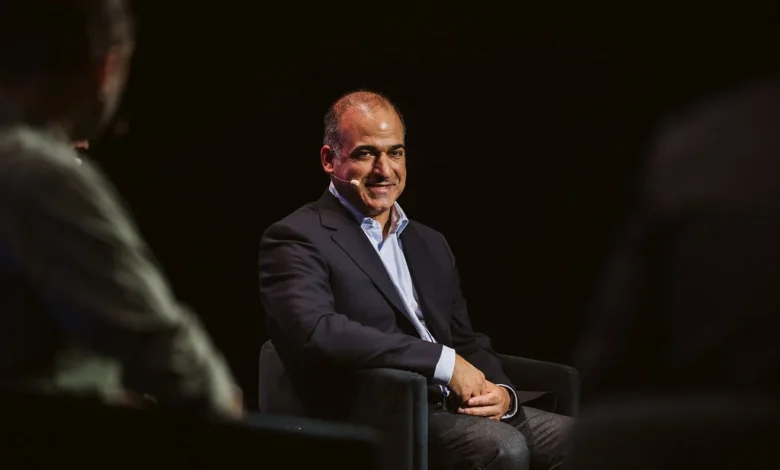
The reluctance to discuss product timelines or commercial strategies was on sharp display during a recent industry panel on world models at the All In conference. Moderated by technology analysts examining the sector, the panel featured Michael Rabbat, co-founder of AMI Labs and the company’s vice president of world models. When pressed by moderators on the specifics of AMI Labs’ internal projects and eventual commercial rollout, Rabbat maintained a strictly guarded posture.
"We’ll talk about it when we’re ready to talk about it," Rabbat stated during the panel discussion. Clarifying his position in subsequent correspondence, he noted that the organization remains deeply entrenched in the research and building phase, precluding any public disclosures regarding product timelines or specific market targets.
To be fair, AMI Labs is a relatively young enterprise, having operated for less than a year. A quiet incubation period is standard practice for deep-tech startups tackling fundamental scientific hurdles. However, this caginess is not an isolated incident; it permeates the entire ecosystem. World Labs, another heavily funded pioneer in spatial intelligence, has showcased impressive technology through its Marble platform. While Marble’s early demonstrations illustrate sophisticated capabilities—ranging from media creation and interactive video game environments to specialized visual effects—the platform often functions more as a proof-of-concept than a commercially available tool for enterprise customers.
The Downstream Effect on Data Suppliers
The information blackout extends far beyond internal product roadmaps, directly impacting the supply chain that sustains these laboratories. Developing a world model requires massive quantities of high-fidelity physical data, ranging from spatial scans to complex kinematic measurements.
Speaking on the sidelines of the same industry conference, Alex de Vigan, chief executive officer of Physicl—a specialized data supplier catering to the burgeoning world model sector—shed light on the operational friction caused by this corporate secrecy. De Vigan confirmed that his firm’s data has been actively integrated into various undisclosed projects within the space, yet he and his team remain completely in the dark regarding the ultimate objectives of their clients.
"I wish they would tell us more," de Vigan remarked. "We could build more useful data if we knew what they were working on."
This disconnect highlights a unique operational challenge within the deep-tech economy. Suppliers are expected to deliver hyper-specific training inputs without understanding the exact physical or mechanical dynamics their models are ultimately designed to simulate.
The Versatility Trap and the Threat of Preemptive Competition
Part of the mystery surrounding world models stems from their sheer versatility. A single architectural approach can theoretically pivot across multiple trillion-dollar industries. AMI Labs, for instance, has already explored preliminary partnerships across manufacturing, biomedicine, advanced robotics, and even specialized medical software for clinical diagnostics through its collaboration with Nabia.
Faced with such an expansive horizon, these laboratories have little incentive to narrow their focus prematurely. As long as venture capital and strategic funding remain readily available—bolstered by investor enthusiasm for foundational AI breakthroughs—there is minimal financial pressure to commit to a single vertical market.
More importantly, avoiding early specialization is a deliberate defensive strategy against premature competition. If a prominent lab were to announce tomorrow that it had successfully commercialized a universal operating system for humanoid robotics or a disruptive Hollywood rendering engine, it would instantly trigger a massive realignment across the tech sector. Such an announcement would not only galvanize rival world model startups, but it would also draw the immediate attention of well-capitalized industry giants such as OpenAI, Anthropic, and major enterprise cloud providers.
In essence, the very financial ecosystem that enables these companies to research under the radar also arms their eventual competitors. Because venture capital flows freely throughout the AI sector, any strategic roadmap made public today lays the strategic groundwork for a dozen well-funded rivals tomorrow. Delaying the reveal of a definitive path to market is therefore the most rational method for preserving a competitive moat.
The Dark Forest of Artificial Intelligence
Observing the strategic silence and paranoid positioning of the world model sector, industry veterans have drawn comparisons to the dark forest hypothesis popularized in modern science fiction. In the conceptual framework introduced by author Cixin Liu, civilizations in a hostile universe remain hidden because any active transmission of their location invites destruction from superior, unseen adversaries.
While the stakes in artificial intelligence are commercial rather than existential, the underlying dynamic is remarkably similar. In a landscape where competitors possess equal access to capital and talent, visibility is a vulnerability. Until these laboratories have fully fortified their intellectual property and established insurmountable technical leads, the wisest course of action is to remain quiet, keep building, and let the forest conceal their movements.
Related posts: