The Mystery of the Tyrannosaurus rex Metabolism Finally Solved Through Breakthrough Chemical Analysis


For generations, the iconic Tyrannosaurus rex has captured the public imagination as the undisputed king of the prehistoric world. Yet, beneath the cinematic depictions of roaring terror and devastating jaw strength, a fundamental physiological question has eluded the scientific community: Was the apex predator warm-blooded or cold-blooded? Early paleontologists universally categorized dinosaurs as sluggish, cold-blooded reptiles reliant entirely on the sun to regulate their body temperatures. However, decades of evolutionary research have progressively dismantled this outdated stereotype, painting a picture of dinosaurs as dynamic, swift creatures that eventually gave rise to modern birds.
Today, that decades-long debate has reached a definitive conclusion. According to a landmark study published in the journal Science Advances, researchers have definitively established that the Tyrannosaurus rex maintained an internal body temperature remarkably similar to that of a modern human—hovering right around 97 degrees Fahrenheit. This groundbreaking finding delivers the first conclusive chemical proof regarding the tyrant lizard’s metabolic strategy, bridging the gap between cold-blooded reptiles and their high-temperature avian descendants.
A Technological Breakthrough in Paleontology
Obtaining a precise internal body temperature from a fossilized creature that lived roughly 66 million years ago was, until recently, an impossible endeavor. Soft tissues, blood vessels, and organs decay rapidly, leaving behind only mineralized bones and teeth. However, a scientific technique developed approximately a decade ago revolutionized the field of geobiology by introducing the study of clumped isotope geochemistry.
When calcium carbonate forms in bone or tooth enamel, rare isotopes of carbon and oxygen bond together. The frequency with which these specific carbon-oxygen bonds form is strictly governed by the temperature at which the mineral crystallized within the living animal. By measuring these bonds using sophisticated mass spectrometry, scientists can accurately reconstruct the body temperature of an organism long after its extinction.
Despite its theoretical brilliance, the early iterations of this method presented a formidable practical barrier: sample size. Previous protocols required substantial amounts of fossil material to yield readable data. When researchers attempted to drill into dinosaur bones or teeth, the sheer volume of material required would permanently deface and structurally compromise the specimen. Because Tyrannosaurus rex fossils are exceptionally rare and fiercely guarded by museum curators worldwide, institutions routinely denied access to their prized collections.
To overcome this roadblock, a research team led by geobiologists at the University of California, Los Angeles (UCLA), spent years refining the analytical technique. By optimizing the extraction and purification processes, the team successfully reduced the required sample size by a staggering 90 percent.

Sourcing Thomas the T. rex
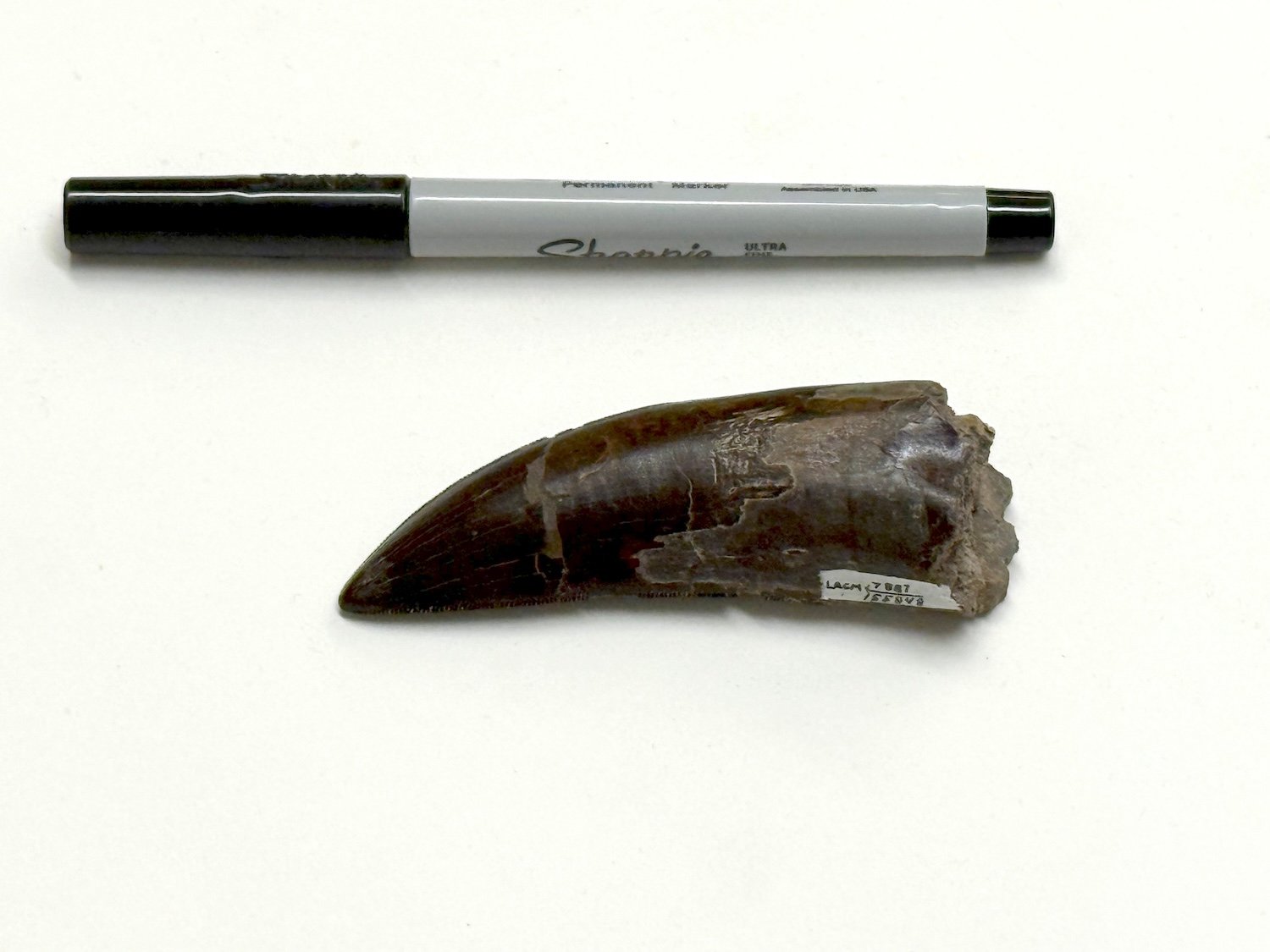
Armed with a method requiring merely a few milligrams of material, the UCLA researchers approached the Los Angeles Museum of Natural History. Convinced by the precision and minimal invasiveness of the updated protocol, museum curators finally agreed to part with microscopic fragments extracted from the teeth of "Thomas," a remarkably well-preserved T. rex specimen housed in their collection.
Using a precise dental drill, the researchers harvested minuscule shavings of fossilized tooth enamel. Enamel serves as an ideal medium for this type of analysis because its dense, highly crystalline structure is uniquely resilient, resisting diagenesis—the chemical alteration of fossils over millions of years—far better than porous bone.
The extracted enamel was subsequently dissolved in phosphoric acid, releasing carbon dioxide gas bearing the coveted isotopic bonds. After pressurizing the gas, the team fed the samples into a high-precision mass spectrometer. The resulting data revealed the thermal signature locked away since the Cretaceous period: the T. rex lived with a core body temperature of approximately 97 degrees Fahrenheit.
This reading places the dinosaur well above modern ectothermic reptiles, such as crocodiles and lizards, and slightly ahead of creatures like sloths. However, it sits comfortably below the high metabolic baselines of modern birds, the direct descendants of theropod dinosaurs, which typically range between 104 and 109 degrees Fahrenheit.
The Evolutionary Timeline of Endothermy
To fully contextualize this discovery, historians of science point to a massive paradigm shift that has unfolded over the past fifty years. For much of the 19th and early 20th centuries, dinosaurs were universally viewed as oversized, lumbering lizards. Their immense size led many theorists to assume they possessed passive, environmental temperature regulation, known as gigantothermy, where large bodies simply retain heat gained during the day throughout the night.
However, as advanced biomechanical studies began to reveal that dinosaurs were active hunters capable of sustained, agile movement, the gigantothermy hypothesis proved insufficient. The discovery of fast-paced predatory behaviors, coupled with the realization that birds evolved directly from small theropod dinosaurs, forced a profound reevaluation of dinosaur physiology.
Over the last ten years, researchers have progressively applied clumped isotope techniques to a broader range of ancient fauna. UCLA geobiologist Robert Eagle and his colleagues previously utilized the method to confirm that the colossal prehistoric shark, the megalodon (Otodus megalodon), also possessed a warmer-than-expected internal temperature. Yet, applying the technique to a terrestrial apex predator like the T. rex remained the ultimate test of the hypothesis.
Broader Implications: Conquering the Arctic
The confirmation of a warm-blooded metabolism in Tyrannosaurus rex carries profound implications for our understanding of Cretaceous ecosystems and dinosaur biogeography. An endothermic metabolism provided the T. rex with a high-energy engine, allowing for sustained physical exertion during hunting and rapid growth rates during its youth.
Furthermore, this physiological adaptation explains how the apex predator was able to successfully colonize a massive geographic territory spanning widely disparate climatic zones. Fossil evidence confirms that tyrannosaurids roamed across North America, stretching from what is now the southern United States all the way up into the Arctic realms of present-day Alaska.
Cold-blooded reptiles are fundamentally restricted to warmer latitudes because they cannot generate sufficient internal heat to survive prolonged freezing temperatures. By maintaining an internal body temperature of 97 degrees Fahrenheit, the T. rex possessed a biological heater that insulated it against environmental shifts.
"The teeth tell us T. rex was warmer than the environment around it," noted UCLA geochemist and study co-author Aradhna Tripati. "A warm-blooded T. rex could go almost anywhere on the continent, including the Arctic."
Future Horizons in Paleobiological Research
The success of this study marks a turning point for paleontological research, opening the door to unprecedented analyses of other extinct species. With the sample-size barrier successfully shattered, researchers can now request small tooth fragments from a wider variety of museum specimens without fear of damaging invaluable artifacts.
Scientists are already setting their sights on analyzing other dinosaur clades, including long-necked sauropods and armored herbivorous dinosaurs, to determine whether warm-bloodedness was an isolated trait among hyper-carnivores or a widespread characteristic across the broader dinosaur family tree.
As analytical chemistry continues to merge with traditional paleontology, our understanding of prehistoric life moves further away from speculative guesswork and closer to empirical certainty. The Tyrant King, once shrouded in ambiguity, has finally surrendered its thermal secrets, cementing its status not just as a mechanical marvel of nature, but as a warm-blooded powerhouse of the ancient world.
Related posts: