Tom Cruise Embraces His Reputation for Intensity While Navigating a New Era of Hollywood Filmmaking

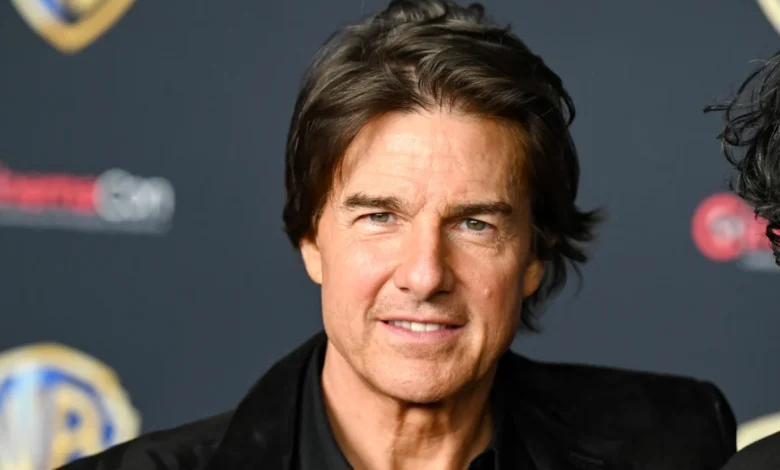
The enduring career of Tom Cruise has long been defined by a singular commitment to the craft of cinema, a dedication that has frequently sparked rumors regarding his uncompromising intensity on set. In a wide-ranging cover story for the latest issue of GQ, the Oscar-nominated actor addressed these long-standing industry whispers head-on, confirming that his demanding nature is not merely a rumor but a foundational element of his professional philosophy. As he prepares for the release of Alejandro G. Iñárritu’s drama Digger—his first significant departure from the action-heavy roles that have dominated his recent filmography—Cruise suggests that his intensity is a tool designed to foster a collaborative environment aimed at the shared human experience of the theater.
The Philosophy of Professional Intensity
For decades, the “Tom Cruise set” has been characterized by legend and lore. From the high-stakes stunt work of the Mission: Impossible franchise to the meticulous production standards of Top Gun: Maverick, Cruise has maintained a reputation as a producer and performer who demands as much from his collaborators as he does from himself. Addressing this, Cruise noted that he does not view his intensity as a barrier, but rather as an invitation.
“I’m very open. It’s not like we don’t have a plan,” Cruise explained in the interview. “I work hard, and people that work with me, they know. I expect a lot and I’m upfront about it. It’s like: ‘The rumors are true. And do you want this?’ I’ll be here before you. What experience do you want?”
This approach, he suggests, is rooted in a lifelong curiosity and a drive to master the tools of his trade. He acknowledges that his reputation for being “intense” dates back to his childhood, where his singular focus often set him apart from his peers. Rather than suppressing this trait, he has channeled it into a career that prioritizes the collaborative discovery of a film’s “tone.” By being willing to look “foolish” in pursuit of a scene’s emotional truth, Cruise argues he sets a precedent for his cast and crew to shed their inhibitions and engage fully in the creative process.
A Return to Dramatic Roots: The Digger Era
The timing of these reflections coincides with a notable pivot in Cruise’s career. With his casting in Alejandro G. Iñárritu’s Digger, Cruise is stepping away from the high-octane blockbusters that defined his 2010s and early 2020s. The film, which marks a collaboration with one of cinema’s most critically acclaimed directors, represents a departure from the pyrotechnics of the Ethan Hunt persona.
Industry analysts observe that this move is indicative of a broader strategy for the actor, who has historically balanced his commercial powerhouses with character-driven dramas. The transition to a project led by Iñárritu—known for the technical complexity and emotional depth of films like The Revenant and Birdman—suggests a desire for the actor to lean into a more nuanced, performance-based narrative. This shift arrives at a pivotal moment for the film industry in 2026, as studios navigate the ongoing recovery of the theatrical box office following the volatility of the mid-2020s.
The Preservation of the Theatrical Experience
Throughout his career, and particularly in recent years, Cruise has positioned himself as a vocal defender of the theatrical experience. While he acknowledges the utility of streaming platforms such as Netflix for job creation and content distribution, he remains steadfast in his belief that the cinema house serves a unique, essential purpose.
“What I like about cinema is it is all of us coming together in a room and sharing an experience,” Cruise stated. This stance is bolstered by his own production choices. Following the massive success of Top Gun: Maverick in 2022, which was credited by many industry observers with helping to revitalize post-pandemic theatrical attendance, Cruise has become a symbol of the “event film.”
His approach to this preservation is not passive. It involves a rigorous, often analog, style of communication. In an era dominated by instant messaging and constant digital connectivity, Cruise famously keeps his distance from his smartphone. He prefers face-to-face interaction, encouraging his crew to bypass detailed digital correspondence in favor of direct conversation. This preference is consistent with his broader desire to minimize distractions and maintain a sharp, focused presence on set.
Mentorship and the Next Generation
A critical, yet often overlooked, aspect of Cruise’s intensity is his commitment to mentoring the next generation of performers. His relationship with actor Glen Powell, his co-star in Top Gun: Maverick, serves as a prime example of this pedagogical approach. In 2024, it was revealed that Cruise provided Powell with an extensive, six-hour instructional video designed to deconstruct the fundamentals of filmmaking.
The video covered essential elements ranging from lens selection and framing to the historical evolution of cinema. “It was just very basic,” Cruise explained. “It was something to have people understand… just the same way as an actor onstage, or in the development of cinema, where it started, and what that frame means and how to understand that frame.”
For Cruise, this mentorship is not just about teaching techniques; it is about providing the foundational knowledge required for actors to eventually "forget" the mechanics and focus entirely on the performance. By fostering a deeper understanding of the camera’s role, he believes actors can better serve the narrative structure of a film.
The Economic Context of 2026
The industry’s current landscape provides a stark backdrop for Cruise’s latest venture. Following a period of significant economic uncertainty, the 2026 box office has shown signs of a robust turnaround. Cruise remains optimistic about this trajectory, citing the cyclical nature of Hollywood’s financial health.
“Hollywood has always gone through ups and downs,” he remarked. “If you study Hollywood, they’ve been bust and bank and broke. I’m excited. I’m very excited about where movies are… You look at how many people are going to the theaters and where we are and what they want.”
Data supports this sense of optimism. After a slump in global box office receipts between 2023 and 2025, the start of 2026 saw a notable uptick in high-budget, director-driven projects. The success of these films indicates that audiences are responding to a return to traditional, high-quality production values—a trend that aligns perfectly with Cruise’s own philosophy of meticulous, high-intensity filmmaking.
Analysis: The "Cruise Effect" on Production Culture
The implications of Cruise’s management style are significant. While his intensity has historically been fodder for gossip columns, the long-term results of his methodology—consistent box office dominance, high production quality, and a reputation for technical excellence—have made him one of the most bankable assets in Hollywood history.
From a production standpoint, his insistence on direct communication and deep-level preparation reduces the margin for error. In large-scale, big-budget productions, where every hour of delay can translate to significant financial losses, Cruise’s "upfront" approach to setting expectations acts as a filter. By establishing his intensity as a prerequisite for the project, he creates an environment where only those aligned with his vision remain, effectively streamlining the decision-making process.
Furthermore, his influence on the industry’s perception of "cinema vs. streaming" cannot be overstated. By consistently advocating for the theatrical experience, he has provided a rallying cry for theater chains and production houses alike. His refusal to let streaming become the default medium for his projects has forced a continued investment in the theatrical window, keeping the infrastructure of the cinema alive for other filmmakers as well.
Conclusion
As Tom Cruise transitions into this new phase of his career with Digger, he continues to reconcile the demands of a changing industry with the constants of his own personality. His intensity is not merely a quirk of character; it is a deliberate strategy for artistic excellence. Whether it is through his rigorous on-set protocols, his dedication to the physical craft of performance, or his commitment to mentoring the stars of tomorrow, Cruise remains a defining figure in modern cinema.
As he told GQ, his ultimate goal remains simple: to facilitate an experience that connects humanity. Whether that takes the form of a high-flying aerial sequence or a quiet, dramatic moment in an Alejandro G. Iñárritu film, the objective remains unchanged. For Cruise, the work is never finished, and the intensity is merely the cost of creating something that lasts.