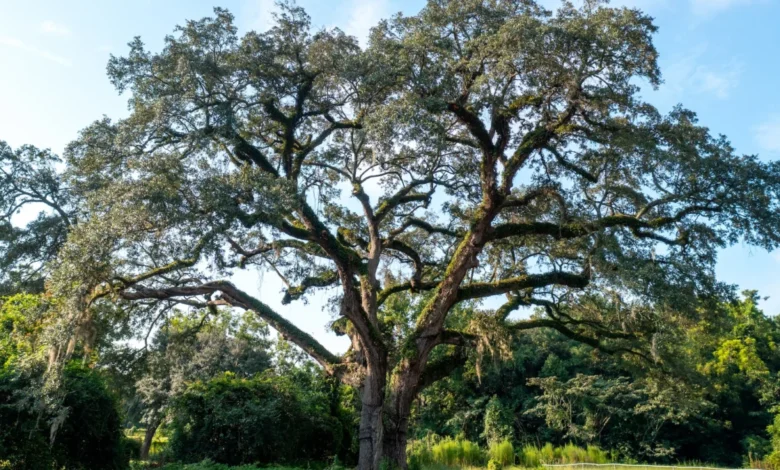
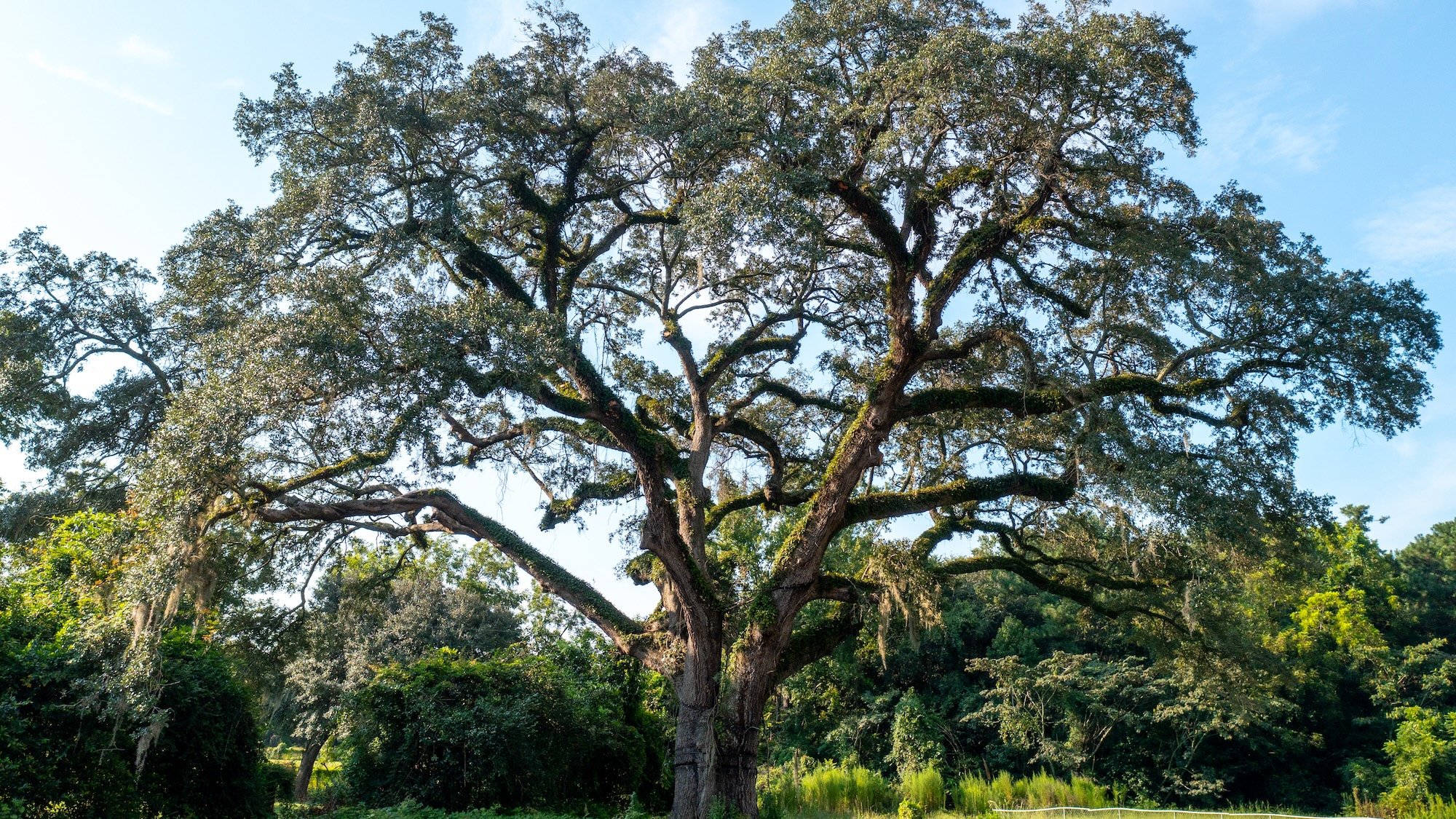
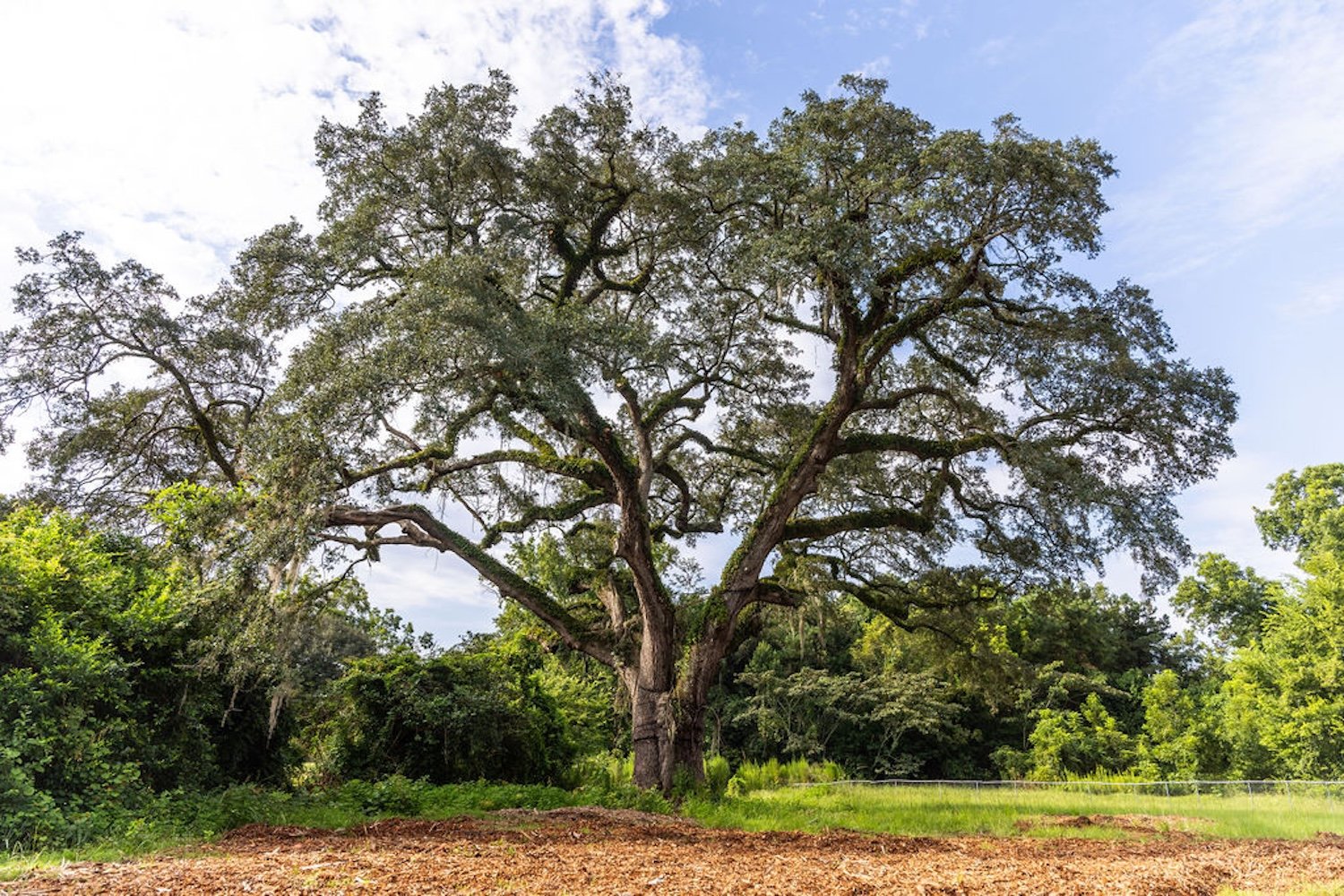
Deep in the historically rich lowlands of Eutaw Springs, South Carolina, a magnificent live oak stands as a silent sentinel to one of the American Revolution’s most brutal and pivotal military engagements. Approaching three centuries of age, this living monument has weathered the fury of open warfare, the passage of empires, and the devastating blow of a mid-20th-century lightning strike. Yet, as the United States approaches its semiquincentennial anniversary, this rare "witness tree" faces an entirely unexpected threat to its survival: the very conservation methods implemented decades ago to save its life.
Today, a specialized coalition of arborists, state historical preservationists, and national battlefield conservation groups are engaged in a delicate, high-tech rescue mission. Their goal is not merely to treat the oak for modern environmental stressors, but to carefully undo the well-intentioned interventions of the past that have slowly begun to suffocate the ancient organism.
The Historical Significance of Eutaw Springs
To understand the enduring value of the Eutaw Springs live oak, one must look back to the autumn of 1781. On September 8 of that year, the idyllic landscape along the Santee River basin transformed into a theater of carnage. The Battle of Eutaw Springs brought together approximately 2,000 British soldiers under the command of Lieutenant Colonel Alexander Stewart and roughly 2,500 Continental Army troops, militia, and partisans led by Major General Nathanael Greene.
The engagement is widely recorded by historians as the final major open-field battle of the Revolutionary War in the Deep South. The fighting was fierce, chaotic, and exceptionally bloody. In his official reports following the encounter, General Greene famously described the conflict as "by far, the hottest action I ever saw, and the most bloody for the numbers engaged." Historical accounts indicate that out of the roughly 4,500 combatants on the field, combined casualties exceeded 1,400 men killed, wounded, captured, or missing. While both the British and American forces claimed tactical victories, the strategic outcome heavily favored the Continental forces, effectively forcing the British to retreat toward Charleston and sealing the fate of the southern campaign.
Standing sentinel throughout this violence was the live oak. "That tree probably took a few lead balls itself," noted Aron Landsaw, a professional arborist intimately involved in the current preservation efforts, highlighting the reality that countless trees in the theater of war absorbed musket balls and artillery shrapnel during the relentless crossfire.
A Legacy of Survival and Accidental Peril
For centuries following the revolution, the oak continued to grow, absorbing the scars of history into its expanding rings of heartwood and bark. However, the most severe physical test to the tree’s structural integrity occurred roughly 50 years ago, when a violent bolt of lightning struck the base of the oak. The immense electrical charge tore through the trunk, nearly splitting the towering 45-foot structure directly down the middle.
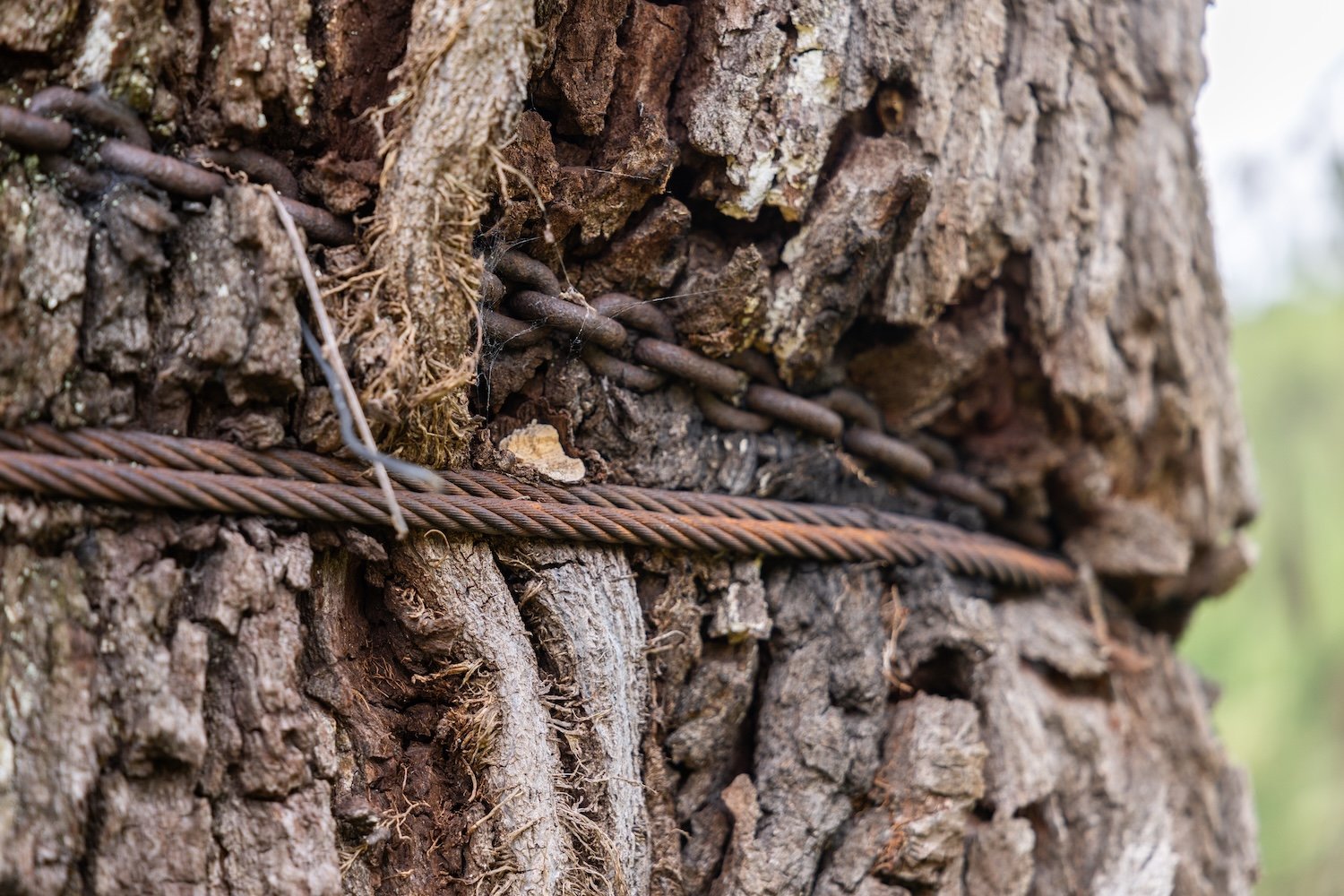
In an era when advanced arboricultural techniques were limited, local preservationists and property caretakers did what they believed was necessary to hold the shattered giant together. They wrapped the severely split branches and trunk in heavy-duty steel chains and industrial metal cables, cinching the massive limbs tightly to prevent complete structural collapse.
While the emergency measure succeeded in granting the oak a temporary reprieve, it introduced a slow-moving crisis. Over the subsequent five decades, the living tree naturally expanded, growing outward in girth as healthy trees do. As the oak widened, it aggressively enveloped the rigid steel cables and chains. Today, much of that historical hardware has been completely swallowed by the tree’s living tissue, disappearing beneath layers of thick, protective bark.
Worse still, the unyielding metal bands began to act as a biological tourniquet. By constricting the trunk and major limbs, the chains effectively disrupted the tree’s vascular system, impeding the vital flow of water, sugars, and mineral nutrients from the root system up into the canopy. The very harness designed to hold the tree together was steadily starving it from the inside out.
Modern Arboriculture Meets Revolutionary Heritage
With the United States’ 250th anniversary approaching, regional stakeholders recognized that immediate, highly specialized intervention was required if the Eutaw Springs witness tree was to survive into the next century. South Carolina state agencies partnered with the American Battlefield Trust and premier arboricultural specialists, including New York-based SavATree, to execute a comprehensive, state-of-the-art rehabilitation plan.
The contemporary rescue operation discarded brute-force mechanical restriction in favor of precision biotechnology and advanced engineering. The initial phase of the project addressed the root zone of the oak, which had suffered from decades of soil compaction—a common urban and rural stressor that restricts oxygen exchange and water penetration.
Using specialized pneumatic excavation equipment, arborists deployed high-pressure supersonic air jets to safely blast away heavily compacted earth surrounding the tree’s root flare without causing mechanical damage to the delicate root system. Once the soil was aerated and loosened, technicians introduced a customized, nutrient-dense organic concoction heavily featuring kelp extract. This biological stimulant is designed to encourage root regeneration, enhance nutrient uptake, and build the tree’s overall immune resilience against pathogens and environmental fluctuations.
Lightning Protection for the Next Century
Protecting the oak from future catastrophic weather events formed another critical pillar of the multi-phase restoration project. Given that the region is highly prone to severe thunderstorms and lightning strikes, leaving the 45-foot tree vulnerable was not an option.
Instead of relying on exterior restraints, arborists installed a sophisticated, discreet lightning protection system integrated directly into the tree’s primary branching architecture. Small, highly conductive copper terminals were strategically mounted at the highest points of the oak’s canopy. These terminals are interconnected by heavy-gauge copper cabling that runs down the length of the trunk, ultimately leading away from the tree to a heavily grounded copper rod driven deep into the earth roughly 10 feet from the root zone.
"If lightning does hit it, it’ll run down the copper cables and dissipate safely into the ground," Landsaw explained, detailing how the system safely diverts thousands of volts of electrical current around the living tissue rather than through it.
The final phase of the restoration involves removing the hazardous, constricting 20th-century chainwork. To ensure the oak’s structural stability is not compromised once the old steel is extracted, arborists are installing a modern, flexible cabling system high up in the canopy. Unlike the rigid chains of the past, these new support lines are designed to act dynamically, allowing the heavy branches to sway naturally and flex under heavy wind gusts while still preventing catastrophic splitting.
Broader Impact and the Importance of Witness Trees
The preservation of the Eutaw Springs live oak underscores a growing national movement to safeguard "witness trees"—living biological artifacts that connect modern generations directly to defining moments in human history. Across the United States, conservationists are increasingly cataloging and treating aging trees that stood witness to the Civil War, the Revolutionary War, and pivotal moments in indigenous and early colonial history.
From a scientific and cultural standpoint, maintaining these trees provides irreplaceable educational value and ecological continuity. While arborists are quick to note that no biological organism lives forever, the successful remediation at Eutaw Springs demonstrates how modern science can significantly extend the lifespan of historic flora.
With the combination of decompacted soil, targeted nutritional therapy, state-of-the-art lightning grounding, and the removal of its restrictive historical harnesses, the Eutaw Springs live oak is well-positioned to recover its biological vigor. Backed by careful stewardship and a touch of modern engineering, this resilient centenarian stands ready to bear silent witness to yet another century of American history.