Beyond the Clouds: Unveiling the Ancient Geological and Cultural Tapestry of Cappadocia

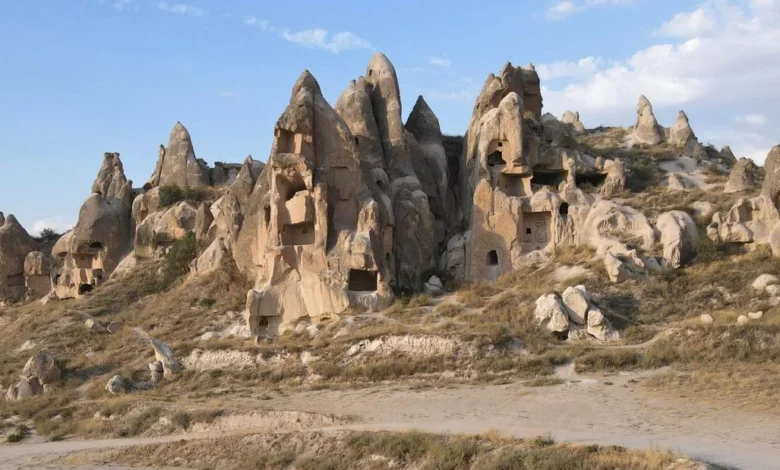
The central Anatolian plateau of Turkey presents a landscape that defies conventional geography, unfolding as a shimmering palette of caramel swirls, ochers, creams, and soft pinks. This is Cappadocia, a region defined by an extraordinary synthesis of volcanic geology and human ingenuity. While modern tourism has largely framed the region through the lens of early-morning hot air balloon flights, the true essence of Cappadocia lies on the ground—within the labyrinthine valleys and the towering, conical rock formations known as "fairy chimneys," or peribacaları.
The Geological Genesis
The surreal topography of Cappadocia is the result of a violent geological past followed by millions of years of patient erosion. Roughly 60 to 70 million years ago, the region was submerged under a shallow sea. As the tectonic plates shifted, the sea receded, leaving behind a massive sedimentary basin. Between 10 and 20 million years ago, intense volcanic activity from three major peaks—Erciyes, Hasan, and Melendiz—blanketed the region in thick layers of ash, lava, and mud.
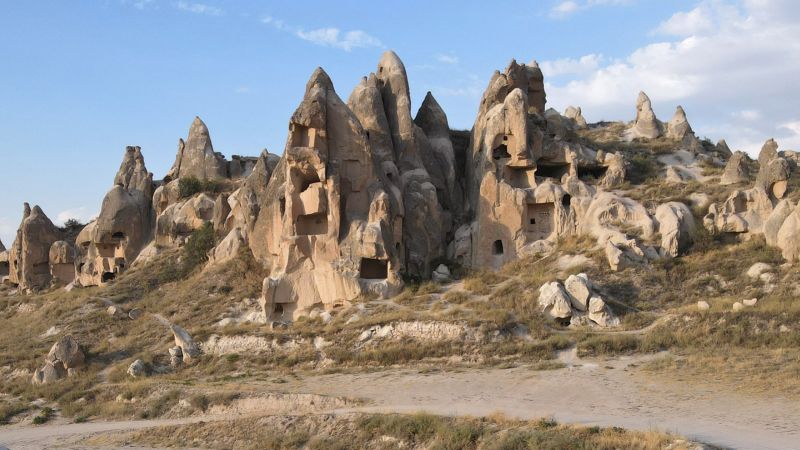
This accumulation eventually solidified into a soft, porous volcanic rock known as tuff (or tufa). As the volcanoes went dormant and eventually extinct, wind, rain, and rapid temperature fluctuations began the process of carving the landscape. Because the tuff varies in hardness, the erosion was uneven. Denser basalt caps often protected the softer material beneath, resulting in the iconic, pillar-like structures that now define the region’s silhouette. The tufa is remarkably versatile; it is soft enough to be carved with basic hand tools yet possesses the unique property of hardening upon prolonged exposure to air.
A Chronology of Human Habitation
Human interaction with this landscape dates back to the Hittite era, but the most profound transformation occurred during the Roman and Byzantine periods. Facing persecution, early Christians sought refuge in the remote, easily defensible valleys of Cappadocia. They discovered that the volcanic rock offered a perfect medium for excavation.
By the 4th century, Cappadocia had become a significant center for monastic life. Communities began hollowing out the fairy chimneys and cliff faces to create churches, refectories, and intricate underground cities. This architectural tradition persisted through the medieval Byzantine period and continued into the 20th century. Notably, the Zelve Valley, which served as a monastic hub until the 20th century, stands as a testament to this longevity. Historian Dr. Tolga Uyar of Nevşehir Hacı Bektaş Veli University notes that Zelve represents a rare, continuous timeline of human settlement spanning over 1,400 years, offering an unparalleled look at how communities adapted their living spaces from early Christian anchorite cells into functional farming households.

The Shift from Farming to Tourism
For centuries, the inhabitants of Cappadocia lived in a symbiotic relationship with their environment. The rock dwellings provided natural insulation—staying cool in the sweltering Anatolian summers and retaining heat during the harsh winters. Agriculture was the lifeblood of the region, with the valleys providing fertile soil for orchards, vineyards, and grain.
However, the late 20th century marked a pivotal transition. As the Turkish government and international tourism boards began to recognize the unique cultural value of the "rock-carved civilization," the economic focus shifted toward hospitality. By the 1950s, the population began migrating out of the traditional cave dwellings and into modern, conventional homes. This shift, while improving modern living standards, risked the abandonment of the ancient structures. Today, these sites are largely protected as UNESCO World Heritage sites, serving as open-air museums that attract millions of international visitors annually.
Exploring the Valleys: Beyond the Balloon
While the aerial view from a balloon provides a panoramic understanding of the region’s vastness, local experts argue that the true scale of the history can only be grasped on foot or on horseback.

The Ihlara Valley and the Melendiz River
Unlike the arid plateaus that surround it, the Ihlara Valley is a lush, verdant canyon carved by the Melendiz River. An eight-mile hiking trail begins at Ihlara Village and terminates at the monumental Selime Monastery. This route offers a different perspective on the region; the canyon walls are honeycombed with Byzantine-era churches adorned with remarkably preserved murals. The Selime Monastery itself, dating back to the 8th or 9th century, is the largest of its kind in the region and provides a striking example of the scale of religious architecture in the medieval period.
Çavuşin and the Red Valley
The village of Çavuşin serves as a gateway to some of the most historic sites in the region, including the 5th-century Church of John the Baptist. From here, trails wind through orchards of apricot and apple, leading into the Kızılçukur, or "Red Valley." The valley earns its name from the high iron ore content in the tufa, which causes the rock to glow with an intense, fiery hue during sunset.
Expert Insight: The Value of Local Knowledge
Navigating these valleys without professional guidance can be a challenge. Many of the most significant cave churches are hidden, locked, or unmarked. Guides like Mehmet Güngör, who has operated walking tours in Göreme since 1998, emphasize that the value of a guide goes beyond navigation.

"When I started walking these paths, the landscape was largely agricultural," says Güngör. "Over the last 25 years, as farming practices have become more specialized and the landscape has been protected, we have seen the return of flora and fauna that were once thought to be on the decline."
Güngör highlights the discovery of the Iris galatica, a rare, endemic flower that blooms in the crevices of the rock formations during the spring. He contends that an experienced guide provides the context necessary to interpret the history of the 5th-century churches that are otherwise invisible to the casual hiker.
The Legacy of the "Land of Wild Horses"
The name "Cappadocia" is derived from the Old Persian Katpatuka, often translated as "the Land of Beautiful Horses." For generations, the yılkı—or wild horses—roamed the region. These animals were originally working horses that were released by farmers during the winter months to survive on their own. With the advent of mechanized agriculture and the introduction of tractors, these horses were eventually left permanently to the wild.

Today, commercial outfits like Cemal Ranch in Ortahisar work to preserve this equestrian heritage. By operating small-group tours that offer sunset access to protected valleys, they provide an alternative to mass-market tourism. "Riding through these valleys at dusk is not just about the view," says Cemal Koksal. "It is about connecting with the rhythm of the land that my ancestors worked for centuries."
Economic and Environmental Implications
The transition of Cappadocia from an agricultural heartland to a global tourism destination carries significant environmental and economic implications. The concentration of foot traffic in sensitive archaeological areas requires careful management. The Turkish Ministry of Culture and Tourism has implemented strict regulations to ensure the preservation of the rock-cut frescoes and the structural integrity of the fairy chimneys.
Furthermore, the economic shift has created a dual challenge: the necessity of maintaining traditional livelihoods while accommodating the logistical demands of a tourism-driven economy. The success of the region as a sustainable destination relies on the balance between preserving the authenticity of the local culture and providing the infrastructure for visitors. As the region continues to draw global interest, the focus has increasingly shifted toward "slow tourism"—encouraging longer stays, deeper exploration of the lesser-known valleys, and a greater emphasis on the preservation of the ancient, cave-carved way of life that remains the soul of Cappadocia.
Related posts: