The Unsung Village: How Friends and Neighbors Are Quietly Reshaping the Future of American Eldercare

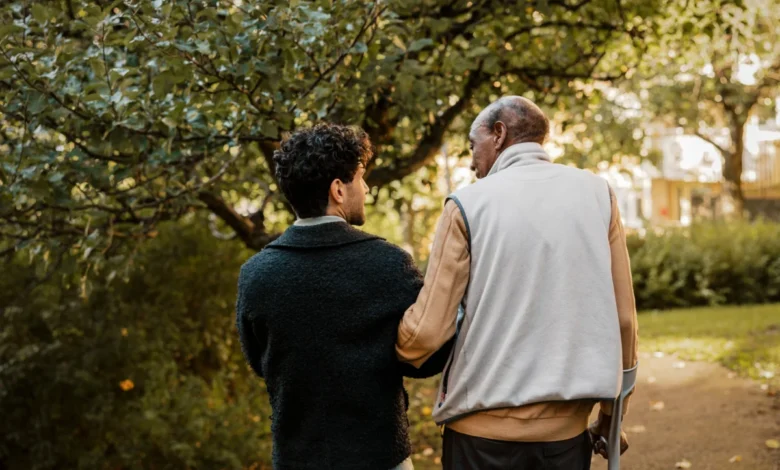
For years, Nicole Straight and Patricia Wood lived merely as acquaintances across a quiet street in Sausalito, California, exchanging polite morning pleasantries and the occasional casual cup of coffee. Their relationship was defined by the respectful distance typical of modern suburban neighbors. That dynamic shifted fundamentally last October when Wood, then 92, suffered a severe fall that resulted in a broken neck and a demanding three-month stint in rehabilitative care. Upon returning home to the residence she shares with her niece, Wood found herself unable to walk independently or navigate her multi-level home without physical support.
This medical crisis transformed a casual neighborhood acquaintanceship into an essential caregiving alliance. Straight, a 53-year-old retired chef, now checks in weekly, bearing lattes, baked goods, and surplus portions of home-cooked meals. Straight’s husband stepped in to retrofit Wood’s living space, installing bathroom grab bars, mounting shelves, replacing hard-to-reach lightbulbs, and servicing smoke detectors. Daily communication is maintained through a steady stream of text messages, coordinating grocery runs and errands for Wood, who has permanently surrendered her car keys.
Wood, a retired insurance executive now aged 93, reflects on the transformation with profound gratitude, describing her neighbor as a literal gift from heaven. Their relationship now incorporates shared laughter, emotional vulnerability, and mutual support, establishing a newfound companionship during the twilight of Wood’s life. Yet, while heartwarming, the arrangement between Wood and Straight is not an isolated local anomaly. Across the United States, profound demographic shifts are quietly rewriting the script of eldercare, forcing communities to look beyond traditional nuclear family structures for aging support.
Demographic Shifts and the Rise of Aging Alone
Eldercare has historically been viewed through the lens of familial obligation—an unwritten social contract dictating that spouses and adult children will shoulder the burdens of physical, emotional, and logistical support as loved ones age. However, sweeping macroeconomic and sociological transformations are rendering this model increasingly precarious for millions of aging Americans.
According to Dr. Deborah Carr, a prominent sociologist at Boston University who has extensively researched contemporary aging trends, the structural composition of households is undergoing a historic realignment. The demographic landscape features a growing population of older adults who have never married or are divorced, leaving them without a spousal safety net. Simultaneously, declining fertility rates mean that families have fewer children than in previous generations, while an increasing number of adults are childless by choice or circumstance.
Compounding these structural realities are the physical and emotional distances imposed by modern labor markets, which frequently scatter families across different states or continents. Furthermore, an upsurge in family estrangements leaves vulnerable seniors entirely cut off from traditional kin. As these safety nets fray, a critical caregiving vacuum has emerged, prompting friends, neighbors, and extended community networks to step into vital auxiliary roles.
Quantifying the Phenomenon: National Data on Non-Kin Caregiving
Until recently, the scope of non-familial caregiving remained largely undocumented by large-scale public health researchers, who traditionally focused on spousal and filial support. This blind spot was recently addressed by a landmark study published in JAMA Network Open, spearheaded by researchers at the University of Michigan.
The research team utilized comprehensive data from the National Health and Aging Trends Study, examining a cohort of more than 2,600 older adults with documented health limitations, who reported an average age of 79. While the study confirmed that family members still shoulder the vast majority of eldercare responsibilities, approximately 14% of participants identified friends or neighbors as active providers of care. Extrapolating these figures to the national scale, the study’s authors estimate that approximately 2.4 million Americans currently rely on friends to help them navigate the challenges of aging.
These findings align closely with a comprehensive national survey conducted last year by the AARP and the National Alliance for Caregiving, which independently calculated that 11% of all active caregivers provide assistance to nonrelatives.
Dr. Karen Fingerman, a gerontologist at the University of Texas at Austin and co-author of an expert commentary accompanying the JAMA study, emphasizes that these auxiliary caregivers have long operated in society’s blind spots. Society frequently overlooks the substantial emotional, physical, and logistical sacrifices made by friends who step in when relatives are absent, unavailable, or emotionally distant.
The Distinct Profile of Friend Caregivers
A closer examination of the data reveals that caregiving friendships operate under very different rules, parameters, and limitations compared to traditional family care. The University of Michigan study, led by gerontologist Yee To Ng, uncovered distinct structural differences in how friends administer aid.
Unlike spouses or cohabitating children, caregiving friends rarely live with the older adults they assist and almost never act as the sole provider of care. Statistically, friends contribute significantly fewer cumulative hours of service. While family members average approximately 67 hours of care per month, friends provide an average of roughly 18 hours monthly.
The nature of the tasks performed also diverges sharply. Ng’s research highlights that transportation is the single most common domain of assistance provided by non-kin, with two-thirds of caregiving friends regularly driving seniors to appointments, errands, and social outings. Grocery shopping, facilitating outdoor access, preparing meals, and accompanying patients to complex medical consultations round out the top five most frequent responsibilities.
For instance, consider Czes Ferrino, an 82-year-old widow living independently in Westerly, Rhode Island. Though free of debilitating chronic health conditions, Ferrino faced a critical logistical crisis when her automobile unexpectedly broke down. Her next-door neighbor stepped in, accompanying her across multiple dealerships to help her evaluate and purchase a reliable used vehicle. Ferrino noted that the neighbor guided her through the stressful consumer process with the patience and dedication of a son assisting a mother.
Conversely, there are clear, socially enforced boundaries regarding what friends are willing or equipped to handle. Personal care activities—such as bathing, grooming, dressing, and toileting—remain almost exclusively within the domain of family members. Ng explains that intimate personal care touches directly upon human self-esteem and dignity. While society generally accepts that severe illness requires close family members to bridge the gap with intimate bodily assistance, individuals often feel acute embarrassment at the prospect of exposing such vulnerabilities to friends.
Demographic Signatures of Non-Kin Support
The University of Michigan study identified notable demographic trends among older adults who rely on friends for caregiving support. Respondents who named friends as their primary or supplemental caregivers tended to be younger on average than those relying strictly on relatives, and they were statistically more likely to possess college degrees. Dr. Fingerman notes that individuals with higher levels of educational attainment typically cultivate and maintain broader, more diverse social networks throughout their adult lives, providing a deeper reservoir of community goodwill to draw upon in later years.
Furthermore, those assisted by friends were predictably less likely to be married and exhibited a much higher propensity to live alone. A prime example is Ann Greenwater, an 84-year-old resident of a mobile home park in rural Humboldt County, California. Greenwater maintained complete independence until a debilitating bout of severe back pain left her bedridden for nearly three months.
Although she has since regained her mobility and manages routine housekeeping, cooking, and self-care, Greenwater acknowledges that she has never fully returned to her baseline physical resilience. Being single and entirely devoid of local family—save for a distant nephew with whom she shares minimal contact—and having surrendered her driver’s license, Greenwater faced a precarious future.
Fortunately, a dedicated cadre of friends cultivated through a local Zen Buddhist center intervened. Milli Quam, an 86-year-old community member, regularly manages Greenwater’s laundry and picks up necessary prescriptions. Another friend assists with complex computer troubleshooting, while various community members alternate driving her to routine grocery stores and medical appointments through an organized local volunteer framework. Quam expresses deep affection for Greenwater, noting her profound satisfaction at being able to offer tangible, sustained assistance.
Advantages and Vulnerabilities of Friend Caregiving
Sociological analysis indicates that non-kin caregiving offers distinct psychological benefits that family arrangements occasionally lack. Dr. Carr points out a fundamental peer-to-peer advantage: friends are frequently generational peers who possess an innate, experiential understanding of the physical and emotional indignities of aging. This shared life stage often fosters higher levels of empathy and practical, hard-won wisdom. When integrated successfully, the efforts of friends can alleviate the severe burnout frequently experienced by sole-charge family caregivers.
However, non-kin networks also introduce unique vulnerabilities and structural instabilities. Neighbors move away, life circumstances change, and friendships are inherently governed by an expectation of reciprocity and egalitarian balance. Strains can rapidly develop if an aging individual’s physical needs become excessively demanding, or if the care receiver experiences acute guilt over burdening a friend.
Research led by Carr indicates that these relational strains can exacerbate depressive symptoms in older adults dealing with physical limitations, as the power dynamic shifts uncomfortably away from mutual friendship toward dependency.
Compounding these interpersonal risks is a complete lack of institutional and policy support. Unlike employment protections afforded to biological family members, federal labor statutes offer virtually no recourse for non-kin caregivers. Laura Lawless, a labor and employment attorney with Squire Patton Boggs, confirms that the federal Family and Medical Leave Act (FMLA), with extremely rare exceptions, does not provide job-protected leave for workers seeking to care for an ailing friend.
Societal expectations heavily favor biological kin; while family estrangement carries a heavy social stigma, friendships are far more fragile and prone to naturally fading away when logistical pressures mount.
Looking Toward an Uncertain Horizon
As the American population ages rapidly, the reliance on informal networks of friends and neighbors will undoubtedly intensify, bridging the widening gap between state-sponsored eldercare infrastructure and family availability.
In Sausalito, Patricia Wood jokingly warns Nicole Straight that she is legally barred from relocating until Wood passes away—a humorous masking of a very real, deep-seated emotional dependence. In Humboldt County, Ann Greenwater similarly celebrates the steadfast dedication of her aging community network, though she remains acutely aware of the ticking clock. At 86 years old, Milli Quam acknowledges that she, too, may soon face the loss of her own driving privileges.
Reflecting on the inevitable future, Greenwater captures the precarious sentiment shared by millions of aging Americans navigating this new frontier of care: "I’m wondering what will happen when these friends aren’t able to come to me. I guess we’ll deal with it when it comes."
Related posts: