Tensions Rise at Hartsfield-Jackson: The Dispute Between an American Airlines Pilot and Air Traffic Control Over Wake Turbulence Protocols

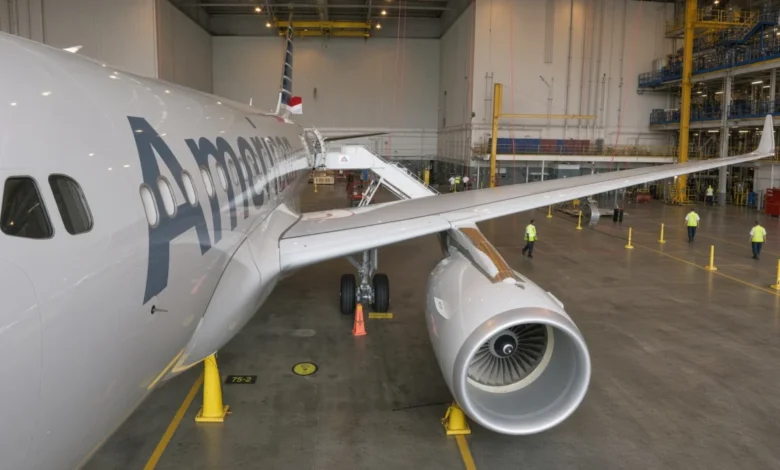
A heated verbal exchange between an American Airlines flight crew and an air traffic controller at Hartsfield-Jackson Atlanta International Airport has reignited a long-standing debate regarding the boundaries of pilot authority versus controller directives. The incident, which occurred on September 13, involved American Airlines Flight 1428, an Airbus A319 bound for Philadelphia. The disagreement centered on whether the crew had the right to refuse a takeoff clearance due to concerns over potential wake turbulence from a preceding Boeing 757, a decision that led the controller to initiate a formal "possible pilot deviation" procedure.
Chronology of the Incident
The interaction began as Flight 1428 taxied to Runway 27 Right, preparing for departure. As the preceding aircraft, a Boeing 757, initiated its takeoff sequence, the American Airlines crew assessed the environmental conditions—specifically the calm winds—and determined that additional spacing was required to safely clear the wake turbulence generated by the heavy aircraft.
When the tower issued takeoff clearance, the crew of the A319 promptly requested additional time to ensure adequate separation. The controller, citing operational flow requirements, immediately canceled the takeoff clearance and instructed the crew to exit the runway at the "Mike 20" taxiway. While the crew complied with the exit instruction, a brief communication gap occurred regarding the acknowledgement of the canceled clearance, necessitating a second directive from the tower.
After the crew moved to a holding position, the controller admonished them over the radio, stating, "Next time you need more than standard separation, you need to notify us prior to taking the runway." The situation escalated when the pilot, expressing frustration with the tone and the perceived safety risk of the initial clearance, remarked that the flight deck did not carry ATC separation manuals and suggested that the controller’s instructions did not account for proper wake turbulence mitigation. The controller retorted that there was "no wake turbulence separation" required, eventually leading to the issuance of a "possible pilot deviation," a formal administrative step that requires the flight crew to contact the tower via phone to discuss the incident.
Analyzing the Technical Requirements
The core of the dispute lies in the technical interpretation of wake turbulence categories as defined by the Federal Aviation Administration (FAA). Wake turbulence is a complex aerodynamic phenomenon caused by the high-pressure air under an aircraft’s wings curling around the wingtips into a vortex. These vortices can remain in the air long after the aircraft has passed, posing a significant threat to smaller or trailing aircraft, particularly during takeoffs and landings in light wind conditions.
According to current FAA regulations, aircraft are categorized based on their weight and performance characteristics. The Boeing 757 is classified as Category E, while the Airbus A319 falls under Category F. Under existing FAA Order 7110.126B, there is no mandatory additional wake turbulence interval specified for a Category F aircraft departing behind a Category E aircraft.
Technically, the air traffic controller was correct that, per the regulatory handbook, the minimum separation requirements for departure had been met. However, the regulatory framework also grants the Pilot-in-Command (PIC) final authority regarding the safety of the aircraft. FAA regulations and standard aviation practices dictate that a pilot is never obligated to accept a clearance if they believe, in their professional judgment, that doing so would compromise the safety of the flight.

The Role of Pilot Discretion in Aviation Safety
The incident highlights a fundamental tension in modern air traffic management: the pressure to maintain maximum airport throughput versus the absolute necessity of pilot safety discretion. Hartsfield-Jackson, as one of the world’s busiest airports, operates under immense pressure to maintain precise arrival and departure intervals. Any unscheduled delay, such as a pilot requesting additional spacing, creates a ripple effect that can impact dozens of other flights.
Aviation safety experts note that the "pilot-in-command" doctrine is the bedrock of safe operations. If a pilot perceives a risk—whether from weather, mechanical concern, or perceived wake turbulence—they are empowered and expected to decline a clearance. In this instance, the American Airlines crew exercised that right. The subsequent characterization of this refusal as a "pilot deviation" has drawn criticism from industry observers, who suggest that the controller’s action may have been an overreach intended to penalize the crew for questioning his authority.
Professionalism and Radio Discipline
The recording of the event also captured a notable interaction between the tower and a subsequent flight, a Frontier Airlines aircraft. Following the exchange with the American Airlines crew, the Frontier flight crew praised the controller’s work. The controller responded with a remark that seemed to reflect a lingering frustration: "I’ve been doing it for 26 years. I don’t need some pilot telling me how to do my job."
This exchange has sparked discussion within the aviation community regarding the standard of professional discourse on active frequencies. While the American Airlines pilot’s instruction for the controller to "do your job" was widely viewed by aviation analysts as unprofessional and inflammatory, the controller’s reaction—officially classifying the refusal of clearance as a pilot deviation—is being scrutinized for potential bias. A pilot deviation is typically reserved for instances of airspace violation, failure to follow altitude assignments, or runway incursions, rather than a tactical disagreement over safe separation distances.
Broader Implications for Air Traffic Control
This incident is not an isolated case. In recent years, several high-profile disputes between pilots and controllers have reached the public domain, often due to the widespread availability of live air traffic control audio feeds. These incidents underscore the fragility of the communication loop between the cockpit and the tower.
The implications for the FAA are significant. If controllers perceive that their separation instructions are being second-guessed, it may lead to a more rigid enforcement of rules. Conversely, if pilots feel intimidated by the threat of administrative repercussions for exercising safety-related caution, it could lead to a "chilling effect" where crews feel pressured to accept clearances they are not comfortable with to avoid conflict with the tower.
Moving forward, the aviation industry will likely use this incident as a case study in Crew Resource Management (CRM) and Air Traffic Control coordination. The FAA’s policy on "pilot deviations" will continue to be a subject of debate, particularly regarding whether such labels are being applied appropriately to administrative disagreements rather than genuine safety violations. For now, the American Airlines crew and the Atlanta tower staff remain under the spotlight of an aviation community that is increasingly sensitive to the balance between efficiency and safety in the nation’s crowded skies.