Snakes on a Sea: Marine Biologists Discover Coastal Crabs Hitching Rides on Pelagic Serpents


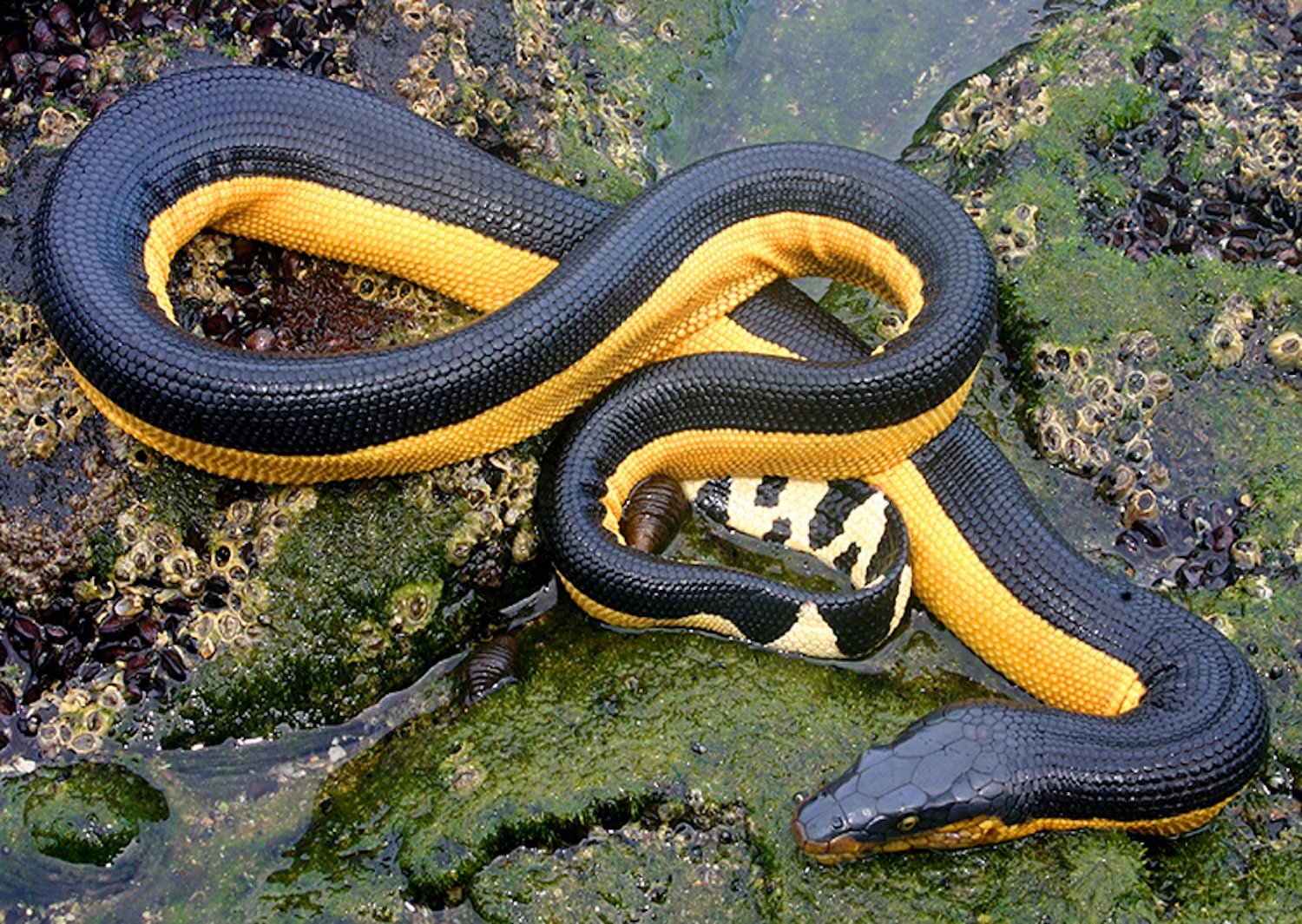
Marine biology has long cataloged the complex relationships between oceanic predators and their microscopic or small-scale passengers. While scientists are well-acquainted with the various barnacles, algae, and specialized crabs of the genus Planes that routinely utilize sea turtles as mobile habitats, a recent discovery off the Pacific coast of Costa Rica has expanded the known roster of marine hitchhikers. Researchers examining preserved specimens of the yellow-bellied sea snake (Hydrophis platurus) have uncovered a surprising and unexpected phenomenon: juvenile crabs belonging to the family Grapsidae utilizing pelagic sea snakes as temporary, albeit misguided, ocean taxis.
The findings, detailed in a study published in the journal Ecology and Evolution, shed new light on the larval dispersal strategies of coastal invertebrates, while highlighting the complex ecological interactions that occur out of sight in the open ocean.
The Accidental Discovery: From Fieldwork to the Museum Archives
The narrative of this discovery began more than a decade ago, in 2012, during an extensive marine herpetology expedition led by Joseph Pfaller, then a researcher at the University of Florida. Pfaller was actively studying the ecology, distribution, and skin-shedding behaviors of the yellow-bellied sea snake in the tropical waters of the eastern Pacific. Unlike their terrestrial relatives, which slough off their old epidermal layers by rubbing against rough surfaces like rocks and fallen logs, fully aquatic sea snakes face a distinct logistical challenge in the open pelagic environment. Deprived of solid land, these reptiles must coil their slender bodies into tight knots, generating friction through muscular contraction to peel away their old skin.
During the collection and examination of these shed skins and captured serpents, Pfaller made an anomalous observation: small, clawed invertebrates were frequently detaching from the reptiles. At the time, marine science recognized that sea snakes occasionally hosted sessile organisms such as barnacles, but the presence of mobile crustaceans was largely undocumented. Intrigued by the anomaly, Pfaller expanded his methodology. By the conclusion of the expedition, his team had amassed a comprehensive dataset of 371 sea snakes.

To the researchers’ surprise, the serpents were hosting a diverse assemblage of unexpected epibionts. Beyond the occasional crustacean, individual snakes served as floating islands for small shrimps, marine snails, and even a species of clingfish. Due to the rapid pace of fieldwork and a subsequent shift in Pfaller’s research focus toward sea turtles, the collected crustacean specimens were preserved, cataloged, and safely stored within the archives of the Florida Museum of Natural History, where they remained unexamined for nearly ten years.
A Decade Later: Unraveling the Identity of the Passengers
The dormant collection returned to scientific prominence years later during a casual conversation between Pfaller and Robert Lasley, a crustacean expert at the University of Guam. Pfaller recounted his historical field observations of the unusual organisms found clinging to pelagic snakes. The exchange immediately sparked a playful reference to the cult cinema classic Snakes on a Plane, setting the stage for a formal investigation into the genetic identity of the mystery passengers.
Collaborating with Soma Elefánti, an invertebrate researcher at the Florida Museum of Natural History, the research team initiated a genetic sequencing project on the preserved specimens. Initial hypotheses leaned toward the Planes genus—the ubiquitous "crab-on-a-turtle" specialists well known to marine biologists. The researchers humorously considered titling their anticipated paper "Planes on a Snake," fully expecting the DNA analysis to confirm a close evolutionary link to turtle-riding crabs.
However, the genetic results defied expectations. DNA sequencing revealed that none of the specimens belonged to the genus Planes. Instead, the crabs belonged to three distinct species within the family Grapsidae, a group whose adult members are decidedly non-pelagic, residing instead on coastal mangrove roots, rocky shorelines, and tidal trees along the Costa Rican coast.
Larval Insticts and Ecological Misidentification
To understand how coastal terrestrial-adjacent crabs ended up hundreds of miles out to sea clinging to venomous reptiles, the researchers examined the life cycle of the Grapsidae family. Like many marine and coastal crabs, adult Grapsidae release their microscopic larvae into the nearshore waters. These larvae undergo several developmental stages before transitioning into the megalopa stage—a critical transitional phase between the free-swimming larval form and the benthic, ground-dwelling adult.
During the megalopa stage, young crabs possess strong swimming capabilities combined with an innate biological drive to seek out solid substrates upon which to settle and transition into their adult morphology. According to the study’s authors, these developing crabs likely utilized coastal drift lines and floating debris as temporary rafts. In the dynamic, churning waters of the coastal convergence zones, these drifting megalopae inevitably encountered swimming yellow-bellied sea snakes.
Lacking sophisticated visual processing or the evolutionary conditioning of their Planes relatives, the crab megalopae registered the slender, undulating body of the sea snake merely as a convenient solid surface. Operating on pure instinct, the young crustaceans latched onto the reptiles, only to be carried far out to sea as the pelagic snakes migrated or were swept away by offshore ocean currents.
Evolutionary Implications and Dead-End Dispersal
The discovery provides a fascinating case study in ecological mismatch and evolutionary adaptation. While Planes crabs have evolved a specialized relationship with marine turtles and floating Sargassum seaweed—ensuring they remain within habitats conducive to their survival—the Grapsidae megalopae find themselves trapped in an evolutionary trap.
For these coastal crabs, boarding a pelagic sea snake represents what researchers term a "poor decision." Because yellow-bellied sea snakes rarely return to coastal rocks or mangrove shores in a manner that would allow the crabs to disembark into their native adult habitat, these hitchhiking juveniles face a biological dead end. Once carried into the open pelagic realm, the young crabs are largely cut off from the shallow intertidal zones required for their maturation into breeding adults.
The researchers note that while the snakes themselves are largely unaffected by their transient, microscopic passengers, the phenomenon underscores the complex, often chaotic nature of marine larval dispersal. Ocean currents, floating debris, and swimming megafauna interact in ways that routinely test the limits of behavioral instinct in marine invertebrates.

Broader Impact on Marine Research
The publication of this study in Ecology and Evolution highlights a persistent blind spot in traditional marine biology: the tendency of specialists to focus heavily on high-profile primary subjects—such as the distinctive coloration, physiological adaptations, and geographic distribution of the yellow-bellied sea snake—while overlooking the micro-ecosystems hosted on their bodies.
By demonstrating that even well-studied marine reptiles can harbor entirely unexpected communities of epibionts, the research team has opened new avenues for investigating pelagic hitchhiking behavior. As marine scientists continue to re-examine museum collections and deploy modern genetic tools in field research, discoveries of this nature emphasize that the open ocean remains an interconnected web of surprising, accidental, and sometimes misguided biological partnerships.