President Trump pledges 5000 dollar dividend checks to every American adult if Republicans retain control of Congress in November

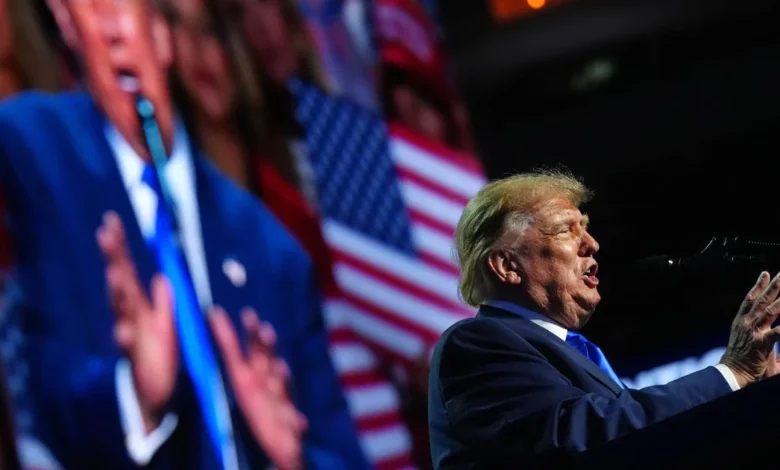
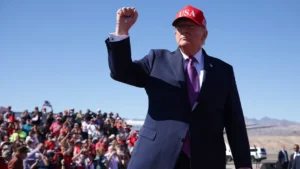
The promise of a $5,000 "economic dividend" for every American adult has emerged as the centerpiece of President Trump’s final push ahead of the 2026 midterm elections. Speaking at the Republican National Committee’s midterm convention in Washington, the President framed the proposed payout as a direct return on the administration’s economic policies, asserting that the country’s recent fiscal performance warrants a redistribution of wealth to the citizenry. However, the proposal faces a complex array of constitutional, logistical, and economic hurdles that have invited skepticism from budget hawks, legal experts, and political opponents alike.
The scale of the proposal is historically unprecedented. According to recent data from the U.S. Census Bureau, there are approximately 245 million U.S. citizens over the age of 18. A universal payment of $5,000 per capita would necessitate an outlay of approximately $1.225 trillion. This sum would represent a massive expansion of federal spending at a time when the national debt has already crossed the $40 trillion threshold, a milestone that has drawn mounting concern from fiscal conservatives within the Republican party itself.
The Constitutional and Legislative Reality
At the heart of the debate is the separation of powers. Under Article I, Section 9 of the U.S. Constitution, the "power of the purse" is vested exclusively in Congress. Any direct, large-scale appropriation of funds—especially one of this magnitude—requires an act of legislation passed by both the House of Representatives and the Senate and signed into law by the President.
Despite the constitutional requirement for legislative approval, President Trump has signaled a desire to bypass traditional congressional oversight. In a recent interview with CBS Texas, the President expressed confidence that such a program might not require formal legislative intervention, though he stopped short of providing a legal framework for how the Executive Branch could unilaterally distribute over a trillion dollars. When pressed by media outlets regarding the mechanics of the payout, the President suggested that if Republicans maintain their majorities, the mechanism would be inherently "positive," contrasting his vision with the economic platform of the Democratic Party.
Political analysts note that even if the President were to seek congressional approval, the path to passage is narrow. While Republicans currently hold majorities in both chambers, the legislative agenda is already crowded with competing priorities, including debates over expiring tax provisions and federal spending cuts. House Speaker Mike Johnson has publicly campaigned on a platform of fiscal restraint, emphasizing the need to curtail government spending to combat the burgeoning national debt. The contradiction between the President’s pledge of a $5,000 check and the Speaker’s mandate for austerity has created a visible rift in the party’s midterm messaging.
A Pattern of Unfulfilled Economic Promises
For many observers, the skepticism surrounding the $5,000 dividend is rooted in a history of similar, yet unrealized, economic pledges. Throughout his current term, the administration has introduced several high-profile concepts intended to provide direct financial relief or benefits to the public, many of which failed to materialize as promised.
The most notable of these was the "DOGE dividend" concept. Proposed early in the President’s term, the idea was to monetize the savings generated by the Department of Government Efficiency (DOGE), overseen by billionaire entrepreneur Elon Musk. The plan suggested that 20% of the savings accrued from federal downsizing would be distributed directly to American citizens, while another 20% would be allocated toward debt reduction. By mid-2026, however, it became clear that the projected efficiency savings were significantly lower than the administration’s initial estimates. As the anticipated surplus failed to manifest, the DOGE dividend initiative effectively stalled, leaving the public with no clear indication of whether the program remains on the table.
Similarly, the administration previously floated the idea of "tariff dividends." In the previous year, the President suggested that revenue generated from newly implemented tariffs would fund a $2,000 rebate check for middle- and lower-income Americans. The reality, however, proved more complicated. Legal challenges, including Supreme Court rulings that deemed certain tariff implementations improper, forced the federal government to issue significant refunds to domestic companies. While some of these companies pledged to pass the savings on to consumers, there was no federal mandate requiring them to do so, and the vast majority of the promised rebates never reached the average taxpayer.
Data Analysis: The Revenue Gap
Beyond the logistical challenges, there is a fundamental mathematical concern regarding the funding source. Vice President JD Vance has frequently cited tariff revenue as the primary vehicle for financing the proposed $5,000 checks. However, data from the Bipartisan Policy Center and other non-partisan economic observers suggests that the math does not align with the President’s stated goals.
In 2026, total federal revenue from tariffs and excise taxes was estimated at approximately $210 billion. Even if this entire amount were distributed equally—without accounting for the cost of collection or the ongoing litigation-driven refunds to corporations—it would equate to roughly $857 per adult, far short of the $5,000 promise. Furthermore, a significant portion of that revenue has already been earmarked for corporate refunds, as companies successfully litigated against the tariff structures.
Economists at the Cato Institute have noted that even if the administration were to sustain its current tariff levels over a ten-year horizon, the total revenue generated would only cover a fraction of the $1.2 trillion required for a one-time $5,000 payout. To reach the funding level required, the government would likely need to resort to deficit spending, which would further exacerbate the $40 trillion national debt and potentially trigger inflationary pressures that could negate the intended benefits of the dividend.
The Midterm Political Context
The timing of the pledge is widely viewed as a strategic attempt to shift the narrative ahead of the November elections. Current polling suggests a competitive environment, with Democrats demonstrating strength in generic ballot polling and a distinct possibility that the House of Representatives could flip. The President’s promise serves to galvanize his base, framing the election as a binary choice between a "pro-growth" dividend and a status quo defined by "negative growth."
However, the strategy carries risks. By making a high-visibility promise that is difficult to fulfill, the President opens himself up to criticism regarding his credibility. If Republicans fail to hold the House, the promise will likely be shelved indefinitely. If they succeed, the administration will face immediate pressure from both the public and members of their own party to provide a concrete, fiscally responsible plan to deliver the funds—a task that experts argue is unlikely to be accomplished given the current state of federal finances.
Conclusion and Future Outlook
As the 2026 midterms approach, the $5,000 dividend promise remains a focal point of intense debate. It represents a bold, populist vision of governance that aims to bypass traditional bureaucratic channels to provide immediate relief to the American public. Yet, it also underscores the growing chasm between political rhetoric and fiscal reality.
For the average American, the prospect of a $5,000 check provides a compelling reason to participate in the upcoming election. But for economists, policy analysts, and congressional leaders, the proposal raises fundamental questions about the viability of the current economic trajectory. Whether the pledge is viewed as a genuine policy shift or a tactical campaign maneuver, its success depends entirely on the outcome of the midterm elections and the subsequent willingness of the next Congress to engage with a proposal that—by most objective measures—faces an uphill battle to become reality. As the nation prepares for the polls, the "dividend" remains a promise that has yet to demonstrate a clear path from the campaign stage to the American household.
Related posts: