Nearly half of the world’s farmers are poisoned by pesticides every year as global chemical dependency reaches a crisis point.

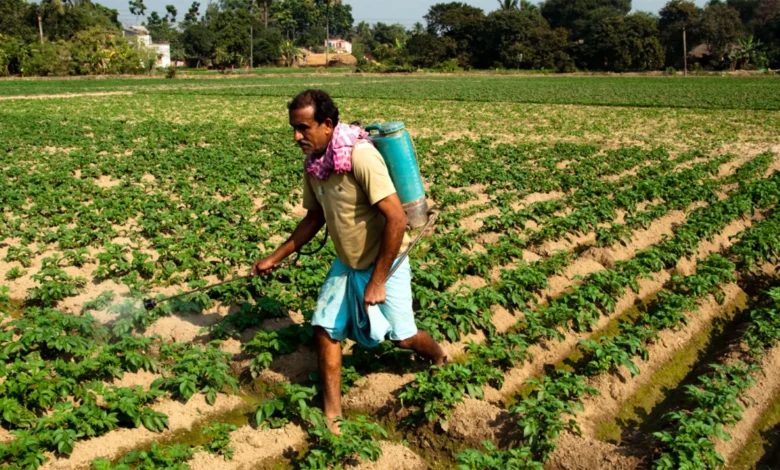
The global agricultural sector is currently facing a public health emergency of unprecedented proportions, according to a landmark study published this past Wednesday in the journal Frontiers in Public Health. The research, commissioned by the Pesticide Action Network (PAN), indicates that approximately 46 percent of the world’s 934 million farmers and agricultural laborers suffer from unintentional acute pesticide poisoning annually. These findings, derived from an exhaustive analysis of data spanning from 2006 to 2023, suggest that between 402 million and 433 million individuals are afflicted by chemical-induced illness every single year.
A Growing Global Crisis
The implications of these figures are profound, highlighting a systemic failure to protect the very workforce that sustains the global food supply. While the study documents an estimated 11,000 deaths annually attributed to direct pesticide poisoning—with nearly 60 percent of these fatalities concentrated in India—the report warns that this is likely a conservative estimate. The data collection limitations inherent in rural agricultural regions suggest that the true mortality rate may be significantly higher than the reported numbers.
Geographically, the burden of these poisonings is not distributed equally. Southern Asia, Southeast Asia, and East Africa emerge as the regions with the highest incidence of exposure-related illnesses. On a national level, Burkina Faso in West Africa represents a particularly alarming case study, where nearly 84 percent of the farming population reported symptoms consistent with acute pesticide poisoning.
Historical Context and Usage Trends
The escalation of this crisis coincides with a massive, decades-long surge in the global trade and application of synthetic chemicals. Since 1990, the volume of pesticides utilized globally has doubled, reaching a staggering 3.8 million metric tons in 2023 alone.
The trajectory of this reliance can be broken down into distinct phases:
- The Green Revolution (1960s–1980s): The introduction of high-yield crop varieties necessitated the adoption of chemical fertilizers and synthetic pesticides to prevent crop loss.
- The Neonicotinoid Era (1990s–2010s): The widespread adoption of systemic insecticides—often applied as seed coatings—led to a shift in how farmers interacted with toxins, embedding them into the plant tissue itself.
- The Modern Proliferation (2010s–Present): Despite growing international awareness of the dangers, the expansion of commercial industrial agriculture has outpaced regulatory oversight, leading to the continued, intensive application of hazardous substances.
The Mechanism of Exposure
The study underscores that the primary avenues for poisoning are mundane, everyday activities: the preparation of chemical mixtures, the mechanical application of sprays, and the routine handling of contaminated equipment or treated crops. For many farmers, particularly in developing nations, the lack of standardized Personal Protective Equipment (PPE) is not merely a choice but a consequence of poverty and lack of access to industrial safety standards.
Jayakumar Chelaton, executive director of Pesticide Action Network India, characterized the current situation as a "crisis that can no longer be ignored." The researchers argue that the persistence of these chemicals in the environment and the workforce represents a failure of international policy to align with existing United Nations recommendations, which call for the urgent phase-out of highly hazardous pesticides (HHPs).
Chronic Health Implications and Emerging Evidence
While the study focuses primarily on acute poisoning—defined as illness or health effects experienced shortly after exposure—the medical community is increasingly alarmed by the long-term, chronic consequences of pesticide contact.
A significant portion of the discourse surrounding this study involves the potential link between chronic chemical exposure and neurodegenerative conditions. Hélène Nicora, director general of Parkinson’s Europe, noted that there is "overwhelming evidence" suggesting that Parkinson’s disease is, in many cases, an environmentally driven condition. Recent scientific investigations have established a credible link between consistent exposure to specific herbicides and the onset of movement-related disorders.
This recognition is beginning to gain legal and institutional traction. France, Germany, and Italy have already taken the significant step of classifying Parkinson’s disease as an occupational disease for farmers who have worked with specific chemicals, such as the herbicide paraquat. The personal accounts of former agricultural workers, such as Rendert Algra from the Netherlands, serve as a harrowing reminder of these risks. Algra, who spent years applying pesticides on his family farm, has publicly attributed his own diagnosis to his decades of direct exposure.
Scientific Limitations and Calls for Reform
Despite the robustness of the new data, the authors of the study are the first to acknowledge the gaps in current knowledge. The analysis did not account for the roughly 84 million children who are estimated to be working in the agricultural sector, a group uniquely vulnerable to the developmental impacts of chemical exposure. Furthermore, the lack of standardized surveillance and reporting protocols worldwide makes it difficult to compare poisoning rates across different jurisdictions accurately.
"We are extremely concerned about the devastating health impacts from pesticide poisonings—both the acute impacts mentioned in this study but also chronic exposures that farm workers and communities suffer," said Génon Jensen, executive director of the Health and Environment Alliance.
The call to action issued by the research team is threefold:
- Immediate Policy Change: Governments must implement the UN recommendation to phase out highly hazardous pesticides globally.
- Infrastructure for Support: Farmers must be provided with the financial and logistical support necessary to transition to safer, non-toxic alternatives.
- Standardization: International health bodies must establish uniform protocols for tracking and reporting pesticide-related illnesses to ensure that the scale of the problem is accurately reflected in future health policy.
The Path Forward: Implications for Global Agriculture
The economic and social implications of this study are profound. As the global population continues to grow, the pressure on the agricultural sector to produce higher yields is immense. However, the current model of production, which relies heavily on chemical intervention, is proving to be physically unsustainable for those who perform the labor.
If the global agricultural system continues on its current path, the costs—both in terms of human life and the burden on public healthcare systems—will likely continue to mount. As Dr. Sheila Willis of Pesticide Action Network UK aptly summarized, the revelation of the "scale of suffering" must serve as a catalyst for reform. The transition to regenerative, less toxic farming practices is no longer a matter of environmental preference; it has become a fundamental necessity for protecting human health on a global scale.
As it stands, the international community faces a difficult balancing act. Policymakers must reconcile the need for food security with the undeniable evidence that the tools currently used to ensure that security are systematically dismantling the health of the global farming population. Whether this report will trigger a legislative shift remains to be seen, but the data has provided a clear, urgent roadmap for those who argue that the status quo is fundamentally broken.