The American political landscape is in a constant state of flux, a reality consistently underscored by the in-depth analysis provided by CNN Political Director David Chalian and his guests on the "CNN Political Briefing" podcast. Recent episodes, spanning from late September to early December 2025, have delved into a series of high-stakes events and internal party struggles, offering crucial insights into the forces shaping the nation’s political trajectory as it gears up for the pivotal 2026 midterm elections. From unprecedented government shutdowns and evolving leadership challenges within the Republican Party to the persistent, yet sometimes fractured, influence of former President Donald Trump and groundbreaking municipal election results, the briefing has illuminated the complex interplay of power, strategy, and public sentiment.
GOP Navigates Internal Strife and Leadership Scrutiny Ahead of 2026 Midterms
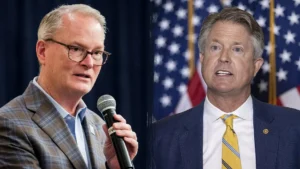
The Republican Party, particularly within the House of Representatives, finds itself at a critical juncture marked by internal dissent and questions surrounding its leadership. An episode from December 5, 2025, titled "This GOP Congressman Says Speaker Johnson Has “Failed to Lead”," featured California Republican Representative Kevin Kiley, who offered a candid assessment of the party’s current state. Rep. Kiley, whose own political future was complicated by new district lines passed in California at Governor Gavin Newsom’s urging, voiced significant criticisms of House Speaker Mike Johnson’s leadership. His remarks highlighted a palpable "vibe shift" within the Republican conference, indicating growing frustration and a lack of unified direction as the party prepares for the 2026 midterm elections and contemplates a future potentially beyond the immediate shadow of former President Trump.
This public critique by a sitting Republican congressman underscores the persistent challenges Speaker Johnson has faced since assuming the gavel. Leading a historically narrow majority, Johnson has grappled with maintaining cohesion among diverse ideological factions, ranging from conservative hardliners to more moderate members in battleground districts. The sentiment expressed by Kiley is reflective of broader anxieties within the GOP regarding its ability to govern effectively, pass key legislation, and present a united front to the electorate. The "vibe shift" could signal a move towards greater assertiveness from individual members or factions, potentially leading to more frequent challenges to leadership decisions and a more fractious legislative environment. The implications for the 2026 midterms are significant; a party perceived as divided and unable to lead effectively often struggles to retain or expand its electoral mandate. Analysts suggest that such internal squabbles could alienate swing voters and complicate fundraising efforts, making the path to regaining control of both chambers of Congress an even steeper climb for Republicans.
Donald Trump’s Enduring Influence and Shifting Allegiances
Former President Donald Trump’s grip on the Republican Party and his devoted MAGA base has long been considered unshakeable, yet recent developments suggest potential cracks in this formidable bond. The November 21, 2025, episode, "Is President Trump Losing Control of MAGA?," explored this intriguing question through the insights of POLITICO’s Jonathan Martin. The discussion centered on Trump’s decision to reverse course on the Epstein files, a move interpreted by some as an attempt to align himself more closely with mainstream party sentiment, potentially at odds with a segment of his most ardent supporters.
Beyond the Epstein matter, the episode highlighted growing criticism from some within Trump’s base regarding his messaging and focus. Concerns were raised about his perceived lack of emphasis on critical domestic issues such as prices and affordability, with some supporters expressing a desire for him to prioritize economic challenges facing everyday Americans. Furthermore, his continued penchant for placing foreign affairs "front and center" has also drawn scrutiny from those who advocate for an "America First" agenda focused predominantly on domestic concerns. Martin’s assessment probed whether these instances signify the beginning of a "lame duck" period for Trump, suggesting a potential shift in the dynamics of the MAGA movement and raising questions about who or what might emerge as the next influential force within the conservative populist wing of the Republican Party.
This analysis gains particular significance in the context of the 2026 midterms and beyond. While Trump remains a dominant figure, any erosion of his absolute control over his base could empower other Republican figures to challenge his influence or carve out their own niches. The internal debates over policy priorities—whether to focus on global issues or strictly domestic economic concerns—reflect a broader ideological struggle within the GOP. The Epstein files reversal, while seemingly minor, could be a bellwether, signaling Trump’s strategic adaptability or, conversely, a concession to pressures from the party establishment, a move that might not sit well with the most purist elements of his base. The implications are profound for the Republican Party’s future direction, its messaging, and the potential emergence of new leadership.
Democrats Leverage Shutdown Victory and Eye 2026 Midterms
The Democratic Party, fresh off "big electoral victories," found itself at a crossroads, navigating both the triumph of ending the "longest government shutdown in U.S. history" and internal debates over the strategies employed. The November 14, 2025, episode, "Terry McAuliffe: Donald Trump is the Democrats’ Best Weapon," featured former Virginia Governor Terry McAuliffe, a seasoned Democratic strategist who has led the Democratic National Committee and chaired Hillary Clinton’s 2008 presidential campaign. McAuliffe offered his assessment of the Democrats’ shutdown strategy and laid out a prescription for winning the 2026 midterms, notably asserting that Donald Trump remains the Democrats’ most potent electoral weapon.
The government shutdown, which had extended into its third week by mid-October 2025, according to the October 17 episode "How Does This Shutdown End?," had been a focal point of intense political maneuvering. Democratic Congressman Ro Khanna from California’s progressive wing articulated the party’s non-negotiables and pathways to resolution during the shutdown. Earlier, in the October 3 episode "The Republicans’ Plan to Win the Shutdown," Congressman Mike Lawler, a Republican representing a battleground district, expressed confidence that Democrats had made a critical error in their shutdown calculus, anticipating public backlash against them. However, the September 26 episode "The Democrats’ Plan to Win the Shutdown," featuring Representative Suzan DelBene (D-WA) and Chair of the Democratic Congressional Campaign Committee (DCCC), outlined the Democrats’ strategy to pin blame on Republicans and position themselves for a majority win in 2026.

The eventual resolution of the shutdown, framed by Democrats as a "victory," provided the party with a narrative of effective governance and standing firm against perceived Republican intransigence. This narrative, coupled with McAuliffe’s strategic insights, positions Democrats to capitalize on any lingering public dissatisfaction with Republican internal divisions or perceived extremism. The DCCC, under DelBene’s leadership, is laser-focused on recapturing the House, viewing the shutdown’s outcome as a significant momentum builder. The ability of Democrats to unify behind a common message and leverage external factors, such as the continued prominence of Donald Trump, will be crucial in their efforts to sway swing voters and energize their base for the upcoming midterm cycle. The implications are clear: the Democrats are keen to frame the 2026 elections as a choice between their perceived stability and Republican disarray, with the shutdown serving as a potent example.
Groundbreaking Electoral Outcomes in 2025: NYC, NJ, and VA
The 2025 election season proved to be a dynamic period, particularly for municipal and state races, with significant implications for the broader political landscape. The "CNN Political Briefing" meticulously tracked these developments, offering deep dives into key contests.
A standout narrative emerged from New York City’s mayoral race, a contest that redefined political expectations. The November 7, 2025, episode, "How Zohran Mamdani Changed the Game in NYC," detailed the meteoric rise of Zohran Mamdani, a once "little-known state assemblyman" who "catapulted himself to victory" in the mayoral race. Errol Louis, Political Anchor of Spectrum News NY1, explained to David Chalian how Mamdani "rewrote the political playbook in Gotham." Mamdani’s win, as a rising progressive star, signals a significant shift in the city’s political power dynamics, demonstrating the increasing influence of progressive movements in major urban centers.
This victory was set against a challenging backdrop for his opponents. The October 24, 2025, episode, "Curtis Sliwa Sees a Path to Becoming NYC’s Mayor," explored the uphill battle faced by Republican Curtis Sliwa. Despite a six-to-one Democratic voter advantage in New York City, Sliwa, the GOP’s standard-bearer who had previously lost to Eric Adams four years prior, mounted another campaign. He found himself not only against Mamdani but also against former Governor Andrew Cuomo, who had left office in disgrace four years earlier and was attempting a political comeback. Sliwa faced enormous pressure to withdraw from the race, underscoring the formidable challenges Republicans encounter in America’s largest city.
Beyond New York City, the October 31, 2025, episode, "The Home Stretch: Elections in NYC, NJ, and VA," provided a broader overview of the intense final days of the 2025 election season across New York City, New Jersey, and Virginia. CNN Correspondents Jeff Zeleny and Eva McKend shared their insights from the campaign trail, highlighting the key issues, candidate strategies, and voter sentiments that shaped these crucial contests. The results of these elections, particularly Mamdani’s progressive win, serve as potential bellwethers, indicating the strength of progressive movements, the enduring challenges for Republicans in heavily Democratic areas, and the unpredictable nature of political comebacks. The implications extend to the national level, as successful local and state strategies often inform broader party platforms and campaign tactics for future federal elections.
An Extraordinary Moment in American Justice: The Comey Prosecution
The realm of American justice took an "extraordinary chapter" with the prosecution of former FBI director James Comey, a development explored in the October 10, 2025, episode, "An Extraordinary Moment in American Justice." Former federal and state prosecutor Elie Honig joined David Chalian to place Comey’s case in its historical context, drawing from his new book, When You Come at the King: Inside DOJ’s Pursuit of the President, From Nixon to Trump.
James Comey’s tenure as FBI Director was marked by unprecedented political controversies, including his handling of the investigation into Hillary Clinton’s emails and his interactions with former President Donald Trump. His eventual dismissal and subsequent prosecution, while not explicitly detailed in the podcast summary regarding the charges, signifies a deeply unusual turn in American legal and political history. The prosecution of a former FBI director, a position traditionally held as apolitical and independent, raises profound questions about the politicization of justice, the independence of law enforcement institutions, and the potential for retribution in the political sphere.
Honig’s analysis would undoubtedly delve into the constitutional implications, the precedents (or lack thereof) for such a prosecution, and the broader impact on public trust in institutions like the Department of Justice and the FBI. The case would be examined through the lens of historical moments when the executive branch clashed with law enforcement, such as during the Nixon or Trump administrations, as suggested by Honig’s book title. The implications of such a high-profile prosecution are far-reaching, potentially setting new standards for accountability for government officials, but also risking the perception of politically motivated legal actions. It underscores the delicate balance required to maintain an independent justice system in an increasingly polarized political environment.
A Dynamic Political Landscape Unfolds
The collection of insights from the "CNN Political Briefing" reveals a political landscape rife with challenges, strategic maneuvers, and shifting allegiances. From the internal power struggles within the Republican Party and the nuanced evolution of Donald Trump’s influence to the Democrats’ post-shutdown strategic positioning and the groundbreaking results of key municipal elections, the narratives underscore the fluid and often unpredictable nature of contemporary American politics. These discussions, meticulously guided by David Chalian and his expert guests, provide essential context and analysis for understanding the intricate forces at play, offering a vital resource for anyone seeking to comprehend the trajectory of the nation as it navigates the complexities of the present and anticipates the critical electoral battles of 2026. The ongoing dialogue within the "CNN Political Briefing" remains indispensable for those aiming to stay abreast of the ever-changing political currents shaping the future of the United States.
Related posts: