The USC Games Expo: A Decade of Launching Innovative Indie Developers and Shaping the Future of Interactive Storytelling

For ten years, the USC Games Expo has quietly established itself as a pivotal launchpad for emerging independent game developers. Nestled within the hallowed halls of the University of Southern California’s School of Cinematic Arts, specifically its Interactive Media & Games Division, this annual showcase has consistently provided a fertile ground for groundbreaking ideas. Long before titles like the critically acclaimed Journey, the narrative-rich What Remains of Edith Finch, and the elegant puzzle game Threes! garnered widespread recognition and redefined the landscape of interactive storytelling, their creators honed their craft and experimented with nascent concepts at USC. The 2024 iteration of this esteemed event continued this tradition, offering a compelling glimpse into the next wave of interactive entertainment.
Held every spring, the USC Games Expo is more than just an exhibition; it’s a dynamic environment where visitors can directly engage with a diverse array of student-created works. From intricate digital games and engaging tabletop experiences to immersive themed entertainment installations, the expo provides a hands-on platform for innovation. Crucially, it allows student creative directors to witness firsthand how real players interact with their creations, offering invaluable feedback and insights.
"In layman’s terms, the USC Games Expo is the largest academic games showcase in the world," stated Jim Huntley, Associate Professor of Interactive Media & Games and Head of Marketing for USC Games, reflecting on this year’s event. "We’ve been doing it for a little over 10 years now, and it’s been getting bigger and bigger each time." This decade-long trajectory underscores the expo’s growing significance within both academic and professional game development circles.
While the expo primarily features work from USC Games students, its reach extends to any currently enrolled USC student who has developed a game. This broad inclusivity transforms the event into a comprehensive celebration of interactive storytelling across the entire university. However, the centerpiece of the showcase remains the Advanced Games Project (AGP), the division’s capstone course. This intensive program brings together multidisciplinary teams of students who dedicate three semesters to conceptualizing and building an original game, culminating in a playable demo ready for public unveiling.
"It’s the final expression of all the stuff that they’ve learned throughout their time learning with us," Huntley elaborated. Students embark on an approximately 18-month journey, progressing from an initial pitch to a polished project. Working in small, studio-like environments with around 30 collaborators, they meticulously develop their games before presenting them to the public at the Expo. This extended development period has become increasingly vital, with USC Games recently introducing an additional semester dedicated to pre-production. This strategic addition allows students more time to refine their ideas and solidify their vision before diving into full-scale production. "We value pre-production so much," Huntley emphasized, "allowing teams to better understand what they’re making before the larger production effort starts."
This strong emphasis on thorough preparation mirrors the program’s commitment to evolving alongside an industry in perpetual motion. Huntley explained that USC Games actively consults with external studios and publishers to ensure their curriculum equips graduates with the skills demanded by the contemporary workforce. However, this engagement is carefully balanced to avoid chasing fleeting trends. The goal, Huntley clarified, is to distinguish between transient industry buzz and substantive, lasting shifts that warrant integration into the curriculum.
Artificial intelligence (AI) serves as a pertinent example of this nuanced approach. Rather than instructing students to rely on AI-generated content, the program prioritizes foundational creative and technical skills. AI is viewed as a powerful tool to augment, not replace, the development process. "We do want to make sure that the students know how to script and code and write and design by hand, so that they’re not relying on the tool as a crutch," Huntley stated. "It’s awesome to see the raw creativity that our students bring to bear. [The program is very] blue sky: what do you want to make? This is where they can make that dream happen, and it’s fun seeing what kind of dreams they have." This year’s showcase vibrantly reflected this ethos, featuring a diverse range of projects that embodied imaginative exploration.
Showcasing Innovation: A Closer Look at Featured Projects
This year’s USC Games Expo highlighted three distinct projects, each helmed by creative directors who shared their insights into the development process, their inspirations, and the unique worlds they have crafted.
Aftertaste: Exploring Burnout Through Surreal Narrative
Creative Director: Baozee
Age: 22
Hometown: Hefei, China
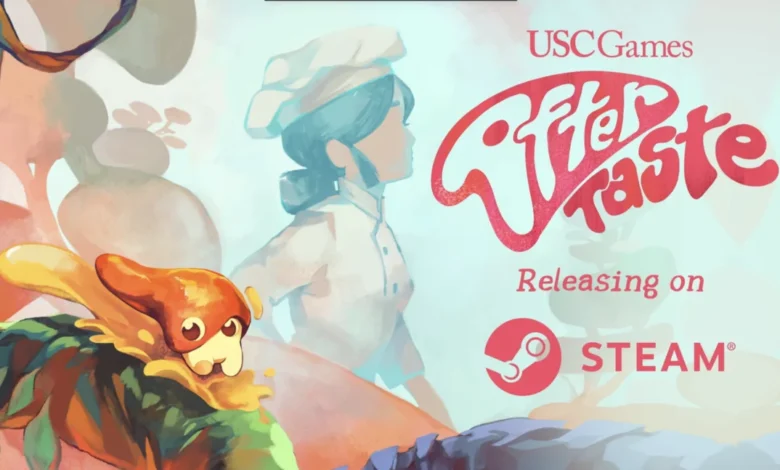
Aftertaste is a surreal 2D narrative platformer that puts players in the role of Tami, a sentient tongue navigating the internal landscape of an overworked chef named Keh, who has lost her culinary passion. Drawing inspiration from traditional Chinese medicine, creator Baozee transforms the chef’s bodily organs into emotional representations, weaving a story that blends quirky visuals with a profound exploration of burnout, the journey toward healing, and the rediscovery of creative spark. The game is available on Steam.
DEADLINE: What is Aftertaste?
BAOZEE: Aftertaste is a 2D side-scrolling platformer where you play as a tongue named Tami. Tami is assisting an overworked chef named Keh, who has experienced burnout and lost her sense of taste. To understand the cause of this, her anthropomorphic tongue embarks on a journey inside her body. It’s essentially a narrative adventure game about recovering her sense of taste, reclaiming lost memories, and rediscovering her passion.
DEADLINE: The concept of a sentient tongue as a protagonist is incredibly unique. What sparked this idea, and were you concerned about how players might react to such an unconventional character?
BAOZEE: The genesis of the idea came last year while I was studying Chinese medicine as part of a stress management class. We discussed the profound connection between emotions and physical sensations, particularly taste. In Chinese medicine, specific tastes are linked to different emotions and internal organs. This concept became a significant wellspring of inspiration for the game. Furthermore, we often overlook the tongue, which is one of the most remarkable muscles in the human body. I thought, "Why not create a game centered around it?" That’s when the narrative for Aftertaste began to form.

Initially, I was indeed concerned about the reception. During the AGP program at USC Games, the first round of feedback indicated that many people found the concept unappealing or difficult to visualize. However, a notable portion of respondents were drawn to its peculiar charm, appreciating the blend of the strange and the endearing. This dichotomy was an important learning experience.
DEADLINE: What was your experience receiving this kind of direct feedback for the first time?
BAOZEE: It was my inaugural experience receiving such direct and varied feedback, especially from industry professionals and a diverse cross-section of individuals from within the school and different professional fields. Presenting the game to them during our second round was a significant step for me. As one of only two sophomore students leading projects, alongside the director of Sisyphus’s Worst Day (Again), it was challenging but immensely educational.
DEADLINE: What presented the greatest hurdle in the game’s development?
BAOZEE: Recruitment was the most significant challenge. Our team comprised students from various schools across USC, and some lacked prior game development experience. In a professional studio, team members are compensated for their work. Here, each team has approximately 50 to 60 individuals, making it difficult to gauge genuine engagement versus participation solely for academic credit. I relied heavily on my friends. The design lead was my roommate, and the art director was a close friend. Trusting them was paramount, as I believe friendship, love, and care are powerful foundations for creating something beautiful.
DEADLINE: Conversely, what was the most rewarding aspect of persevering with your vision for the game?
BAOZEE: Seeing the trailer released and witnessing the collective excitement and applause from everyone at the Expo for our work was incredibly rewarding. We were also immensely proud of creating such a charming and visually appealing character. Developing merchandise for Aftertaste was another significant highlight, a tangible testament to the game and a wonderful gift from my team.
DEADLINE: Which games or films served as key inspirations for Aftertaste?
BAOZEE: Super Mario Odyssey was a definite influence, particularly its themes of transformation, diverse abilities, and tactile interactions, which resonate with Aftertaste‘s gameplay. I also drew inspiration from the film Inside Out for its masterful personification of organs and emotions.
DEADLINE: And on a personal level, what games have most profoundly inspired you?
BAOZEE: What Remains of Edith Finch, which was also developed by a former USC Games student, had a profound impact on me. It demonstrated that games could tackle deeply serious and meaningful themes, which directly inspired my decision to pursue game development in college.
DEADLINE: What are your aspirations for your career after graduation?
BAOZEE: My dream is to become a freelance game developer. I have a multitude of interests, including ongoing studies in anatomy, but my true passion lies in creating games, particularly compelling indie titles developed by small, dedicated teams.
Sisyphus’s Worst Day (Again): A Mythological Twist on Puzzle Design
Creative Director: Jason Lin
Age: 21
Home Country: Taiwan

Sisyphus’s Worst Day (Again), a 3D puzzle game, evolved from Jason Lin’s fascination with cyclical mechanics into a clever reinterpretation of Greek mythology. The game challenges players to engineer elaborate contraptions designed to keep the mythical Sisyphus trapped in his eternal, arduous task. It masterfully blends dark humor, inventive puzzle design, and a playful subversion of an age-old tale.
DEADLINE: What drew you to the myth of Sisyphus, and how did it translate into a game concept?
LIN: My initial ambition was to create a game centered around the concept of loops or cycles. I began exploring mechanics that involved reverse-engineering AI by preventing it from achieving its objectives. However, I quickly realized this premise lacked narrative depth and player engagement. I sought a story that would resonate with players, leading me to Greek mythology, a subject I’ve always found captivating. The myth of Sisyphus proved to be a perfect fit, allowing me to craft my own interpretation to serve the game’s narrative.
DEADLINE: Could you describe the most significant challenge you encountered during the game’s development?
LIN: In the early stages, we faced the dual challenge of designing the game while simultaneously leading a large team that had limited initial understanding of the project’s direction until the first demo was built. Our design lead had the daunting task of creating levels with the belief that they would eventually coalesce, and simultaneously assigning tasks to teammates despite the inherent uncertainty of how everything would ultimately fit together. This challenge permeated the entire team; each member had to trust in the vision before it was fully realized. Cultivating that collective confidence was arguably the most arduous part.
DEADLINE: What was the most rewarding aspect of bringing Sisyphus’s Worst Day (Again) to fruition?
LIN: Witnessing people play the game was incredibly rewarding. The first time we truly felt the game was fun was after completing our demo last December. Observing play-testers solve the puzzles and hearing them exclaim, "Oh my God, these puzzles are really interesting," was immensely gratifying. Showcasing the game at the USC Games Expo was another significant highlight, allowing us to finally share our creation with the public, observe their interactions, and hear their reactions. We also thoroughly enjoyed creating merchandise and crafting an immersive experience around the game. The atmosphere at the Expo was truly electric.
DEADLINE: What specific games influenced Sisyphus’s Worst Day (Again)?
LIN: Two primary inspirations guided our development. From a narrative standpoint, Hades and Hades II were major influences. They brilliantly fuse ancient Greek mythology with contemporary game genres, and we drew considerable inspiration from their art style, including the isometric perspective and character design. From a gameplay perspective, we looked to traditional Sokoban-style puzzle games. Additionally, Order of the Sinking Star provided significant inspiration with its puzzle design and visual aesthetic, which closely aligned with our creative goals.
Unrealtor: Navigating Surreal Architecture and Perspective Puzzles
Creative Director: Ariel Sol
Age: 25
Hometown: Chicago
Unrealtor transforms the mundane experience of apartment hunting into a surreal co-op puzzle adventure. Inspired by Ariel Sol’s own frustrating apartment searches in Los Angeles, the game plunges players into impossible architecture and perspective-bending challenges as reality contorts around them. Drawing heavily from the conceptual framework of Superliminal, Sol masterfully blends optical illusions with an uncanny, dreamlike atmosphere, turning a familiar, often stressful, experience into an inventive mystery. The game is available on Steam.
DEADLINE: How would you describe the unique and, at times, disorienting experience of Unrealtor?
SOL: Unrealtor is a local co-op game designed for two players to enjoy together on the couch. The premise involves two friends touring an apartment they are considering renting. However, the tour quickly devolves into a surreal labyrinth, and the players must find a way to escape while the persistent landlord attempts to finalize the sale. At its core, it’s a puzzle game where our primary mechanic revolves around perspective. Players manipulate objects by viewing them from specific angles, effectively creating a 2D image that is projected across the split-screen display.
DEADLINE: Could you outline the timeline of your time at USC and the development period for Unrealtor?

SOL: The master’s program at USC spans two years. The development cycle for Unrealtor was concentrated within one year, specifically through the Advanced Games Project. Projects are typically greenlit in the fall, and from that point until the subsequent USC Games Expo, the entire focus is on ideation and development.
DEADLINE: How did the core concept of Unrealtor come to life?
SOL: The idea originated from two distinct starting points. Firstly, the mechanic itself: I was deeply intrigued by optical illusions and the interplay between 3D and 2D space. Secondly, I felt a strong desire to incorporate a narrative, believing that a game devoid of story is more akin to a toy. Concurrently, I was navigating the challenging landscape of apartment hunting in Los Angeles, encountering numerous perplexing living spaces. I would often ponder practical questions like, "Where exactly can a bed fit?" only to receive unhelpful advice, such as, "Just put it diagonally." When removed from the real-life stress, the process of finding an apartment almost transforms into a game of spatial reasoning. It was at this juncture that I recognized the potential to merge these seemingly disparate ideas.
DEADLINE: What was the most significant challenge encountered during the development of Unrealtor?
SOL: Interdisciplinary communication proved to be the most substantial hurdle. I am immensely proud of my team because I presented them with an idea that was inherently difficult even for me to articulate clearly. If it posed a challenge for the director, conveying it to the entire team was exponentially more complex. The primary difficulty lay in integrating the design and art departments. Typically, designers conceptualize mechanics, and artists then enhance their visual presentation. However, because our core mechanic relied on precise visual alignment within a 3D space, art had to be integral to the design process, and designers, in turn, needed to contribute to visual considerations. Establishing an effective communication pipeline required considerable time and effort.
DEADLINE: How did your team overcome this communication barrier?
SOL: Initially, we conducted separate meetings for the design and art teams. Over time, however, it became far more efficient to convene everyone in a single room and pose the question: "What do you need from each other?" This collaborative approach significantly streamlined the entire development process.
DEADLINE: What was the most rewarding aspect of the creation process for Unrealtor?
SOL: Playtesting was, without question, the most rewarding element. Especially with a puzzle game, there is an unparalleled satisfaction in observing a player experience that crucial "aha!" moment when they suddenly grasp the solution. When you are designing the puzzles, you are already privy to the answers, so you are essentially estimating when that realization will occur for the player. Witnessing players actually achieve that moment of understanding is profoundly gratifying.
DEADLINE: What games have served as inspirations for Unrealtor, or for you personally as a developer?
SOL: Superliminal was likely our most significant reference point, as it also employs unconventional puzzle mechanics. We also drew inspiration from games like Blueprints and Monument Valley. On a personal level, the game that truly altered my perception of what games could be was Journey. It impressed upon me the idea that games could transcend mere entertainment and exist as art. Its elegant, experiential design and its beautifully crafted narrative arc have remained with me ever since.
The USC Games Ecosystem: Cultivating Future Innovators
The USC Games Expo is not merely an endpoint for student projects; it represents a critical juncture within a broader ecosystem dedicated to nurturing talent and fostering innovation. The Interactive Media & Games Division at USC’s School of Cinematic Arts is renowned for its rigorous curriculum, which combines theoretical learning with hands-on development experience. This approach ensures that graduates are not only equipped with technical proficiency but also possess a strong artistic sensibility and a deep understanding of narrative design.
The program’s emphasis on interdisciplinary collaboration, as highlighted by the student developers, is a key differentiator. By bringing together students from diverse backgrounds—art, computer science, film, and more—USC cultivates teams that can tackle the multifaceted challenges of modern game development. This collaborative environment mirrors the structure of professional game studios, preparing students for the realities of the industry.
Furthermore, the program’s commitment to staying abreast of industry trends, while maintaining a focus on fundamental skills, is crucial. The cautious integration of new technologies like AI, coupled with a continued emphasis on core design principles, ensures that USC graduates are adaptable and well-prepared for the evolving demands of the global game market. The success of games like Journey and What Remains of Edith Finch, which emerged from this very program, serves as a testament to its effectiveness in producing influential and critically acclaimed interactive experiences. As the USC Games Expo continues to grow, it solidifies its position as a vital incubator for the next generation of game designers, storytellers, and innovators.
Related posts: