Armadillo World Headquarters: Woody Harrelson Joins Documentary Project to Chronicle Legendary Austin Music Venue

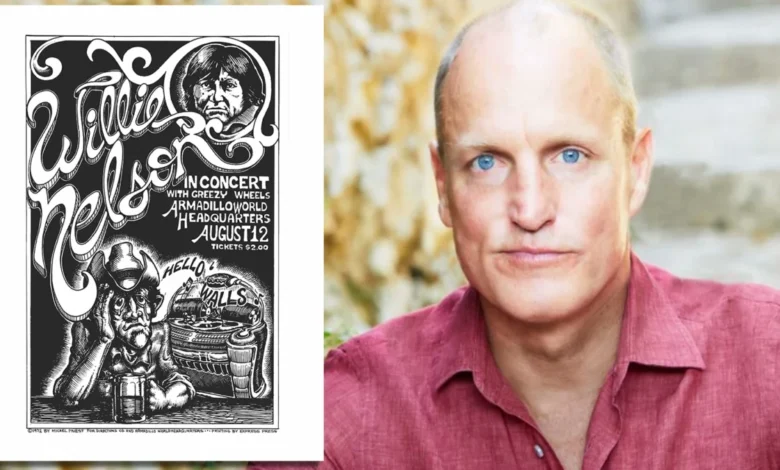
Woody Harrelson, the Academy Award-nominated actor and proud Texas native, is lending his star power and producing prowess to a new documentary chronicling the storied history and indelible cultural impact of Austin’s iconic Armadillo World Headquarters (AWHQ). The feature-length film, currently in development, promises to transport audiences back to a pivotal era in music history, celebrating a venue that not only hosted legendary performers but also became a crucible for Austin’s unique identity.
Harrelson, whose deep-rooted connection to Austin’s vibrant creative landscape is well-established, will serve as a producer on the project. He will collaborate with producing partners Jeremy Plager and Ilya Bronchtein, who are executive producing. This venture signifies Harrelson’s continued dedication to amplifying stories that resonate with the spirit and heritage of his home state.
"The Armadillo wasn’t just a music venue," Harrelson stated in an exclusive comment, reflecting on the venue’s profound significance. "It was where all kinds of worlds came together: artists, outlaws, hippies, students, dreamers, everyone under one roof. Careers got started there, genres mixed, and what really sticks with me is how it made people feel like they belonged. People came for the music, but what they found was each other. The Armadillo represented something we don’t see much anymore, and that’s a big part of why I wanted to be involved with this film."
This sentiment underscores the film’s intended focus: the Armadillo’s role as more than just a stage, but as a vital community hub that fostered a sense of belonging and artistic cross-pollination. The documentary aims to capture the essence of this unique atmosphere, a spirit that has become increasingly rare in the modern entertainment landscape.
A Legacy Etched in Sound and Spirit
Armadillo World Headquarters, which operated from 1970 to 1980, was a transformative force in the Austin music scene and beyond. Its legacy is intrinsically linked to the birth of the "cosmic cowboy" movement, a cultural phenomenon that blended outlaw country, psychedelic rock, blues, and the burgeoning counterculture of the era. The venue served as a fertile ground where these disparate genres and ideologies converged, fostering an environment of experimentation and innovation.
The documentary will delve into the venue’s rise, its profound cultural impact, and its enduring legacy, showcasing its role in shaping Austin’s identity as the "Live Music Capital of the World." The film is poised to feature an array of archival footage, including rare performance snippets from some of the most influential artists of the 20th century. Among the luminaries who graced the Armadillo stage were Willie Nelson, Jerry Garcia, Bruce Springsteen, Little Feat, Linda Ronstadt, and Talking Heads. The film will also offer glimpses of unforgettable sets by artists such as Fats Domino, Waylon Jennings, and Charlie Daniels, highlighting the venue’s broad appeal and its ability to attract a diverse range of musical talent.

The production team has access to a meticulously restored archive of over 100 audio and video recordings captured within the Armadillo during its peak operational years. This treasure trove of material will provide audiences with an unparalleled opportunity to experience the electrifying performances that defined an era. Notably, the film will include footage of Bruce Springsteen’s early performances during his first Texas tour, offering a rare look at the Boss in his formative years.
A Cinematic Journey Through Time
The documentary is being helmed by director and editor David Brodie, whose previous works include "The Greatest Night in Pop" and "Being Eddie." He is collaborating with a team of accomplished producers who bring a wealth of experience in music and documentary filmmaking. Angus Wall, Eve Kornblum, Kent Kubena, and Terry Leonard of MakeMake, known for their work on "The Greatest Night in Pop," "Being Eddie," and SXSW 2026’s "Lainey Wilson: Keepin’ Country Cool," are all attached to the project. Additionally, Marcus Peterzell of Passion Point Collective, recognized for his work on "The Cure: Show" and "James Brown: Godfather of Soul," and Amy Slotnick, whose credits include "AS I AM: The Life and Times of DJ AM" and "Frida," are also producing. Further production partners are expected to be announced in the coming months, signaling a significant industry backing for this project.
The film’s narrative arc will trace the Armadillo’s journey from its inception to its closure in 1980. It will explore how the venue not only launched careers and broke genre barriers but also played a crucial role in cementing Austin’s reputation as a global music epicenter. Through firsthand accounts from artists, musicians, and fans, coupled with the evocative power of the restored archival footage, the documentary will paint a vivid portrait of a place where creativity flourished and a unique cultural identity was forged.
Reviving the ‘Dillo Spirit for a New Generation
The Armadillo’s legacy is not confined to the past. In recent years, there has been a concerted effort to reintroduce the "Dillo spirit" to contemporary audiences. A new Austin-based entity has acquired the intellectual property rights to the Armadillo brand through a partnership with the original owner, Eddie Wilson. This revitalized brand has already made significant inroads, including a collaboration with Austin FC and a pop-up experience designed to introduce the venue’s rich history to younger generations.
This renewed interest in the Armadillo’s heritage is also reflected in the ongoing PBS broadcast of a short documentary titled "Armadillo Man: The Trips of Jim Franklin," which further explores the venue’s cultural landscape.
The original Armadillo World Headquarters closed its doors in 1980, marking the end of an era. However, its spirit has been rekindled in 2024 as a purpose-driven brand. The reimagined AWHQ is committed to celebrating Austin’s roots while actively supporting the growth of music and arts culture. This modern iteration of the Armadillo brand aims to uplift local artists and venues, fostering community through the shared experience of art. By embracing live music, visual art, film, and grassroots events, AWHQ seeks to carry forward the original "Dillo spirit," preserving the essence of what makes Austin "weird and wonderful."
Context and Chronology of an Austin Icon
The story of Armadillo World Headquarters is deeply intertwined with the cultural shifts of the late 1960s and 1970s. Emerging from the psychedelic rock scene of the 1960s, Austin began to cultivate a distinct musical identity that was both innovative and deeply rooted in Texas traditions. The Armadillo, which opened its doors in July 1970, became the epicenter of this burgeoning scene.

1960s: The seeds of Austin’s unique musical identity are sown, influenced by folk, blues, and the emerging psychedelic rock movement.
1970: Armadillo World Headquarters opens its doors, quickly becoming a haven for artists and music lovers. The venue’s unconventional atmosphere, often featuring elaborate murals and a relaxed vibe, sets it apart from conventional concert halls.
Mid-1970s: The Armadillo solidifies its reputation as a premier live music venue, attracting an unparalleled roster of national and international acts. It becomes synonymous with the "cosmic cowboy" movement, a fusion of country, rock, and counterculture. Artists like Willie Nelson, Waylon Jennings, and Jerry Jeff Walker find a receptive audience and a platform to develop their outlaw country sound. Simultaneously, rock and roll giants like Bruce Springsteen, Talking Heads, and Jerry Garcia of the Grateful Dead also perform, showcasing the venue’s broad musical spectrum.
1970-1980: The Armadillo hosts thousands of performances, becoming a cultural landmark and a crucial incubator for artistic talent. The venue’s impact extends beyond music, influencing visual arts and fashion within Austin.
1980: Armadillo World Headquarters closes its doors, leaving a void in the Austin music scene. However, its legend and influence continue to resonate.
Early 2000s: Renewed interest in Austin’s musical history begins to surface, leading to efforts to preserve and celebrate venues like the Armadillo.
2020s: The Armadillo brand is officially revived, with a focus on honoring its legacy while fostering contemporary arts and culture. This includes collaborations with modern Austin institutions and the development of new media projects like the documentary.
Supporting Data and Cultural Impact
The Armadillo World Headquarters played a pivotal role in the careers of numerous artists. For instance, Willie Nelson’s performances at the Armadillo were instrumental in solidifying his outlaw country persona and expanding his fanbase. Similarly, Bruce Springsteen’s early gigs in Austin helped him hone his stage presence and connect with a dedicated audience outside of his native East Coast.
The venue’s eclectic booking policy meant that audiences could experience a wide spectrum of musical genres in a single week, fostering a more open-minded and adventurous listening public. This cross-pollination of genres is a key aspect that the documentary aims to explore, highlighting how the Armadillo served as a catalyst for musical evolution. The "cosmic cowboy" movement, nurtured within the Armadillo’s walls, represented a significant shift in country music, infusing it with a rock and roll sensibility and a more rebellious spirit. This movement paved the way for subsequent generations of genre-bending artists.
The venue’s physical space was also an extension of its artistic ethos. The iconic murals that adorned the Armadillo’s interior were a testament to its commitment to visual arts, transforming the venue into a living canvas. This integrated approach to art and music further contributed to its unique and influential cultural footprint. The estimated attendance figures for major acts at the Armadillo during its prime often reached several thousand people per show, demonstrating its significant draw and its role as a central gathering place for the city.
Broader Implications and Analysis
The forthcoming documentary about Armadillo World Headquarters arrives at a time when the preservation of cultural landmarks and the celebration of music history are increasingly important. In an era dominated by digital streaming and ephemeral trends, stories like that of the Armadillo serve as vital reminders of the tangible spaces and shared experiences that have shaped our cultural landscape.
The revival of the Armadillo brand itself signifies a growing appreciation for heritage and authenticity. By reintroducing its legacy to a new generation, the brand aims to not only honor the past but also to inspire future creativity. The documentary’s production, bolstered by the involvement of established figures like Woody Harrelson, signals a strong potential for widespread recognition and critical acclaim, further cementing the Armadillo’s place in the annals of music history.
The film’s exploration of how a single venue could foster such a diverse and influential cultural movement offers valuable insights into the power of community and shared artistic passion. It underscores the idea that certain spaces, imbued with a unique spirit, can become crucibles for innovation and identity formation, leaving an indelible mark on both local and national culture. The success of this documentary could also pave the way for further explorations into other significant, yet perhaps less globally recognized, cultural hubs that have played a similar role in shaping artistic movements. The Armadillo World Headquarters documentary is poised to be more than just a historical recounting; it is an exploration of the enduring power of music, community, and the spaces that bring them to life.