
China Lunar New Year
Celebrating China Lunar New Year: Traditions, Symbolism, and Modern Adaptations
China Lunar New Year, also known as Spring Festival or Chinese New Year, marks the beginning of the traditional lunisolar Chinese calendar. It’s the most significant and longest holiday in Chinese culture, a time for family reunions, feasting, and a hopeful ushering in of good fortune for the year ahead. Unlike the Gregorian calendar’s fixed January 1st, Lunar New Year’s date shifts annually, typically falling between January 21st and February 20th, determined by the cycles of the moon. The celebration isn’t confined to a single day but extends for fifteen days, culminating in the Lantern Festival. Its observance transcends mainland China, with vibrant celebrations echoing in East Asian countries like Korea, Vietnam, and Singapore, as well as in Chinese diasporas worldwide. The economic and social impact is immense, with millions undertaking journeys for family reunions, making it the largest annual human migration on Earth. Understanding the intricacies of this festival provides a profound insight into Chinese heritage, values, and evolving societal dynamics.
The foundation of China Lunar New Year rests on a rich tapestry of history and mythology. Ancient agrarian societies developed the lunisolar calendar to track agricultural seasons, with the New Year marking the end of winter and the anticipated arrival of spring and renewed growth. The most prominent legend associated with the festival is that of the mythical beast, Nian (年). Nian was said to emerge from the sea on the eve of Lunar New Year to devour livestock, crops, and even people. Villagers discovered that Nian was terrified of loud noises, fire, and the color red. This discovery led to the traditions of setting off firecrackers, lighting lanterns, and decorating homes with red paper cutouts. The character "Nian" itself means "year," so by scaring away Nian, people were symbolically chasing away bad luck and ushering in a prosperous new year. Another significant myth involves the Jade Emperor, who is said to have decreed a race for animals to determine their order in the zodiac. The twelve animals that completed the race were immortalized in the Chinese zodiac cycle.
The Chinese Zodiac is an integral part of Lunar New Year celebrations, with each year associated with one of twelve animals: Rat, Ox, Tiger, Rabbit, Dragon, Snake, Horse, Goat, Monkey, Rooster, Dog, and Pig. The animal for the year is believed to influence the personality traits, fortunes, and compatibility of individuals born during that period. For instance, a person born in the Year of the Dragon is often perceived as charismatic, ambitious, and lucky, while someone born in the Year of the Snake might be seen as wise, intuitive, and enigmatic. The zodiac cycle repeats every twelve years. The transition to a new zodiac animal is a significant aspect of the New Year’s identity, influencing horoscopes, annual forecasts, and even influencing major life decisions like marriage and business ventures for some. Understanding one’s zodiac animal is considered a key to understanding oneself and one’s potential within the year.
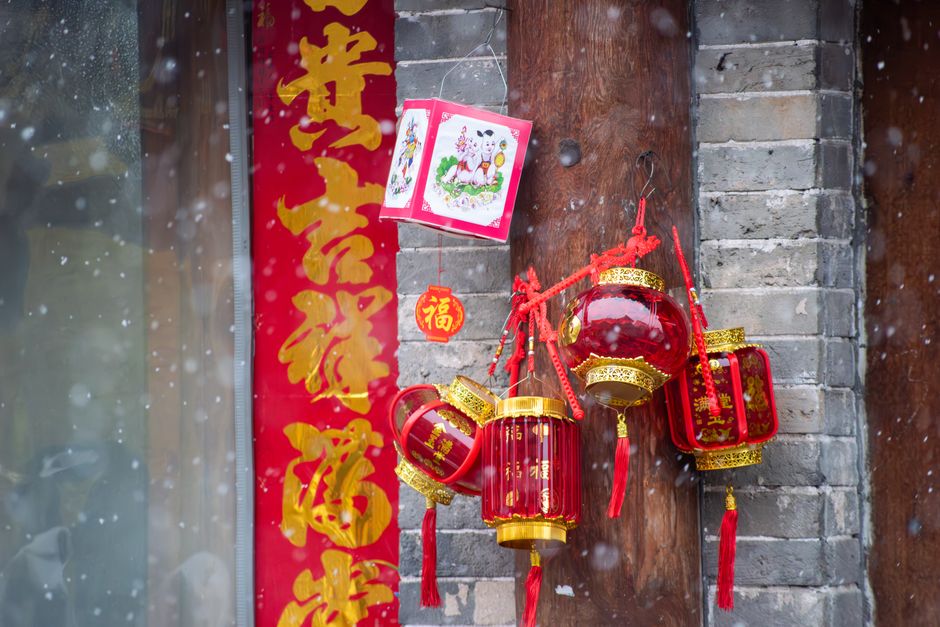
Preparations for China Lunar New Year begin weeks in advance. A crucial tradition is the thorough cleaning of the home, known as "sweeping the dust." This symbolizes sweeping away bad luck and making space for good fortune to enter in the new year. It’s an act of purification and renewal. Following the cleaning, homes are adorned with auspicious decorations. Red, the color of good luck, prosperity, and happiness, dominates. Red lanterns are hung, red couplets (春联 – chūnlián) featuring poetic verses wishing good fortune are pasted on doorframes, and paper cuttings (剪纸 – jiǎnzhǐ) depicting symbols of luck and prosperity, often featuring the zodiac animal of the coming year, are displayed on windows. The character "Fu" (福), meaning good fortune, is often hung upside down on doors or walls, as "dao" (倒), meaning upside down, sounds like "dao" (到), meaning arrival, thus symbolizing the arrival of good fortune.
The culinary aspect of China Lunar New Year is central to the festivities. The Reunion Dinner (年夜饭 – niányèfàn), held on New Year’s Eve, is the most important meal of the year, bringing together immediate and extended family. The menu is rich with symbolic dishes. Dumplings (饺子 – jiǎozi) are a staple, especially in northern China, their shape resembling ancient Chinese gold or silver ingots, signifying wealth. Fish (鱼 – yú) is essential because its pronunciation is a homophone for "surplus" or "abundance" (余 – yú), symbolizing a wish for prosperity. Sweet rice cakes (年糕 – niángāo) represent progress and growth, as their name sounds like "higher year." Spring rolls (春卷 – chūnjuǎn) symbolize wealth due to their golden color and resemblance to gold bars. Noodles (面条 – miàntiáo) are eaten uncut to symbolize longevity. Every dish is prepared with meticulous care and imbued with meaning.
The giving of red envelopes (红包 – hóngbāo), also known as lucky money, is a deeply ingrained tradition. These envelopes, filled with cash, are traditionally given by elders to children and unmarried younger relatives as a symbol of good luck and blessings for the year ahead. The amount of money is often chosen to be auspicious, avoiding numbers associated with death or bad luck. While historically, these were purely monetary gifts, in modern times, e-commerce platforms and digital payment services have introduced virtual red envelopes, allowing for a more convenient and widespread distribution, especially among younger generations and those living far from family. This adaptation reflects the fusion of tradition with technological advancements.
Activities and customs during the fifteen days of the Spring Festival are diverse and vibrant. The first day typically involves visiting relatives, exchanging greetings, and offering good wishes. The fifth day is traditionally the birthday of the God of Wealth (财神 – Cáishén), and businesses often reopen on this day with elaborate celebrations. The seventh day is considered the birthday of humankind. The ninth day is dedicated to the Jade Emperor. The tenth day marks the completion of the main festival period for many. The climax of the entire celebration is the Lantern Festival (元宵节 – Yuánxiāo Jié) on the fifteenth day. This festival is characterized by the lighting and display of colorful lanterns of various shapes and sizes, often featuring riddles written on them. People eat tangyuan (汤圆), sweet glutinous rice balls symbolizing family unity and completeness. Dragon dances and lion dances are performed in public spaces, believed to ward off evil spirits and bring good luck and prosperity.
The symbolism embedded in China Lunar New Year customs is profound and multifaceted. Red represents vitality, joy, and good fortune, a stark contrast to the perceived darkness of winter. The act of cleaning symbolizes a fresh start and shedding the old. The symbolic foods and decorations represent wishes for wealth, health, longevity, happiness, and prosperity. The emphasis on family reunion underscores the importance of filial piety and familial bonds in Chinese culture. Even the seemingly simple act of not washing one’s hair on New Year’s Day is symbolic; the word for hair (发 – fā) is a homophone for "to prosper" (发 – fā), so washing it would mean washing away good fortune. These deeply rooted beliefs and practices create a powerful collective memory and a sense of cultural continuity.
Modern adaptations and global influences are increasingly shaping China Lunar New Year celebrations. While traditional practices remain strong, younger generations are embracing new ways to connect and celebrate. The increasing global connectivity means that Lunar New Year is recognized and celebrated by a wider audience worldwide, fostering cultural exchange and understanding. The commercialization of the festival is also evident, with retailers offering themed products and promotions. However, at its core, the essence of Lunar New Year remains the same: a time for introspection, renewal, and strengthening the bonds of family and community, while looking forward with hope and optimism to the year ahead. The enduring appeal lies in its ability to resonate with universal human desires for good fortune, happiness, and connection.
