Digital Creators and the Resurgence of New York City Urbanism in the Post-Pandemic Era

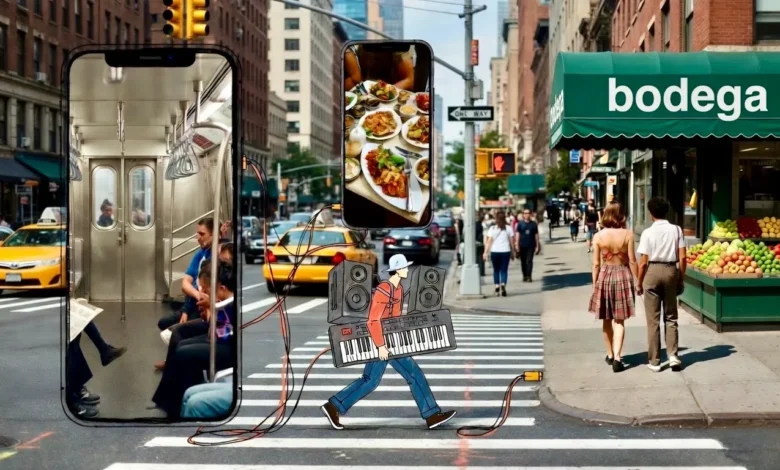
The debate regarding the vitality of New York City in the wake of the COVID-19 pandemic has shifted from the boardrooms of corporate landlords and the offices of city hall to the digital feeds of millions of social media users. While institutional stakeholders have spent the last three years debating whether the "post-pandemic city" has returned to its former glory, a new generation of independent creators has been quietly constructing the most compelling argument for urban life in decades. Utilizing nothing more than mobile phone cameras, minimal budgets, and the city’s transit infrastructure, these creators are documenting a version of New York that feels more authentic and vibrant than any government-sponsored tourism campaign. This phenomenon is perhaps best exemplified by the work of Kareem Rahma and his viral series "Subway Takes," which captures the unfiltered, democratic, and often eccentric spirit of the city’s subway system.
The Evolution of the Urban Narrative
In the immediate aftermath of 2020, the narrative surrounding New York City was largely defined by a "doom loop" theory. Economists and pundits predicted that the rise of remote work would lead to a permanent exodus of the creative class, a collapse in commercial real estate values, and a subsequent decline in municipal services. For nearly three years, the discourse remained focused on office occupancy rates and the struggles of Midtown lunch spots.
However, a parallel narrative began to emerge on platforms like TikTok, Instagram, and YouTube. Independent creators, unaffiliated with official city branding agencies, began to showcase the "unscripted" New York. These videos did not focus on the sanitized landmarks traditionally found in travel brochures but rather on the friction and spontaneity of street life. The success of these creators suggests that the appeal of the city is not found in its corporate infrastructure, but in its human density—the ability to encounter strangers worth talking to, arguing with, and sharing a communal space with.
The "Subway Takes" Phenomenon and Kareem Rahma
At the forefront of this digital renaissance is Kareem Rahma, whose series "Subway Takes" has become a cultural touchstone. The format is deceptively simple: Rahma stands on a subway platform or inside a moving train car, holding a fuzzy microphone, and asks commuters for their "hot takes"—opinions on anything from mundane lifestyle choices to local politics.
One of the series’ most notable moments involved New York State Assemblyman Zohran Mamdani. In a viral clip, Mamdani used the platform to offer a scathing critique of Mayor Eric Adams’ administration. This intersection of high-level political discourse and the gritty environment of the Astoria transit line demonstrated the unique power of the format. It bypassed the formal structure of a press conference, placing a legislator in the same physical and digital space as the average commuter.
Beyond politics, the series thrives on the mundane. Whether it is a stranger defending the reputation of pigeons as "rats with better PR" or heated debates over the best way to eat a bagel, these interactions highlight the "beautiful, unhinged democratic argument" that defines New York. This organic content has proven more effective at selling the "idea" of New York than the multimillion-dollar "We ❤️ NYC" campaign launched by the Partnership for New York City in 2023, which was met with widespread public derision for its perceived lack of authenticity.
Timeline of New York City’s Cultural Recovery
The transition from a "dead" city to a thriving digital muse followed a distinct chronology:
- March 2020 – Mid-2021: The "NYC is Dead" Era. High-profile essays and media reports suggested the city would never recover. Residents fled to the suburbs, and the subway was largely empty.
- Late 2021 – 2022: The Return of the Vibe. As vaccines became available, a "vibe shift" was documented by cultural critics. Younger residents began moving back, drawn by lower rents (which quickly rebounded) and a desire for social density.
- 2023: The Rise of the Creator-Urbanist. Creators like Kareem Rahma, New York Nico (Nicolas Heller), and others began to dominate social media algorithms. Their content focused on the "characters" of New York, reinforcing the city’s identity as a place of infinite human variety.
- 2024: Institutional Recognition. City agencies and brands began to notice that organic viral content was driving more foot traffic and cultural relevance than traditional advertising. The "Subway Takes" format has since been emulated by various brands seeking to capture a sliver of that authenticity.
Supporting Data: The Reality of the Resurgence
While social media provides the qualitative evidence of NYC’s return, quantitative data supports the notion that the city has regained its gravity.
- MTA Ridership: According to data from the Metropolitan Transportation Authority (MTA), subway ridership has consistently hit milestones in 2024, frequently surpassing 4 million riders on weekdays. This represents a significant recovery from the lows of 2020, even if it remains slightly below 2019 peaks.
- Tourism Recovery: NYC & Company, the city’s official marketing organization, reported that New York City welcomed approximately 62 million tourists in 2023, nearly reaching the record-breaking 66.6 million seen in 2019. Projections for 2024 suggest a full recovery.
- Social Media Engagement: The hashtag #NYC has over 35 billion views on TikTok. Short-form video content featuring New York street life consistently outperforms content featuring other major U.S. cities, indicating a high "digital demand" for the New York experience.
- Population Trends: Despite headlines about an exodus, tax data from 2023 suggests that while older, wealthier residents moved out, they were replaced by a surge of Gen Z and Millennial residents, many of whom cite the city’s cultural vibrancy as their primary reason for moving.
Institutional Responses and Political Implications
The success of grassroots creators has created a challenging environment for city officials. Mayor Eric Adams has frequently used the phrase "New York is back," but his administration has faced criticism for focusing on a "law and order" narrative that some feel contradicts the spontaneous, eccentric spirit of the city.
The Mamdani-Rahma interview is a prime example of how these new media platforms allow for a different kind of political accountability. When Mamdani criticized the Mayor on a subway car, it reached an audience that might never watch a local news broadcast. It showcased the subway not just as a transit system, but as a town square where the city’s leadership is subject to the same "hot takes" as any other resident.
Furthermore, the MTA has had to balance its role as a service provider with its role as a "stage" for creators. While official rules prohibit certain types of filming and performances that obstruct traffic, the agency has largely allowed the "Subway Takes" style of content to flourish, recognizing that it serves as a free, high-quality advertisement for the transit system’s essential role in city life.
Broader Impact and Future Implications
The shift in how New York City is marketed—from top-down campaigns to bottom-up viral content—has significant implications for urban planning and the global "war for talent."
The "Vibe Economy" as Urban Policy
Cities are increasingly realizing that their economic health is tied to their "vibe." If a city is perceived as boring, sterile, or overly corporate, it struggles to attract the young, creative workers that drive innovation. By allowing (and occasionally encouraging) a chaotic, diverse, and loud street life, New York City maintains a competitive advantage that more "orderly" cities like Singapore or even San Francisco struggle to replicate.
The Democratization of City Branding
Historically, the image of a city was controlled by a few powerful entities: the tourism board, the major newspapers, and the film industry. Today, any resident with a smartphone is a potential brand ambassador. This democratization means that the "brand" of New York is now more honest. It includes the grit, the arguments, and the pigeons, rather than just the skyline and the theater district.
Risks of Performative Urbanism
There is, however, a risk. As the "New York aesthetic" becomes a valuable digital commodity, there is a danger of the city becoming a "set" for content rather than a place to live. If the friction of the city is commodified into 60-second clips, it may lead to a version of gentrification where the "characters" of the city are used for engagement but are eventually priced out of the neighborhoods they make famous.
Conclusion
New York City’s post-pandemic recovery is not being measured by the number of people sitting in Midtown cubicles, but by the number of people engaging with one another in the shared spaces of the sidewalk and the subway. Creators like Kareem Rahma have tapped into a fundamental truth: the thing that makes a city great is not its buildings, but its people—specifically, the strangers who make life unpredictable.
As long as there are people willing to hold a microphone in a crowded F train and ask for an opinion, New York will remain "back." The city’s resilience is found in its ability to facilitate these unscripted moments, proving that while you can buy advertising, you cannot buy the kind of soul that naturally erupts when eight million people are packed onto a small island. The "Subway Takes" era of urbanism suggests that the future of the city lies not in returning to the past, but in embracing the beautiful, unhinged, and digital-forward present.