Crumbling Infrastructure and a Changing Climate The Urgent Crisis Facing Americas Aging Dams

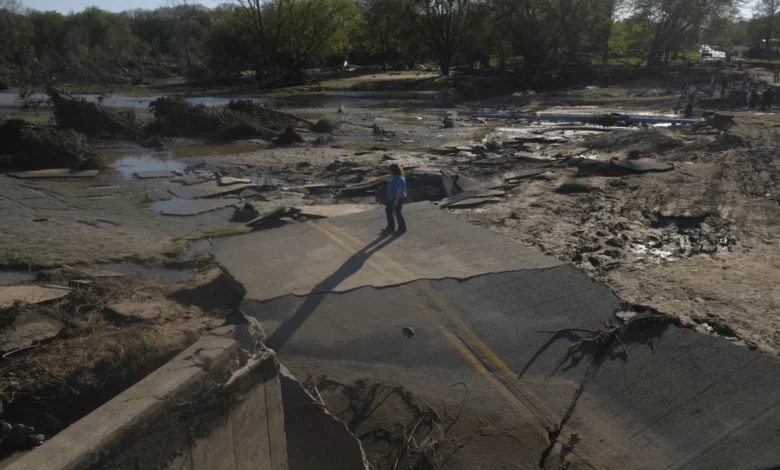
The recent surge of floodwaters across northern Michigan has served as a stark reminder of the precarious state of the nation’s water infrastructure. In April, record-breaking river levels pushed aging dams to their absolute breaking points, nearly forcing mass evacuations in cities like Cheboygan, where water rose to within five inches of overtopping a primary barrier. This close call is not an isolated incident but rather a symptomatic warning of a broader national crisis. As climate change accelerates, bringing more intense and frequent precipitation, the thousands of dams across the United States—most of which were designed for the weather patterns of the mid-20th century—are increasingly becoming liabilities that threaten both public safety and economic stability.
Across the United States, the average dam is now approximately 64 years old. According to the American Society of Civil Engineers (ASCE) and the Association of State Dam Safety Officials (ASDSO), many of these structures have already surpassed their intended design life of 50 years. Of the roughly 92,000 dams recorded in the National Inventory of Dams, approximately 18 percent are classified as "high-hazard." This designation does not necessarily mean a dam is in poor condition, but rather that its failure would likely result in the loss of human life and significant economic destruction. As infrastructure continues to age and populations expand into downstream floodplains, the risk profile of these structures grows more dire each year.
The Michigan Flashpoint: A Microcosm of National Risk
Michigan has become a focal point for the dam safety debate, particularly following the catastrophic failures of the Edenville and Sanford dams in May 2020. That disaster, triggered by heavy rainfall that caused the Edenville Dam to breach, sent a wall of water downstream that overwhelmed the Sanford Dam. The resulting flood forced the evacuation of 10,000 residents, destroyed over 2,500 homes and businesses, and caused more than $200 million in property damage. It was a wake-up call that many experts argue has yet to be fully answered with the necessary funding and regulatory oversight.
In April 2024, the state faced another series of tests. Rapid snowmelt combined with weeks of heavy spring rain swelled rivers to near-record levels. In the city of Cheboygan, home to 4,700 people, the Cheboygan Dam faced a critical threat. Officials monitored the water levels hourly as the river crested just inches from the top of the dam. Simultaneously, in the village of Bellaire, emergency crews and volunteers deployed over 1,000 sandbags to reinforce a century-old dam that was struggling to contain the surge.
These incidents highlight a disturbing reality: Michigan’s infrastructure is failing to keep pace with a changing environment. More than half of the state’s dams are beyond their 50-year design life. Richard Rood, a professor emeritus at the University of Michigan specializing in climate change, warns that these "close calls" should no longer be viewed as extraordinary events. Instead, they represent the "new normal" for a world where the atmosphere holds more moisture, leading to "rain-on-snow" events that can overwhelm even well-maintained spillways.
The Economic Burden of Maintenance and Rehabilitation
The financial scale of the dam crisis is staggering. The ASDSO estimates that the cost to rehabilitate all non-federal dams in the United States exceeds $157 billion. When including federally owned dams, that figure rises to over $165 billion. In Michigan alone, the estimated price tag for necessary repairs and upgrades is $1 billion.
For many small municipalities and private owners, these costs are insurmountable. Most dams in the U.S. are privately owned, meaning the responsibility for maintenance, safety inspections, and emergency repairs falls on individuals, homeowners’ associations, or small private companies. When a dam requires a multi-million dollar spillway expansion to meet modern safety standards, these owners often lack the capital to act.
This financial gap has led to a growing movement toward dam removal. In many cases, it is significantly cheaper to dismantle a dam and restore the natural flow of the river than it is to bring an aging structure up to code. Since 2000, the trend of dam removal has accelerated across the country. According to American Rivers, more dams are now being removed annually than are being built.
Case Study: The Boardman-Ottaway River Restoration
Traverse City, Michigan, provides a blueprint for how communities can proactively manage dam risks. In 2024, the city completed the removal of the Union Street Dam as part of a multi-decade restoration of the Boardman-Ottaway River. This project, the largest of its kind in Michigan’s history, involved the removal of three dams and the modification of a fourth at a total cost of $25 million.
The benefits of this proactive approach were proven during the April floods. Engineers estimated that if the dams had still been in place, upstream areas would have been submerged under an additional two feet of water, causing devastating property damage. Instead, the restored river channel was able to handle the surge effectively. Daniel Zielinski, a principal engineer for the Great Lakes Fishery Commission, noted that the system underwent a "stress test" that functioned exactly as intended, protecting the community from what could have been a 500-year flood event.
However, dam removal is often met with fierce local resistance. Many communities are built around the artificial lakes and reservoirs created by dams. These impoundments often support local economies through tourism and recreation, and property owners fear that losing the "lakefront" will cause their home values to plummet. This emotional and economic attachment creates a political stalemate that can delay safety improvements for years.
Regulatory Fragmentation and Oversight Gaps
The regulatory landscape for dam safety in the U.S. is a patchwork of state and federal authorities. The federal government, primarily through the Federal Energy Regulatory Commission (FERC), oversees hydroelectric dams. However, state governments are responsible for regulating approximately 70 percent of the nation’s dams.
This leads to significant variability in safety standards and inspection frequency. In Michigan, the Department of Environment, Great Lakes, and Energy (EGLE) oversees about 1,000 dams, while another 1,500 smaller barriers fall through regulatory cracks entirely because they do not meet the height or storage capacity thresholds for state oversight.
Furthermore, the issue of private ownership remains a major hurdle. State Senator John Damoose has recently raised concerns about the risks associated with private entities controlling critical infrastructure. The Cheboygan Dam, for instance, is under a complex arrangement of both state and private control, which can complicate emergency response and long-term maintenance funding. While private property rights are a cornerstone of American law, the public safety implications of a dam failure often transcend property lines, leading to calls for more robust state intervention.
The Role of Climate Change in Infrastructure Failure
The core of the problem lies in the concept of "stationarity"—the idea that natural systems fluctuate within a fixed envelope of variability. Engineers in the 1950s and 60s designed dams based on historical rainfall data, assuming that future storms would look like past storms. Climate change has effectively ended the era of stationarity.
As global temperatures rise, the atmosphere can hold approximately 7 percent more moisture for every degree Celsius of warming. This has led to an increase in "extreme precipitation events"—storms that drop a massive amount of water in a very short period. For an aging dam with a spillway designed for 1950s rainfall, these modern storms can lead to "overtopping," where water flows over the crest of the dam. Most earthen dams are not designed to withstand overtopping; once water begins to erode the back side of the dam, a total breach can occur in a matter of minutes.
Luke Trumble, Michigan’s chief of dam safety, emphasizes that while fixing dams won’t stop rivers from flooding, it can prevent a flood from turning into a catastrophe. "What we can do with dam safety legislation is help ensure that flooding is not made worse by a dam failure," Trumble stated. The goal is to ensure that infrastructure acts as a managed barrier rather than a ticking time bomb.
Legislative Path Forward and Future Outlook
In response to the growing threat, Michigan lawmakers have proposed new legislation, such as House Bill 5485, aimed at bolstering dam safety. The proposed rules would update design standards to reflect modern climate data, increase the frequency of inspections, and create new funding mechanisms to assist dam owners with repairs or removals.
Phil Roos, the director of EGLE, has stressed that dam safety must be treated as a non-partisan issue of public welfare. While a $44 million state grant program was launched following the 2020 Edenville failure, those funds were quickly exhausted, covering only a fraction of the state’s total needs. Federal resources, such as those provided by FEMA’s Rehabilitation of High Hazard Potential Dams (HHPD) grant program, are available but remain heavily oversubscribed.
As the nation looks toward the future, the choice for many communities will be between controlled removal or uncontrolled failure. The "slowly unfolding failures" described by climate experts are already occurring in real-time. Without a massive infusion of capital and a fundamental shift in how the U.S. manages its waterways, the close calls of today will inevitably become the disasters of tomorrow. The lessons from northern Michigan serve as a final warning: the infrastructure that helped build the 20th century is not equipped to survive the 21st.
Related posts: