Beyond the Fold: One Month Living with Apple’s Disruptive iPhone Duo Redefines the Flagship Category

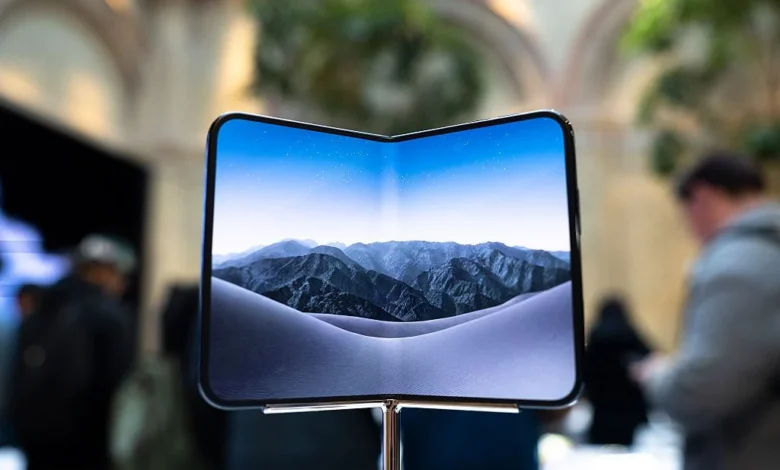
For years, the architecture of a premium smartphone has been defined by incremental metrics: multi-lens camera arrays, hyper-efficient silicon processors, and chassis weights measured in fractions of an ounce. Apple’s entry into the foldable market with the iPhone Duo explicitly rejects this traditional paradigm. By asking consumers to pay a premium price for a fundamentally altered physical experience—while occasionally sacrificing legacy high-end features like the sprawling Pro Max telephoto camera system—the company has initiated a calculated shift in how mobile hardware is conceptualized. After nearly a month of daily usage, the initial anxieties regarding hardware compromises fade rapidly, overshadowed by how the foldable form factor aggressively reorganizes everyday digital habits, app interactions, and device personalization.

Breaking Down the Trade-Offs: Hardware Compromises Versus Functional Gains
When the iPhone Duo debuted, industry analysts and early adopters alike focused heavily on what was left behind. The absence of the top-tier Pro Max optical zoom lens and the initial omission of traditional Face ID—partially mitigated by a recent software patch introducing a swift face unlock mechanism—loomed large over early reviews. Touch ID has made a prominent return, serving as the primary biometric gatekeeper when the device is folded or handled on the go.
Yet, the day-to-day reality of living with the hardware reveals that these concessions are minor compared to the utility of the dual-screen interface. The device effectively operates as two distinct form factors housed in a single chassis. When closed, it channels the ergonomic nostalgia of the discontinued iPhone mini. Despite a slightly heavier pocket footprint, the closed Duo can be comfortably navigated with one thumb, easily enveloped by a single hand, and stowed without the cumbersome pocket drag associated with modern phablets.

Conversely, unfolding the device transforms it into a compact tablet space. This dual nature alters user psychology, actively discouraging the mindless scrolling cycles often triggered by oversized, single-slab displays. The friction of choosing whether to keep the phone closed for quick utility—such as checking transit directions or drafting a brief message—or to unfold it for immersive consumption creates a conscious pause that curtails compulsive device checking.
Evolution of Multitasking and Single-Screen Productivity
One of the most profound realizations during extended testing is the natural integration of multitasking on the Duo’s inner display. Although the unfolded canvas is smaller than a dedicated tablet like the iPad, the split-screen paradigm has been engineered with high fluidity. Apple’s drag-and-drop gesture allows users to snap applications to either half of the screen effortlessly.

This functionality has birthed novel usage patterns. For instance, pairing a real-time social media feed alongside a live news article transforms passive reading into an interactive discourse. Similarly, anchoring communication tools such as Slack or corporate email adjacent to a primary workspace application ensures critical updates are never missed.
Media consumption has similarly evolved. Viewing streaming content while simultaneously engaging with community discussions on a secondary application collapses what was once known as "second-screen viewing" into a unified experience. This "Duo screen viewing" highlights an increasing demand for natively integrated commentary within entertainment platforms, suggesting future software developments will likely blend interactive community layers directly into video delivery systems.

The Application Ecosystem Reaches Critical Mass
The software landscape surrounding foldable iOS devices has matured at an unexpected pace. Following Apple’s mid-November disclosure that the App Store hosted over 200,000 Duo-optimized applications, the user experience has stabilized significantly. Early complaints regarding persistent vertical letterboxing on unoptimized third-party software have largely evaporated as major developers update their interfaces to dynamically scale across both the outer display and the expansive inner canvas.
The adaptation strategies deployed by developers vary from functional utility to playful nostalgia. Niche productivity tools and games have leveraged the hinge mechanics to simulate physical objects: note-taking applications mimic physical journals compatible with the Apple Pencil, retro music players channel the aesthetics of vintage cassette hardware, and interactive titles require physical closing actions to complete simulated tasks like toasting a sandwich.

More critically, enterprise and media mainstays have redesigned their layout logic. Applications such as Spotify utilize the expanded screen real estate to reduce interface clutter, while organizational tools like Sofa dynamically shift from a single-column layout on the outer screen to a robust two-column dashboard when unfolded. Streaming platforms like Netflix have embraced multiple orientations—offering standard outer display playback, a "laptop" mode with prominent lower-deck controls, and a "tent" mode for hands-free viewing—demonstrating hardware-software synergy akin to historical desktop transitions.
Reading Habits and Ergonomic Shifts
The transformation of reading habits stands out as an unanticipated benefit of the foldable form factor. The Duo successfully bridges the gap between dedicated e-readers and traditional smartphones. Although it lacks an e-ink panel, the matte inner screen successfully minimizes glare and softens OLED reflections, creating a calmer visual presentation than standard glossy displays.

Paired with Focus modes to suppress intrusive notifications, reading a digital book with the device held vertically mimics the physical feedback of a paperback. Alternatively, bending the device slightly in landscape orientation mimics an open book, complete with animated page-turning software simulations. This versatility allows mobile readers to leave dedicated e-readers behind during brief outings, relying on the Duo to fill idle moments without requiring an extra device in a bag.
Furthermore, the physical dimensions of the Duo eliminate the ergonomic necessity of aftermarket accessories like PopSockets. While the phone carries substantial weight, its narrower folded profile rests naturally in the hand, aligning with classic one-handed grip mechanics. When unfolded, it functions comfortably as a two-handed mini-tablet or props up independently in tent configuration, reducing repetitive strain during long viewing sessions.

Aesthetic Customization and the Rise of Accessory Personalization
The unique hardware architecture of the iPhone Duo has catalyzed a distinct shift in mobile fashion and accessory design. Unlike traditional smartphones, where protective cases primarily serve as uniform shells, the Duo has inspired a diverse market of modular enclosures.
Consumer demand has driven the proliferation of cases featuring specialized hinge coverage, integrated screen protectors, customizable outer bezel bands, and dedicated attachment points for wrist straps and charms. This modularity aligns with broader cultural trends among younger demographics embracing whimsical, retro-futuristic tech aesthetics. The ability to attach a side strap and carry the Duo like a miniature handbag has transformed the device from a utilitarian electronics tool into a prominent personal fashion accessory.

Industry Implications and Market Outlook
The rapid normalization of the iPhone Duo within consumer workflows underscores a broader evolution in consumer electronics. By prioritizing contextual screen real estate over millimeter-thin profiles and maximal camera counts, Apple has established a viable alternative to the traditional flagship slate.
The device demonstrates that hardware innovation can successfully alter human behavior, encouraging digital intentionality through physical design constraints. While barriers such as high retail pricing and the persistence of unoptimized enterprise software—notably missing key integrations from major developers like Google’s core suite—remain points of friction, the overarching trajectory is clear. The iPhone Duo is no longer viewed merely as an experimental luxury; it is a functional blueprint for the future of mobile computing.
Related posts: