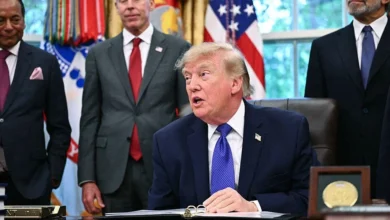
President Donald Trump stated on Saturday that his administration is pursuing a "permanent" agreement with the Iranian government, aimed at ensuring the nation is permanently precluded from acquiring nuclear weapons. In a telephone interview with Fox News, the President emphasized that the objective of such a framework is to safeguard against future shifts in American leadership, asserting, "What I’m doing is I’m going to make it so that if we have an incompetent president in four years or 15 years or 20 years, I’m going to make a deal that is going to be permanent. I’m not going to let somebody allow them to have a nuclear weapon."
This diplomatic overture comes at a time of heightened regional volatility, as the conflict between the United States and Iran—which ignited in February 2026—nears its tenth month. The President’s remarks arrive against a backdrop of ongoing maritime skirmishes in the Strait of Hormuz and intensifying proxy conflicts involving the Houthi movement in Yemen.
A Fragile Security Landscape: Maritime and Regional Escalations
The volatility of the region remains centered on the Strait of Hormuz, a critical maritime chokepoint through which approximately one-fifth of the world’s oil and natural gas supply flowed prior to the onset of the war. On Saturday, the United Kingdom Maritime Trade Operations (UKMTO) reported that two tankers were attacked while transiting the strait. One vessel sustained damage to its stern from an unknown projectile, while a second ship suffered an impact in its engine room. There were no immediate reports of casualties.
Simultaneously, Iranian state media reported that an American drone was downed over Qeshm Island, a strategic location frequently targeted by U.S. forces. This follows a Tuesday engagement in which American fighter jets struck an Iranian missile facility on the island, an action U.S. Central Command described as a self-defense measure in response to IRGC aggression.
The maritime instability is compounded by the ongoing blockade enforced by Washington, which has utilized its naval assets to escort tankers through the waterway, while Tehran has continued to challenge passage through the strait. The cumulative effect of these disruptions has been a persistent strain on global energy markets and a hardening of military postures on both sides of the conflict.
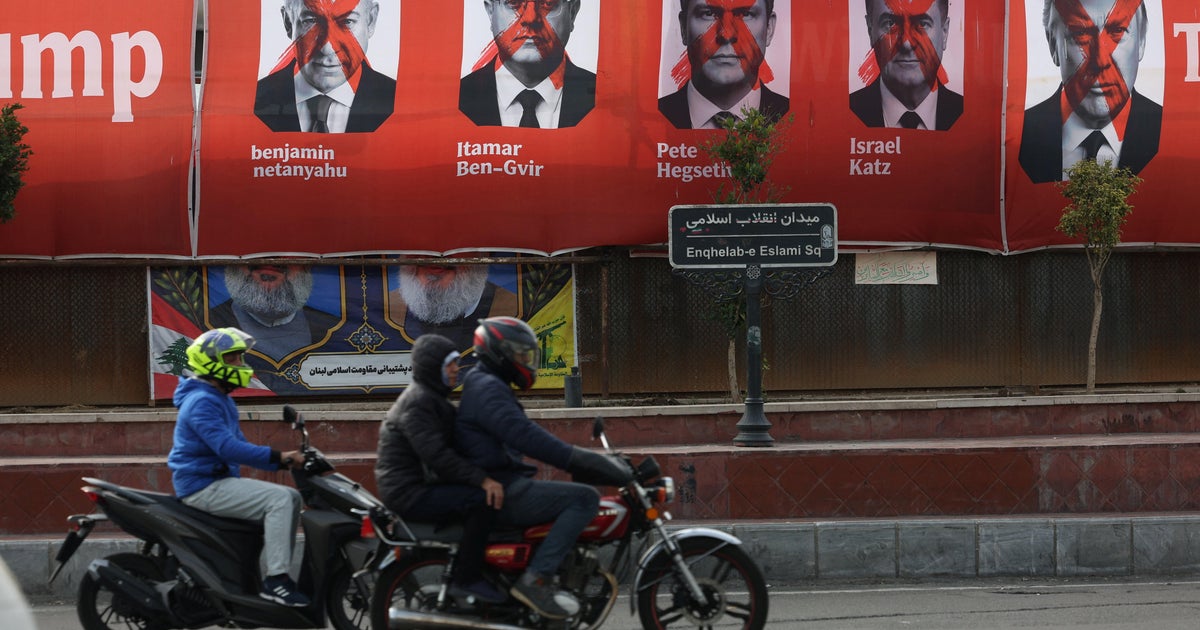
The Technological Arms Race and Underground Infrastructure
Concerns regarding Iran’s military capabilities were underscored on Saturday when Iranian state television broadcast footage from an underground facility, unveiling a new dual-missile launcher. The system is designed to fire two liquid-fueled missiles, marking a technical evolution from the previous dual-launcher platforms that relied on solid-fuel propulsion. Military analysts note that liquid-fueled missiles offer greater efficiency and allow operators to adjust speed and trajectory mid-flight, potentially increasing their survivability against defensive systems.
Brig. Gen. Seyyed Majid Mousavi, commander of the Revolutionary Guard’s Aerospace Force, claimed that the country’s combat structure now includes "highly effective assets" and "surprises," intended to bolster their deterrent capabilities despite persistent U.S. efforts to dismantle their missile infrastructure. This unveiling serves as a direct challenge to the effectiveness of the U.S.-led campaign to neutralize Iran’s strategic arsenal.
The Yemen Front: Houthi Aggression and Saudi Response
The conflict has expanded significantly beyond the borders of Iran and the United States, with Yemen’s Houthi rebels intensifying their operations against Saudi Arabia. On Saturday, the Saudi-led coalition reported that it intercepted three ballistic missiles launched by the Houthis toward Riyadh. The capital city had been placed under a high-level aerial threat alert, which was lifted later in the day once the coalition confirmed the destruction of the projectiles.
The Houthi movement has explicitly designated Riyadh’s King Abdullah Financial District as a primary military target, issuing warnings to investors and corporate entities to evacuate the area. This follows a week of increased hostilities, including a reported strike on a skyscraper in the financial district and a separate incident where the coalition alleged that a civilian boat was struck in an attack by Saudi forces. The escalation has prompted the coalition to warn civilians near the port of Hodeidah to evacuate, signaling the possibility of imminent, large-scale airstrikes.
Political Turbulence in Israel
The regional war has also triggered a profound political crisis within Israel. Following the failure of the October elections to produce a definitive mandate, former military chief Gadi Eisenkot has been tasked with forming a new government to replace that of Prime Minister Benjamin Netanyahu.
Eisenkot has expressed urgency in consolidating a coalition, warning that the current administration’s actions have become dangerously entangled with political survival. Sources familiar with the internal deliberations indicate that Netanyahu remains committed to launching a new offensive against Iran, a strategy that creates a potential point of friction with his political opponents. Eisenkot’s bloc remains divided on whether to integrate ultra-Orthodox or Arab-majority parties into a governing coalition or to pursue a national unity government. The political instability in Jerusalem is viewed by international observers as a factor that could complicate the strategic coordination between Washington and its regional allies.
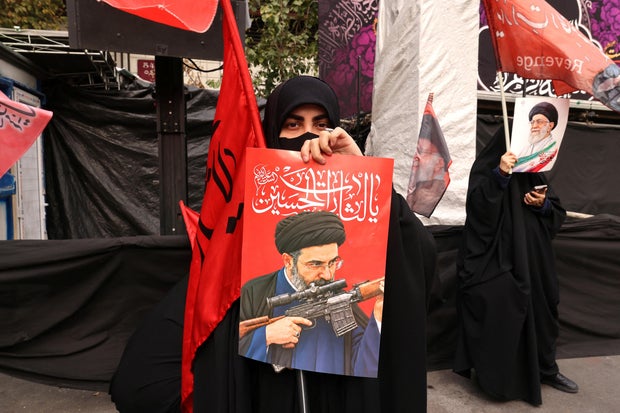
Diplomatic Posturing and the "Fraudulent Script"
President Trump’s recent calls for a "real deal" follow a period of intense, albeit indirect, negotiations that have thus far failed to produce a ceasefire. The President has been vocal about his skepticism regarding Iran’s willingness to negotiate in good faith, noting that the regime has been "very, very difficult" to deal with, frequently citing instances where agreements were allegedly broken shortly after being signed.
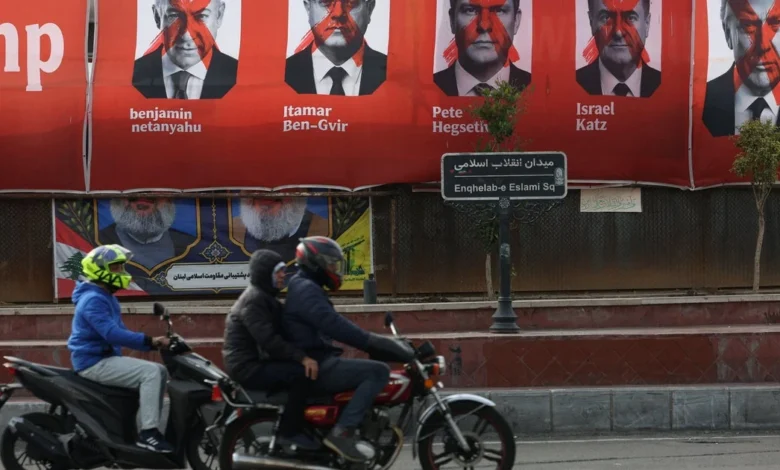
In response to U.S. allegations that Iran is attempting to develop biological or chemical weapons, the Iranian Foreign Ministry has taken a dismissive stance. Spokesperson Esmaeil Baqaei characterized the claims as a "fraudulent script," drawing historical parallels to the intelligence justifications used for the 2003 invasion of Iraq. Tehran maintains that the U.S. is manufacturing these narratives to sustain a policy of pressure that the Iranian leadership views as illegal.
Legislative Constraints and Future Outlook
The U.S. domestic political landscape regarding the conflict remains fractious. On Thursday, a resolution aimed at curtailing the President’s war powers failed to pass the Senate in a 48–51 vote. Despite significant Republican losses in the midterm elections—where voters identified the economic impact of the war as a primary concern—the measure failed to secure enough bipartisan support. Sens. Susan Collins, Lisa Murkowski, and Rand Paul were the only Republicans to cross the aisle to support the resolution.
While the resolution was largely symbolic, the vote highlights a growing restlessness within the legislative branch. However, President Trump has indicated that he is not in an immediate rush to dictate the next phase of the war. In an interview with Israeli media, the President suggested that significant decisions regarding the military campaign might be delayed until the start of the new year.
As of late November 2026, the situation remains a high-stakes standoff. The U.S. continues to hold the position that its naval blockade and precision strikes are necessary to curb regional destabilization, while Iran maintains that its missile development and proxy engagements are essential to its sovereignty and defense. With the regional conflict now in its tenth month, the international community continues to monitor whether the proposed "permanent deal" can bridge the divide between these two entrenched powers or if the cycle of retaliatory strikes will continue to dictate the terms of the war.
Related posts: