Alex Gibney Warns Documentary Filmmakers to Defy Tech Algorithms at DOC NYC Festival

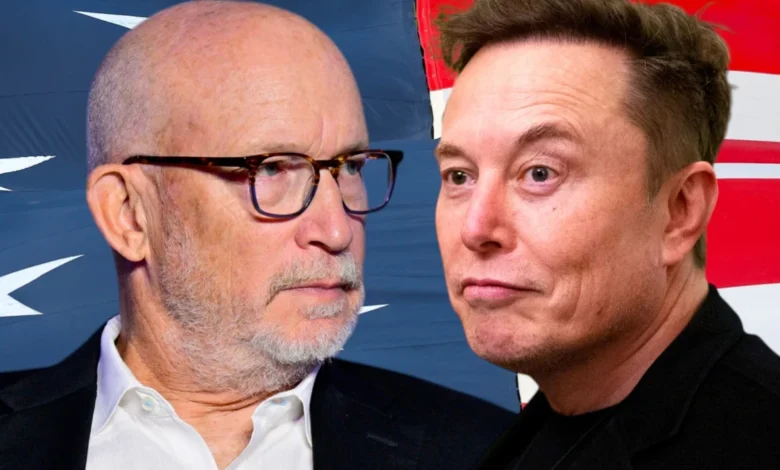
The ongoing tension between independent journalism and corporate-controlled digital architecture took center stage in midtown Manhattan as acclaimed documentary filmmaker Alex Gibney delivered a stirring call to action. Speaking to a packed audience at Gotham Hall during the annual Visionaries Tribute luncheon on the opening day of the DOC NYC festival, the Academy Award-winning director addressed the existential threats facing contemporary nonfiction storytelling. Gibney, who received the festival’s prestigious Lifetime Achievement Award, focused a significant portion of his address on the growing cultural and informational hegemony wielded by technology conglomerates, specifically targeting billionaire entrepreneur Elon Musk and the broader ecosystem of tech elites.
The venue, filled with prominent figures from the documentary landscape, responded with enthusiastic cheers and applause as Gibney outlined a vision of resistance against automated curation. His remarks arrived precisely one week following a major U.S. election cycle, setting a tone of political and artistic urgency for the festival’s slate of screenings and panel discussions.
The Rise of Algorithmic Control in Nonfiction Media
Gibney’s critique centered on what he characterized as the commodification of human attention and personal data by large technology platforms. According to the director, independent creators face an increasingly hostile digital environment where algorithmic enforcement discourages risk-taking, political provocation, and bold investigative reporting.
"The money behind MAGA has not gone away. As filmmakers, we face a world in which Elon Musk and the tech bros are trying to define and control," Gibney stated during his acceptance speech. "They’ve stolen our data and sold it back to us as algorithms we’re supposed to obey. You want to make money, we’re told, don’t step out of line; don’t be adventurous; don’t be provocative, or the algorithms will punish you."
The filmmaker emphasized that the survival of independent thought relies on collective disobedience against these digital gatekeepers. Rather than succumbing to the commercial pressures imposed by engagement-driven algorithms, Gibney urged his peers to construct an entirely new infrastructure for media distribution.
"We can and should say, f-k the algorithms," Gibney declared to widespread approval from the audience. "But, in their place, we need to work together to create a new ecosystem that allows us to protect individual expression and free speech, even as we find a way to deliver and promote our films to the audiences who want to see them."
The Context and Reception of the Documentary "Musk"
Gibney’s warning directly mirrors the subject matter of his latest major project, a sweeping four-hour documentary simply titled Musk. The film, which held its world premiere at the prestigious Venice Film Festival before receiving a theatrical release via Bleecker Street on October 9, offers a granular and critical examination of the life, business empire, and expanding political influence of Elon Musk. As the chief executive of Tesla, the founder of SpaceX, and the owner of the platform formerly known as Twitter, Musk represents the apex of modern technological and financial power.
By dedicating a four-hour investigative runtime to dissecting Musk’s public and private footprint, Gibney has positioned himself at the vanguard of filmmakers attempting to decode the societal impacts of Silicon Valley titans. During his Gotham Hall address, Gibney lightheartedly alluded to the sprawling scale of his latest work, joking that his original acceptance speech had run nearly four hours before his documentary editors intervened to trim it down.
"I started out as an editor, and I particularly want to elevate the editors of documentaries," Gibney remarked, acknowledging the foundational role that editing plays in shaping complex investigative narratives. "Luckily for me, I have those editors to fall back on, and my original three-hour and 45-minute speech has been cut down considerably."

A Prolific Year for Investigative Cinema
The Lifetime Achievement honor at DOC NYC caps off an intensely productive period for Gibney, whose career spans decades of definitive sociopolitical filmmaking. In September, he debuted another high-profile project, Knife: The Attempted Murder of Salman Rushdie. Premiering at the Sundance Film Festival, the documentary is written and narrated by acclaimed author Salman Rushdie and draws directly from his 2024 memoir detailing the harrowing 2022 physical attack against him.
During the luncheon, Gibney publicly recognized Rushdie and his wife, Rachel Eliza Griffiths—who contributed to the film as a producer and cinematographer—both of whom were seated in the audience.
Gibney’s extensive filmography forms a cornerstone of modern documentary history. His credits include the Academy Award-winning 2007 feature Taxi to the Dark Side, which investigated the homicide of an Afghan taxi driver at a U.S. military base; the Oscar-nominated Enron: The Smartest Guys in the Room (2005); the Primetime Emmy-winning Going Clear: Scientology & The Prison of Belief (2015); and Mea Maxima Culpa: Silence in the House of God (2012), which earned another Primetime Emmy for its expose of institutional abuse within the Catholic Church.
Broader Honors at the DOC NYC Visionaries Tribute
While Gibney’s address provided the thematic focal point of the event, the Visionaries Tribute luncheon also celebrated several other luminaries who have shaped the trajectory of documentary film, journalism, and sound recording.
Filmmaker and sound recordist JT Takagi was co-recipient of a Lifetime Achievement Award alongside Gibney, recognizing a career defined by rigorous audio craftsmanship and commitment to social justice storytelling. Additionally, Emmy Award-winning filmmaker Stephen Maing was presented with the Robert and Anne Drew Award for Documentary Excellence, an honor acknowledging observational filmmaking of the highest caliber. Raney Aronson-Rath, the editor-in-chief and executive producer of PBS flagship investigative program Frontline—noted recently for her work overseeing the Academy Award-shortlisted 20 Days in Mariupol—was honored with the festival’s Leading Light Award.
Implications for the Future of Independent Distribution
Gibney’s call for a decentralized, creator-owned ecosystem addresses a growing anxiety within the independent film community. As traditional theatrical distribution models contract and digital streaming platforms increasingly rely on algorithmic curation to maximize quarterly returns, provocative documentary projects face mounting barriers to entry.
Industry analysts note that investigative documentaries—particularly those scrutinizing powerful corporations, billionaires, and state actors—frequently encounter quiet suppression, shadow-banning, or unfavorable placement within recommendation engines. Gibney’s proposal for a collaborative distribution network represents an escalating effort by creators to bypass traditional digital intermediaries.
As DOC NYC continues its multi-day slate of screenings, panel discussions, and industry workshops, the dialogue initiated by Gibney is expected to resonate across subsequent conversations regarding artistic autonomy, funding models, and the ethical responsibilities of media platforms in an increasingly automated world.