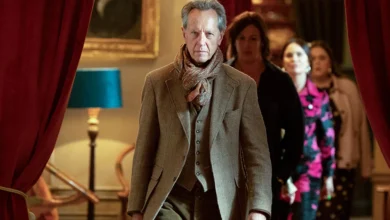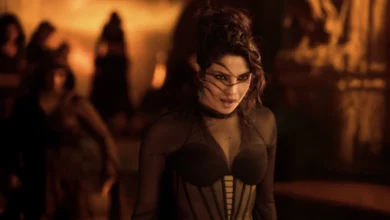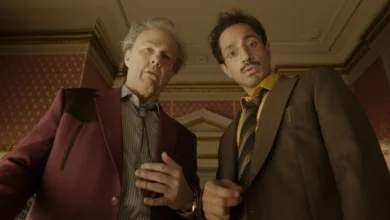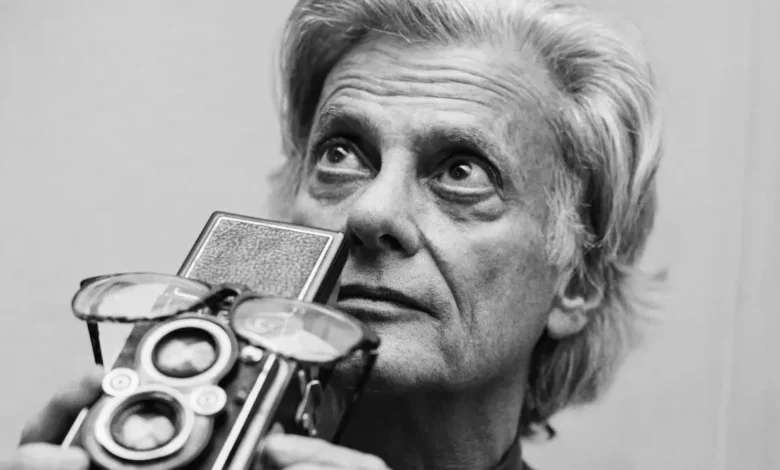
Directed by Ron Howard, the documentary film Avedon offers an expansive examination of the life and career of Richard Avedon, widely regarded as the most influential photographer of the 20th century. Released to critical acclaim, the film serves as a definitive chronicle of how a man rooted in the artifice of high fashion became a pioneer of raw, democratic humanism. Edited with rhythmic precision by Andrew Morreale, the documentary navigates the vast archives of the Richard Avedon Foundation to present a portrait of an artist who fundamentally altered the metaphysics of modern photography.
The Evolution of a Visionary
Born in New York City in 1923, Richard Avedon’s trajectory toward photographic mastery began long before he held a camera. He famously recalled childhood walks where he would blink rapidly, closing his eyes to "burn" an image into his memory—an early exercise in visual retention. This preoccupation with the permanence of a moment would define his professional life.
His formal introduction to the mechanics of the medium occurred during his tenure with the U.S. Merchant Marines between 1942 and 1944. Tasked with photographing thousands of enlisted men for identification cards, Avedon was forced to work within the rigid constraints of a blank, white background. This experience was transformative. Rather than viewing the assignment as mundane, Avedon realized that the lack of environmental context forced the subject to exist entirely within the frame. This "white-out" technique became his signature, stripping away social markers and status to isolate the individual.
Chronology of an Artistic Career
The film meticulously maps Avedon’s evolution through six decades of creative output:
- 1944–1950s: Transitioning from the military to the pages of Harper’s Bazaar and Vogue, Avedon challenged the static norms of fashion photography. He introduced movement, energy, and a sense of narrative spontaneity that deviated from the posed, statuesque styles of his contemporaries.
- 1957: The release of the musical film Funny Face, featuring a character based on Avedon, cemented his status as a cultural icon. This period marked his transition into a figure who could command both the high-fashion world and the intellectual avant-garde.
- 1960s–1970s: Avedon shifted his focus toward social and political subjects, capturing the Chicago 7, the counterculture of the Warhol Factory, and the stark realities of the Vietnam War.
- 1980s: The publication of In the American West represented a significant departure from his commercial work. By documenting oil field workers, drifters, and coal miners against his stark white backdrop, he challenged the fine-art establishment’s perception of "beauty."
- 1944–2004: Across his career, Avedon completed approximately 16,000 portrait sittings. This averages to one sitting every business day for 60 years, a testament to his relentless work ethic.
The Paradox of Glamour and Truth
At the heart of the documentary is an exploration of the paradox that defined Avedon: a man who flourished in the world of luxury while maintaining a clinical, almost brutal honesty in his portraiture. Whether photographing Marilyn Monroe, Elizabeth Taylor, or J. Robert Oppenheimer, Avedon possessed a unique ability to capture the "unfiltered" self.
The film features testimonials from a diverse array of figures, including Tina Brown, Larry Gagosian, Twiggy, Adam Gopnik, Hilton Als, and Calvin Klein. These contributors highlight how Avedon’s process was not one of technical complexity—he was notoriously disinterested in f-stops or camera specifications—but one of psychological manipulation. Isabella Rossellini notes that Avedon’s genius lay in his ability to withhold the shutter click, waiting for the exact moment the subject’s performance dropped to reveal their inner state.
A pertinent example cited in the film is his 1957 session with Marilyn Monroe. After a day of capturing her in the performance of "Marilyn," Avedon waited for the exhaustion of the session to set in. In the final moments of the day, as she let her guard down, he captured an image of a woman who was neither the starlet nor the sex symbol, but a quiet, contemplative individual.
Technical Mastery and Invisible Artistry
The documentary credits editor Andrew Morreale for crafting a narrative structure that mirrors Avedon’s own style: clean, direct, and rhythmic. By weaving hundreds of photographs into the film, the production team creates a "musical" experience that tracks the photographer’s development. The inclusion of Spoon’s track "I Turn My Camera On" serves as a contemporary bridge to Avedon’s timeless aesthetic.
Avedon’s refusal to adhere to traditional rules of lighting or composition allowed his subjects to exist in a vacuum. As noted by James Martin, executive director of the Richard Avedon Foundation, the archives reveal a man who used his celebrity subjects to express his own internal landscape. His work with his own family—particularly his aging father—demonstrates a profound capacity for using the lens as a tool for personal reconciliation.
Analysis of Broader Impact
The implications of Avedon’s work on contemporary visual culture cannot be overstated. He effectively democratized portraiture by insisting that a person’s face was a landscape unto itself, requiring no external scenery to convey meaning. His commercial work, such as the iconic Obsession fragrance campaigns of the 1980s, functioned as surrealist short films, proving that his artistic vision was entirely consistent across both editorial and advertising platforms.
The film also addresses the darker threads of his life, including the mental health struggles of his sister and the complexities of his personal relationships. These segments provide a necessary counterpoint to his professional success, grounding the "legend" of Avedon in the reality of a human life marked by both brilliance and profound vulnerability.
Conclusion: The Legacy of an Eye
Richard Avedon’s influence remains visible in every portrait that prioritizes psychological depth over technical spectacle. As the documentary concludes, it becomes clear that his "technique" was not a set of instructions, but an invitation to look closer. By forcing his subjects—and by extension, his audience—to confront the reality of the human face, Avedon changed the way the world understands the nature of the image.
Ron Howard’s Avedon is more than a biographical sketch; it is a vital examination of how art can bridge the gap between the superficial and the essential. By cataloging 60 years of intense creative output, the film solidifies Avedon’s place not just as a photographer, but as a chronicler of the human condition in the 20th century. For students of film, photography, and art history, the documentary serves as a essential case study in how to capture the truth, one click at a time.