Major Airlines Face Antitrust Scrutiny Over Alleged Data Sharing Schemes to Inflate Ticket Prices

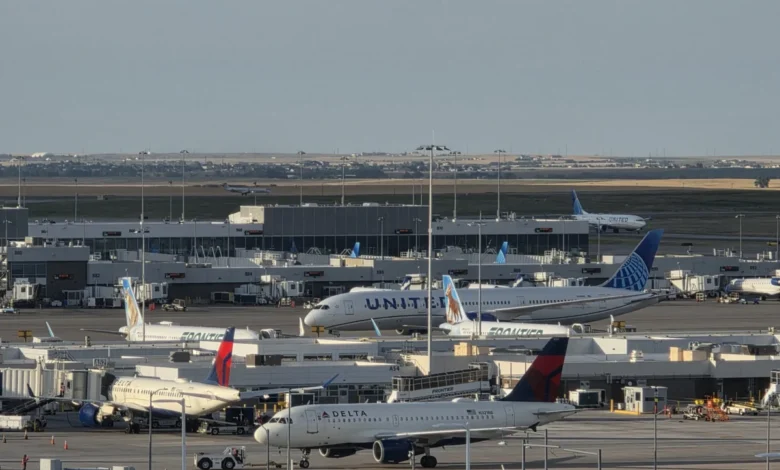
As air travel costs continue to weigh heavily on consumer budgets—with government data indicating a 22.4% spike in airfares over the past year—the airline industry finds itself at the center of a significant legal firestorm. Two newly filed class-action lawsuits, Ward v. ATPCO and Brown v. ATPCO, have brought major domestic carriers under the microscope, alleging that industry giants have conspired to use shared customer shopping data to suppress price competition and maintain artificially high fares.
The lawsuits name a formidable list of defendants, including American Airlines, Delta Air Lines, United Airlines, Southwest Airlines, Alaska Airlines, Hawaiian Airlines, and JetBlue. The litigation also targets the Airline Tariff Publishing Company (ATPCO), an industry-owned entity traditionally tasked with distributing fare rules, alongside its subsidiary, 3Victors. The plaintiffs argue that these carriers have weaponized sophisticated data-sharing systems to monitor and discourage the kind of aggressive discounting that historically benefited passengers.

The Mechanism of Alleged Collusion
At the heart of the litigation is the evolving nature of airline pricing. Modern airline distribution is no longer limited to simple published fares; it now involves dynamic offers tailored by channel, itinerary, and personalized bundles. The plaintiffs allege that through ATPCO and the 3Victors “Iris” platform, airlines have created a feedback loop of proprietary data.
3Victors describes its data exchange model with the phrase, "the more you contribute, the more you receive." The platform collects comprehensive shopping results—including various cabin classes, ancillary bundles, and pricing tiers—that far exceed the data a carrier could obtain through traditional website scraping.
The legal theory proposed by the plaintiffs is that this system creates a chilling effect on competition. Under normal market conditions, an airline might be inclined to offer a significant discount to fill empty seats on a flight. However, if that airline knows that its competitors are instantly alerted to that discount via a shared data platform, the incentive to lower prices evaporates. The logic is simple: if every price cut is immediately matched by rivals, the originating airline gains no market share advantage, leading to a "tacit agreement" to keep prices static.
Historical Context and Antitrust Precedent
This is not the first time the airline industry has faced accusations of using collective systems to stifle competition. In the early 1990s, the Department of Justice launched a massive investigation into the industry’s use of the ATPCO system. At that time, carriers were circulating proposed fare changes through the system before they were actually made available to the public. This allowed airlines to "test" market reactions to price hikes and coordinate increases across the industry without ever needing to hold a private meeting.
The current lawsuits argue that while the technology has changed, the underlying intent remains the same. Where the 1990s system used "fare filing" to signal future intentions, the modern 3Victors platform uses real-time shopping data to monitor competitor behavior in the present. While the defense will likely argue that this is merely efficient market intelligence—helping airlines avoid losing revenue by being underpriced—the plaintiffs characterize it as an unreasonable restraint of trade under the Sherman Antitrust Act.
The Dual-Edged Sword of Price Transparency
The aviation industry maintains that sophisticated data analytics are essential for operational efficiency. Industry proponents argue that access to market data allows airlines to adjust their capacity, such as deploying larger aircraft or adding flights when they identify underserved demand. In this view, data transparency is a tool that leads to better resource allocation and, ultimately, more stable pricing for the consumer.
However, antitrust experts note that the legality of information sharing often hinges on the "public availability" of that information. If an airline observes a price on a public travel booking site and decides to match it, that is standard, legal competitive behavior. The legal threshold is crossed when carriers reach an understanding to share private, non-public data through a third-party intermediary to ensure that no party deviates from an industry-standard pricing floor.
Chronology of the Legal Conflict
- 1990s: The U.S. government investigates ATPCO for facilitating "fare signaling," leading to a consent decree that limited how airlines could communicate future price changes.
- 2010s–2020s: Airlines transition toward "New Distribution Capability" (NDC) and personalized retailing, increasing the complexity and volume of data generated during the shopping process.
- 2023: 3Victors, a data analytics firm, gains prominence for its "Iris" and "PriceEye" tools, which provide granular visibility into shopping behaviors and competitor offers.
- Early 2025: Legal filings, including Ward v. ATPCO (Seattle) and Brown v. ATPCO (Virginia), are initiated, alleging that the utilization of these data tools constitutes an antitrust violation.
- Ongoing: The litigation is expected to enter a protracted discovery phase, where the contents of internal airline emails, contracts with 3Victors, and internal marketing presentations will be scrutinized.
Implications for the Airline Industry
Should these cases proceed to trial, the discovery process will be the most critical phase. The court will demand evidence of direct agreements between the carriers and the data providers. For the airlines, the risk is not just the potential for court-ordered damages, but the possibility that federal regulators may mandate the dismantling of these data-sharing networks.
The airline industry has a history of settling such disputes to avoid the uncertainty of a jury trial and the risk of triple damages. A settlement would likely involve a restructuring of how 3Victors and similar platforms operate, potentially imposing strict "firewalls" to prevent the aggregation of competitive data.
Market Impact and Consumer Outlook
For the average traveler, the outcome of this litigation could have long-term implications for ticket pricing. If the courts find that current systems effectively create an oligopolistic pricing environment, the subsequent forced changes to these platforms could lead to a more fragmented and competitive pricing landscape. However, skeptics of the lawsuit point out that the high cost of fuel, labor, and airport operations—the fundamental pillars of ticket pricing—will remain, regardless of how transparent or opaque airline pricing software becomes.
As the case moves forward, the aviation sector will remain under intense scrutiny from both the public and federal regulators. The central question remains whether modern data analytics tools are being used as a legitimate instrument of business intelligence or as a digital-age vehicle for price coordination. With the industry currently under fire for high inflation and operational reliability issues, these lawsuits represent a pivotal moment in the governance of airline pricing strategies. The outcome will likely dictate the technological trajectory of airline distribution for the next decade, setting a new precedent for what constitutes "fair competition" in the digital marketplace.