Yayoi Kusama iconic yellow pumpkin sculpture makes triumphant return to Japan’s art island of Naoshima

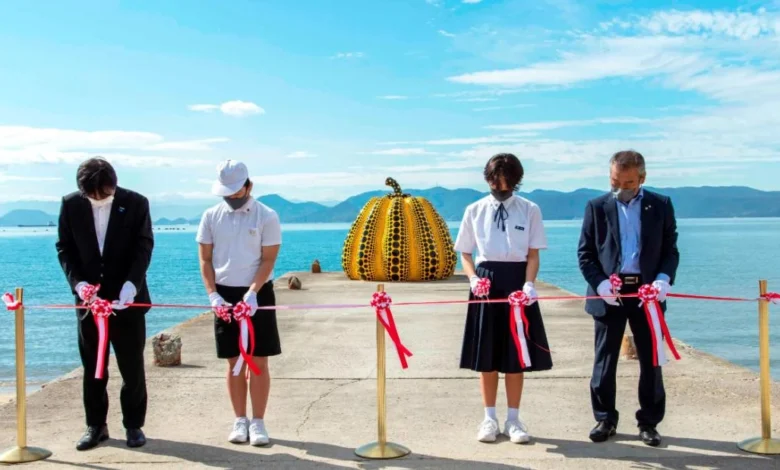
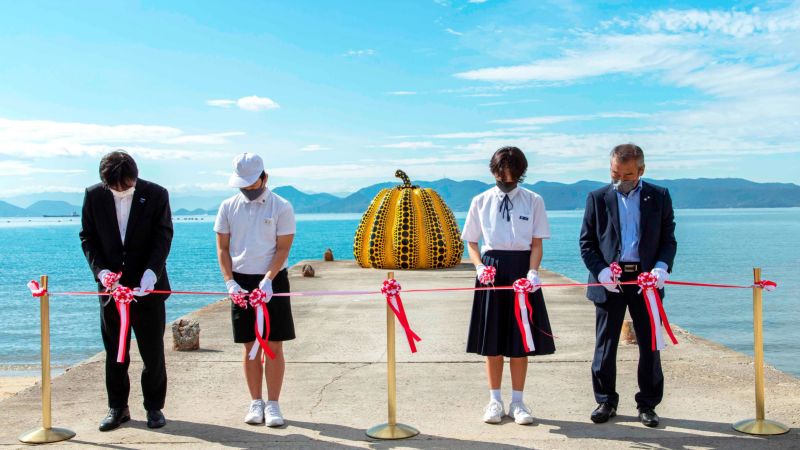
The iconic yellow pumpkin sculpture by world-renowned Japanese artist Yayoi Kusama has been officially reinstalled on the pier of Naoshima, marking a significant milestone for the island community and international art enthusiasts alike. The return of the vibrant, polka-dotted structure on October 4, 2022, serves as a poignant restoration of a landmark that was tragically lost to the forces of nature during a fierce typhoon in August 2021. For the 3,200 residents of Naoshima, as well as the global art tourism sector, the reappearance of the pumpkin signifies more than just the return of a famous photo opportunity; it represents the resilience of an island that has successfully transformed from a quiet fishing community into a world-class destination for contemporary art.
A Chronology of a Cultural Landmark
The story of the Naoshima pumpkin began in 1994, when it was first commissioned and installed as part of the "Out of Bounds" exhibition. Located at the edge of a pier extending into the Seto Inland Sea, the two-meter-tall, 2.5-meter-wide fiberglass-reinforced plastic sculpture quickly became an emblem of the island’s unique identity. Over the decades, it served as a visual bridge between the natural beauty of the Japanese coastline and the avant-garde spirit of Kusama’s work.
The incident in August 2021 was a sobering reminder of the vulnerability of outdoor art installations. As a powerful typhoon tore through the region, the sea grew turbulent, eventually sweeping the pumpkin off its pedestal and into the ocean. The impact shattered the fiberglass shell into three distinct pieces, leaving the art world in mourning for a piece that had defined the aesthetic of the Setouchi region. Immediately following the recovery of the remnants, officials from Benesse Holdings—the organization responsible for the management of the island’s art sites—conducted a thorough assessment to determine whether the original piece could be restored. Ultimately, they concluded that a full reconstruction was the only viable path to preserving the integrity of the work.
Engineering Resilience and Future-Proofing
The creation of the replacement pumpkin was not merely an act of duplication; it was an exercise in sophisticated engineering. Kusama’s production team, working in close collaboration with site managers, sought to retain the aesthetic essence of the 1994 original while enhancing its durability against the increasingly volatile weather patterns seen in the Seto Inland Sea.
The new iteration features an outer shell that is 10% thicker than its predecessor, providing significantly increased structural rigidity. Furthermore, the installation process introduced a critical preventative measure: a high-tensile hook has been permanently embedded into the stem of the pumpkin. This design feature allows for the rapid retrieval and relocation of the sculpture to a secure, inland facility should meteorologists forecast extreme weather events in the future. By integrating these safety protocols, the curators have ensured that while the pumpkin remains a public installation, it is no longer left entirely at the mercy of the elements.
The Significance of the Art Island
Naoshima’s reputation as an "art island" is deeply rooted in its intentional approach to blending modern architecture, contemporary art, and the rural Japanese landscape. With three major museums—the Chichu Art Museum, the Benesse House Museum, and the Lee Ufan Museum—the island acts as a living gallery. The return of the pumpkin serves as the cornerstone for the island’s ongoing identity, particularly as Japan pivoted toward reopening its borders to international leisure tourists in October 2022.
The timing of the installation was strategically aligned with the reopening of the Setouchi Art Festival, a triennial event that draws hundreds of thousands of visitors to the region. The festival is a vital economic engine for the island, supporting local businesses, ferries, and hospitality services that suffered during the pandemic-era border closures. The pumpkin acts as a beacon for these visitors, providing a recognizable landmark that guides tourists through the island’s winding paths and toward its various installations.
Official Responses and Community Sentiment
The reinstallation was marked by a ceremony attended by local students, island residents, and municipal officials. For the people of Naoshima, the pumpkin is more than an object of international renown; it is a point of local pride. Yukari Stenlund, a spokesperson for Benesse Holdings, captured the collective sentiment during a statement to the press. "Since the pumpkin was a symbol of Naoshima, it is great to see the same artwork installed again at the same spot," she noted. "We are happy to share the joy with residents in Naoshima."
Stenlund further emphasized that the philosophical mission behind the work remains unchanged. The pumpkin was designed to symbolize the connection between the remote island of Naoshima and the wider world. By placing a piece of high-concept art in such a natural, public setting, the intention was always to challenge the boundaries between "fine art" and the everyday experience of the sea and sky.
Economic and Cultural Implications
The impact of the pumpkin’s return extends beyond the artistic community into the realm of local economics. Tourism data for the Seto Inland Sea region suggests that the presence of the pumpkin acts as a primary draw for "art pilgrims." In the digital age, the sculpture’s photogenic nature—contrasting the vivid yellow paint and black polka dots against the deep blue backdrop of the Seto Inland Sea—has made it a viral sensation on platforms such as Instagram. This social media visibility has been instrumental in keeping Naoshima relevant in a highly competitive global tourism market.
The logistical accessibility of the island also plays a role in its success. Visitors typically reach the island via a 20-minute ferry ride from Okayama, which is itself connected to the major metropolitan hubs of Osaka and Tokyo by the Shinkansen (bullet train) network. This connectivity allows for a seamless transition from the dense, urban environment of Japan’s mega-cities to the serene, art-infused landscape of Naoshima. The restoration of the pumpkin reinforces the reliability of the island as a destination, ensuring that visitors who make the journey are met with the iconic sights they expect.

Analysis: Art in the Age of Climate Change
The saga of the pumpkin highlights a growing trend in the preservation of outdoor public art: the necessity of climate-conscious curation. As extreme weather events become more frequent, museums and foundations responsible for sculpture parks and public installations must balance the desire for public access with the responsibility of asset protection.
The decision to install a more robust, tethered version of the pumpkin reflects a broader shift toward "resilient curation." It is no longer sufficient for art to simply exist in a space; it must be protected by a management strategy that acknowledges the reality of environmental instability. In this sense, the "new" pumpkin is a modern evolution of the original 1994 concept. It is a work of art that has been forced to adapt to the 21st-century reality of climate risk, yet it continues to represent the same spirit of creativity and connection that first brought it to the shores of Naoshima.
A Legacy Renewed
As visitors now walk along the pier, the familiar sight of the yellow pumpkin once again offers a sense of continuity. Its return is a testament to the fact that while objects are fragile, the cultural significance they carry can be preserved through persistent effort and innovation. The collaboration between the artist, the production team, and the local community has ensured that Naoshima remains a place where the barrier between nature and art is permanently porous.
The pumpkin stands as a symbol of endurance. It has survived the sea, the wind, and the challenges of a global pandemic, and it has emerged as a stronger, better-protected version of itself. For those who travel to the shores of the Seto Inland Sea, the sculpture is more than just a destination; it is an invitation to witness how a small community, united by art, can successfully navigate the complexities of the modern world. As the Setouchi Art Festival continues to draw enthusiasts from around the globe, the yellow pumpkin will undoubtedly remain the enduring, joyful face of Naoshima, welcoming travelers with its bright, immutable optimism.
Related posts: