The Cascading Tragedy of Ruidoso: How Fire and Flood Devastated a Mountain Community

The picturesque village of Ruidoso, New Mexico, long celebrated as a premier destination for seasonal tourism, skiing, and outdoor recreation, has become the epicenter of a harrowing narrative concerning the intersection of climate change, infrastructure failure, and disaster management. What began as a summer getaway for families from across the Southwest transformed into a series of catastrophic events that, over the course of three years, exposed deep-seated vulnerabilities in the town’s emergency preparedness and leadership. The cycle of destruction—defined by severe wildfires followed by lethal flash flooding—has claimed lives, displaced families, and ignited a contentious debate over the prioritization of economic interests versus public safety.

The Chronology of Crisis: A Landscape Transformed
The environmental instability currently plaguing Ruidoso is a phenomenon familiar to many regions in the American West, where prolonged drought leaves forest floors desiccated and highly susceptible to ignition. Three years ago, during a Father’s Day weekend, the region appeared deceptively serene. However, the underlying aridity of the Lincoln National Forest was already a harbinger of the danger to come.
In the days following that weekend, the situation deteriorated rapidly. Two distinct wildfires broke out in the forests surrounding Ruidoso, sending plumes of smoke over the village and forcing a desperate scramble for safety. As the fires encroached upon the town’s commercial and residential zones, they scorched the landscape, stripping the earth of the vegetation required to absorb moisture. This "burn scar" created an immediate, lethal risk: the total loss of soil stability.

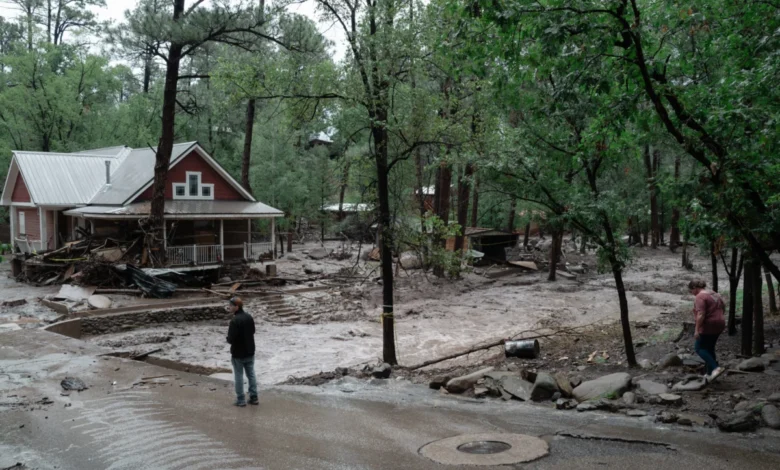
When the seasonal monsoons arrived later that summer, the landscape—unable to soak up the intense rainfall—acted like a slick, concrete surface. The water, channeled into narrow canyons and stream beds, gathered speed and volume, transforming the Rio Ruidoso from a tranquil creek into a destructive force. These recurring floods tore through the town, damaging critical infrastructure and residential areas. The cycle reached a heart-wrenching peak on July 8, 2025, when a sudden, heavy downpour caused the river to swell to unprecedented levels. In the ensuing deluge, three individuals—a man and two children—were swept away, marking a failure of containment that would haunt the community for months to come.
Data and Environmental Precursors
The severity of the flooding in Ruidoso is supported by hydrological and meteorological data consistent with the "fire-to-flood" sequence. When forest cover is destroyed by high-intensity wildfire, the infiltration capacity of the soil can drop by up to 90%. This means that even moderate rainfall events can produce runoff rates five to ten times higher than in unburned areas.

Geospatial analysis of the burn scars around Ruidoso shows that the lack of canopy cover and understory vegetation left the mountainsides defenseless against the monsoon season’s characteristic convective storms. Local experts and federal geologists had issued warnings as early as late 2024, identifying specific zones in the river valley as high-risk for flash flooding. Despite these projections, the integration of such data into the town’s zoning and evacuation plans remained inconsistent. The resulting damage to homes, RV parks, and bridges serves as a grim case study for how rapid, climate-driven environmental shifts can outpace the traditional disaster response frameworks of small, tourism-dependent municipalities.
The Debate Over Emergency Response
Investigations conducted by local and independent media outlets have revealed significant friction between village leadership and the first responders tasked with managing these disasters. While officials from the Village of Ruidoso have repeatedly maintained that the emergency response was handled with professional diligence, field reports from police, fire, and rescue personnel paint a different picture.

Interviews with those on the front lines indicate that the town’s emergency management apparatus was arguably understaffed and inadequately equipped for the scale of the flooding. Responders cited a lack of specialized water-rescue equipment and a delay in the activation of early warning systems as primary factors that hindered their ability to save the three victims lost in July 2025. Critics argue that the decision to prioritize tourism—the lifeblood of the village’s economy—may have influenced the local government’s reluctance to issue more stringent evacuation orders or to invest heavily in expensive, albeit necessary, flood mitigation infrastructure.
Mayor Lynn Crawford has defended the village’s actions, framing the situation as an impossible balancing act between the economic survival of local businesses and the safety of the residents. In public statements, the mayor has often deflected direct responsibility, emphasizing the unpredictable nature of natural disasters. However, for the families of the victims, this rhetoric offers little comfort. The loss of seven-year-old Sebastian Rowan and four-year-old Charlotte Trotter, alongside Benjamin "Tim" Feagin, has become a rallying point for residents demanding greater transparency and a more rigorous approach to disaster management.

Institutional Inaction and Public Trust
A critical point of contention is the failed attempt to implement a relocation project for the most vulnerable properties in the river basin. Following the 2024 fires, state and local leaders initially discussed a plan to buy out or relocate residents from high-risk flood zones. However, the project faltered, reportedly due to bureaucratic stagnation and a pushback from stakeholders concerned about the impact on local property values and the aesthetic appeal of the tourist destination.
Furthermore, reports of the mayor chastising residents for posting flood warnings on social media have sparked allegations of "disaster suppression." When local authorities actively discourage the dissemination of information about potential threats, they effectively strip citizens of their ability to make informed decisions about their own safety. This culture of downplaying risk, intended to preserve a sense of normalcy for visitors, has led to a measurable erosion of trust between the municipal government and the long-term residents of Ruidoso.

The Long-Term Implications
The tragedy in Ruidoso carries profound implications for other mountain towns across the American West. As temperatures rise and the frequency of wildfire events increases, the "new normal" for these communities involves a permanent state of hydrological risk.
- Infrastructure Resilience: Small towns must shift their budgets toward green infrastructure—such as bioswales, retention ponds, and redesigned drainage channels—that can handle the increased velocity of runoff from burn scars.
- Standardized Alert Systems: The reliance on human discretion for flood warnings is clearly insufficient. Automated, sensor-based hydrological monitoring systems are necessary to provide residents with real-time, objective data, removing political bias from the warning process.
- Governance and Accountability: The Ruidoso case underscores the necessity of independent, post-disaster audits. When a municipality serves as both the promoter of tourism and the primary regulator of public safety, an inherent conflict of interest exists. Independent oversight could help ensure that public safety is never compromised for the sake of quarterly revenue.
Moving Forward
Today, the village of Ruidoso presents a dual image: one of physical recovery, where new growth is appearing on the hillsides and the downtown area remains bustling with weekend visitors; and one of lingering trauma, represented by the empty spaces where homes once stood and the memorial at the RV park where three lives were lost.

For the family members of the victims, the path forward is marked by an unresolved pursuit of accountability. They, and a segment of the local population, are calling for a formal inquiry into the emergency response protocols that were active during the 2025 floods. While the village continues to distance itself from the criticisms leveled against its leadership, the physical and social scars left by the disaster remain visible.
As the region faces future seasons of wildfire and potential flooding, the lessons of Ruidoso are clear. A community cannot simply "move on" from a disaster without first addressing the systemic failures that allowed a natural event to escalate into a preventable tragedy. The future of Ruidoso, and towns like it, depends on the ability of local leaders to abandon the preservation of an idealized, pristine image in favor of the difficult, expensive, and necessary work of preparing for an increasingly volatile climate. Until such changes are implemented, the shadow of the 2025 floods will continue to loom over the Rio Ruidoso, serving as a reminder of the high cost of inaction.