Cornwall Prepares for History as Cosmic Girl Readies for the United Kingdom’s First Orbital Space Launch

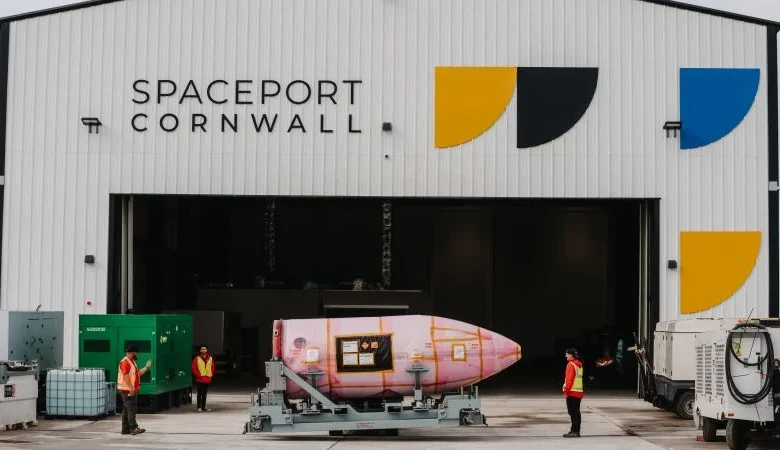
At the far southwestern tip of England, where the rugged coastline of Cornwall dangles into the churning Atlantic, the remote region is undergoing a quiet but profound transformation. Traditionally known for its surfing beaches, tin mining heritage, and quiet fishing villages, Cornwall is currently emerging as an unlikely gateway to the stars. This transition is centered on a modest facility: Newquay Airport. While it ranks as only the 29th busiest airport in the United Kingdom, it is currently the stage for an operation that promises to shift the paradigm of European aerospace. Residents have spent recent weeks gazing skyward, watching a silhouette that feels strikingly out of place against the backdrop of rural Cornish cliffs: a modified Boeing 747, banking low over the coastline before settling onto the tarmac.
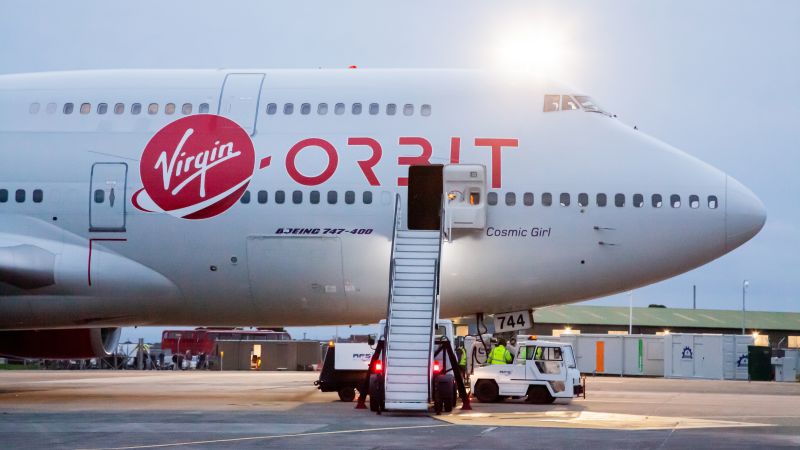
This aircraft, affectionately dubbed "Cosmic Girl," is far more than a vintage jumbo jet. Formerly a commercial passenger airliner that spent years in the fleet of Virgin Atlantic, the 747 has been stripped of its commercial interior and retrofitted as a flying launch platform. It serves as the cornerstone of Virgin Orbit’s "Start Me Up" mission, an ambitious endeavor that aims to execute the first-ever orbital satellite launch from British soil. By utilizing a horizontal launch system—taking off from a standard runway rather than a vertical launch pad—the mission demonstrates a flexible, agile approach to reaching low Earth orbit that could decentralize the global space industry.
A Technological Evolution in Orbital Delivery
The mechanism behind this mission is as ingenious as it is unconventional. The LauncherOne rocket, a California-manufactured vehicle, is mounted directly beneath the 747’s left wing. During the planned mission, Cosmic Girl will take off from the 1.7-mile runway at Spaceport Cornwall, climb to an altitude of approximately 34,000 feet, and reach a precise speed and trajectory before releasing the rocket. Once the rocket detaches, it ignites its engines to propel seven individual satellite payloads into low Earth orbit.
This horizontal launch methodology offers several distinct advantages over traditional ground-based vertical rockets. According to technical documentation provided by Virgin Orbit, the primary benefit is atmospheric and geographic flexibility. A 747 can bypass unfavorable weather conditions that might ground a vertical launch, and it can reposition itself to launch into a wide variety of orbital planes that might be geographically inaccessible from a fixed, coastal launch site. By effectively "flying" the launch to the ideal location, the company claims it can provide a broader range of mission profiles for satellite operators, effectively turning any long-runway airport into a potential spaceport.
Chronology of a Mission
The path to this moment has been years in the making, involving international coordination between the UK Space Agency, the Cornwall Council, and the private sector. The integration of Spaceport Cornwall into the global aerospace network represents a long-term strategic investment for the UK government, which has sought to cultivate a domestic space industry capable of competing with established powers.
The timeline leading to the launch window highlights the complexity of the operation:
- October 2: LauncherOne completes its final full-scale launch rehearsal in Long Beach, California, clearing the way for its transit to the UK.
- October 11: Cosmic Girl arrives at its new operational base in Cornwall, marking the first time the vessel has been stationed in the UK for a mission of this magnitude.
- October 14: The aircraft executes a three-hour test flight over the Cornish coast, providing local residents and aviation enthusiasts with a rare glimpse of the modification under the wing.
- Late October/Early November: Final systems integration and flight readiness reviews are conducted to ensure the compatibility of the rocket and the host aircraft.
The Human Element: Community and Professional Reaction
For the local population of Newquay, the presence of the 747 is a source of immense civic pride. Marc Andrew, a long-time resident who has followed the development of the spaceport with keen interest, traveled to the site to witness the aircraft’s landing. "It was amazing to watch, and will be a nice bit of history to tell my little boy when he’s older," he remarked. This sentiment is shared by many in the region, where the spaceport is viewed not just as a commercial facility, but as a catalyst for STEM (Science, Technology, Engineering, and Mathematics) education and economic revitalization.
The professionals involved in the mission share a similar sense of gravity regarding the milestone. Virgin Orbit’s chief pilot, Matthew Stannard, who has the responsibility of maneuvering the aircraft during the delicate launch sequence, noted the significance of the endeavor. "It feels amazing to bring Cosmic Girl home to the UK. We are weeks away now from the first UK launch at Spaceport Cornwall, so it’s all very real," Stannard stated.
Melissa Thorpe, the head of Spaceport Cornwall, emphasized that the mission is the culmination of years of infrastructure development. "Seeing the infrastructure in place makes our launch ambitions a reality," Thorpe said. Her office has worked closely with regulatory bodies to ensure that the airport—a hub for civilian travel—can safely host a high-stakes aerospace operation without compromising safety or environmental standards.
Broader Implications for the UK and Europe
The "Start Me Up" mission represents a watershed moment for the United Kingdom. Until now, the UK has been a major player in the design and manufacture of satellites but has lacked the domestic launch capability to place them into orbit. Historically, British companies have had to rely on international launch providers in the United States, French Guiana, or Kazakhstan. By establishing this capability, the UK aims to create a "cradle-to-grave" space economy, where satellites can be built, launched, and operated entirely within national borders.
Ian Annett, deputy CEO of the UK Space Agency, has characterized the mission as a "first for Europe," noting that it positions the continent to compete more effectively in the rapidly expanding small-satellite market. As the demand for satellite-based services—such as telecommunications, earth observation, and climate monitoring—continues to skyrocket, the ability to launch from domestic soil provides a significant strategic advantage.

Furthermore, the success of the Cornwall project could trigger a ripple effect in the global aerospace industry. Virgin Orbit has already signaled intentions to expand its horizontal launch model to Australia, Brazil, Japan, Poland, and the Republic of Korea. These nations, many of which have robust space ambitions but limited access to traditional vertical launch complexes, are looking toward the Cornwall mission as a "proof of concept." If Cosmic Girl successfully deploys its satellites, it will demonstrate that the barrier to entry for space access can be lowered, potentially democratizing orbital launch capability for emerging economies.
Analysis of Technical Challenges
While the excitement is palpable, the technical hurdles remain significant. Launching from a mobile, airborne platform requires a level of synchronization that is vastly more complex than a static pad launch. The rocket must be released at a precise altitude, speed, and pitch angle to ensure that the flight computer can stabilize the craft for its journey to orbit.
Previous trials, including a successful launch in 2021 where a rocket was released over the Pacific Ocean at speeds reaching 17,000 miles per hour, have provided the necessary data to mitigate these risks. However, every new launch environment presents unique atmospheric variables. The team at Spaceport Cornwall has spent months analyzing weather patterns, oceanic flight corridors, and air traffic control integration to ensure that the mission remains safe for the surrounding region.
Conclusion: A New Chapter for Cornwall
As the launch window approaches, the eyes of the global aerospace community will be fixed on the western tip of England. The transformation of a local, regional airport into a spaceport is a testament to the pace of innovation in the modern space race. What began as an experimental concept has matured into a viable, repeatable, and highly mobile solution for reaching space.
For the residents of Cornwall, the sight of Cosmic Girl soaring over the Atlantic is a preview of a future where their quiet corner of the world is a vital node in the global space infrastructure. Regardless of the outcome of the mission, the preparation alone has already secured the region’s place in the history books of aviation and orbital mechanics. As the countdown continues, the mission serves as a reminder that the path to the stars is no longer reserved for massive, immovable launch facilities, but can be found wherever there is a runway and the ingenuity to dream beyond the clouds.