Cancun Airport Visitax Controversy Highlights Growing Friction Between Mexican Tourism Authorities and International Travelers

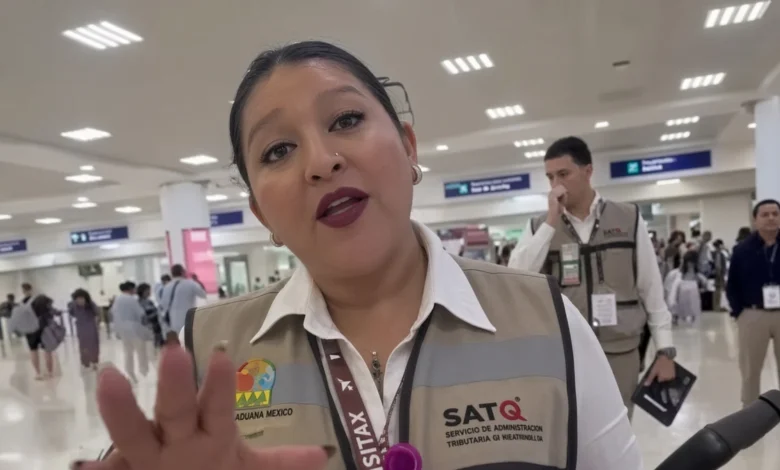
A viral video capturing a tense confrontation at Cancun International Airport has thrust the controversial "Visitax" policy back into the international spotlight. The footage shows a vacation rental operator challenging staff clad in branded vests, demanding clarity on the collection of the state-mandated fee. This incident is the latest flashpoint in an ongoing struggle to balance regional revenue generation with the logistical realities of managing millions of tourists. The interaction serves as a microcosm of a broader issue: the erosion of traveler confidence in one of the world’s most popular vacation destinations, driven by a tax collection system that many visitors find opaque, inefficient, and prone to exploitation.
The Evolution of the Visitax Policy
The Visitax, formally known as the Aprovechamiento de Bienes de Dominio Público, was introduced in 2021 by the state of Quintana Roo. The policy requires all foreign visitors—excluding those under the age of four—to pay a fee to help fund tourism infrastructure, environmental protection, and public security initiatives. When it was first proposed, officials estimated the tax would generate hundreds of millions of pesos annually, providing a crucial lifeline for a state economy that is almost entirely dependent on international tourism.
However, from its inception, the implementation of the tax has been marred by confusion. Unlike traditional tourist taxes that are bundled into airline tickets or hotel room rates, the Visitax was designed as a stand-alone payment. Travelers are encouraged to pay via an official government website before arrival or during their stay, receiving a QR code as proof of payment. The friction arises at the airport, where local authorities and private contractors have set up collection points to intercept travelers who have not pre-paid. This has created a chaotic environment where tourists are often unsure if they are dealing with legitimate government agents or unauthorized individuals attempting to siphon funds, leading to widespread accusations of "shakedowns."
Chronology of the Dispute
The current tensions are the culmination of a multi-year administrative struggle:
- April 2021: The Visitax is officially implemented across the state of Quintana Roo, including Cancun, Tulum, and Cozumel.
- Late 2021–2023: Early reports emerge of confusion at the Cancun airport, with tourists expressing frustration over the lack of clear signage and the aggressive nature of collection personnel.
- 2024: Industry groups, including the local Association of Hotels, formally petition the state government to integrate the tax into the flight ticketing process or hotel checkout process to reduce terminal congestion.
- October 2026: A video goes viral showing a rental property owner confronting airport staff. The video ignites a firestorm on social media, with thousands of travelers sharing personal anecdotes of feeling "extorted" upon arrival.
- Late October 2026: Governor Mara Lezama reaffirms that the airport collection points will remain in place, citing a lack of alternative collection methods.
Economic and Logistical Implications
The financial burden of the tax—approximately 293 pesos, or roughly $15.70 USD per person—is relatively modest compared to the total cost of a international vacation. However, the cumulative effect of multiple fees is beginning to impact traveler sentiment. Tourists arriving in Cancun are already subject to federal visitor charges, city environmental taxes, and, in some cases, dynamic currency conversion fees at hotels that can add as much as 15% to a final bill.

Economic analysts suggest that while the revenue is vital for the region’s development, the "hassle factor" associated with the Visitax may have a long-term chilling effect on return tourism. In an era where travelers have myriad global options for sun-and-sand destinations, the perceived lack of transparency regarding where these tax dollars are actually allocated—and the predatory behavior reported at the airport—tends to erode the "value-for-money" proposition of the Yucatan Peninsula.
The Infrastructure of Confusion
A primary point of contention is the government’s reliance on third-party payment processors and authorized private collectors. While a central government portal (visitax.gob.mx) exists, the state has allowed various private entities to facilitate the payment, creating a fragmented digital landscape. This fragmentation makes it difficult for a layperson to distinguish between a secure government site and a third-party markup service.
Furthermore, the state’s attempt to offload the collection process to the private sector—specifically hotels—was met with a firm refusal from the hospitality industry. Hoteliers argued that they are already tasked with collecting a variety of other municipal and state taxes, and that adding the Visitax to the hotel checkout process would lead to increased friction between staff and guests. Consequently, the government has been forced to maintain a physical presence in the airport, leading to the current confrontations.
Official Responses and Government Justification
Governor Mara Lezama has maintained a firm stance regarding the necessity of the collection points. Addressing recent public outcry, the governor emphasized that the state lacks the administrative infrastructure to collect the tax through other channels at the volume required. "It has to be there, because there is no other way," the governor stated in a press conference. The government maintains that the funds are essential for improving the very services that tourists utilize, including waste management, beach restoration, and increased police presence in tourist zones.
Despite these assurances, there is a palpable lack of trust among the traveling public. Social media forums and travel boards are replete with users labeling the fee a "narcotax" or an "airport shakedown," highlighting a profound disconnect between the state’s stated objectives and the actual experience of the visitor.
A Broader Pattern of Airport Friction
The Visitax controversy exists within a wider context of negative experiences at the Cancun International Airport. The airport has frequently made headlines for incidents involving predatory pricing by taxi services, where travelers have reported being charged exorbitant rates for short transfers. When combined with the Visitax, these experiences create a "death by a thousand cuts" scenario for the destination’s reputation.

The implications for the tourism sector are significant. In a competitive market, a destination’s brand equity is built on seamlessness. When the entry and exit processes are perceived as adversarial, the destination risks becoming a one-time visit for many, rather than a recurring vacation spot. The "never again" sentiment expressed by users in response to the viral video is a metric that tourism boards typically track with great concern.
Analysis: Can the Policy Be Reformed?
For the Visitax policy to remain sustainable, experts suggest that the government must move toward a more integrated model. International best practices for tourist taxes suggest that collection should occur at the point of sale—ideally during the flight booking process. By integrating the fee into the airline ticket (similar to how many countries include security or environmental fees in the base fare), the government would eliminate the need for physical collection points, thereby removing the point of friction that currently fuels public resentment.
However, such a transition would require complex negotiations with international airlines and global distribution systems, which the state of Quintana Roo has yet to undertake successfully. Until such a change is implemented, the airport will likely remain a site of contention.
As the state of Quintana Roo looks toward the future of its tourism industry, the Visitax remains a paradox: it is a necessary tool for funding essential public services, yet it is currently being administered in a way that undermines the very industry it seeks to support. The government faces a difficult choice: continue the status quo and risk further damage to its international reputation, or invest in a more sophisticated, user-friendly digital integration that respects the time and peace of mind of its visitors. Until a resolution is reached, the confrontation at the airport serves as a stark reminder that even the most well-intentioned policy can fail if the user experience is neglected.